


Editor’s note: Zaur Nurmamedov is a journalist and a graduate of the Faculty of Political Science at the Academy of Public Administration under the President of the Republic of Azerbaijan (1993–1999). He previously served as first deputy editor-in-chief of the Vesti.Az news portal (2009–2023). The views expressed in this article are his own and do not necessarily reflect the position of News.Az.
The energy partnership between Azerbaijan and the European Union is no longer limited to the familiar formula of gas supplies, transit routes and diversification away from Russian energy. It is gradually entering a new phase — broader, more political and far more strategic. What was once seen primarily as a supplier–consumer relationship is now evolving into a long-term architecture of energy security, infrastructure integration, the green transition and geopolitical balancing between the Caspian region and Europe.
The negotiations held in Baku on 2–3 June between delegations from Azerbaijan and the European Union should be viewed in precisely this wider context. The parties held talks on two parallel tracks: the new Comprehensive Agreement and the Partnership Priorities document for 2026–2030. The Azerbaijani delegation was led by Deputy Foreign Minister Yalchin Rafiyev, while the EU delegation was headed by Audronė Perkauskienė, Deputy Managing Director of the European External Action Service.
At first glance, this may appear to be another round of technical diplomacy. In reality, however, the talks marked an important procedural breakthrough. On the Partnership Priorities document, the sides reached provisional agreement on the text. On the Comprehensive Agreement, negotiations were officially resumed after a long pause, with progress achieved in several sections and next steps outlined.
This matters because negotiations on the new agreement began on 7 February 2017. The strategic partnership agreement consists of four blocks, with some issues in the trade and economic section still unresolved. Baku has previously stated that around 90% of the text had already been agreed. Yet for several years, the process was effectively frozen. Therefore, the main significance of the 2–3 June talks lies not in the immediate conclusion of a deal, but in the reactivation of the dialogue.
The political impetus for this came from the highest level. In May 2026, Azerbaijani Foreign Minister Jeyhun Bayramov and EU High Representative for Foreign Affairs and Security Policy Kaja Kallas agreed during a meeting in Baku to resume negotiations on both the new agreement and the Partnership Priorities. This was not an isolated diplomatic gesture. It reflected a broader understanding in Brussels and Baku that the strategic value of their partnership has increased significantly in the current geopolitical environment.
Energy lies at the heart of this shift. Since 2021, imports of Azerbaijani natural gas to the EU have increased by more than 40% through the Southern Gas Corridor. In January 2026, the capacity of the Trans Adriatic Pipeline was expanded, creating additional opportunities to increase gas supplies to Europe from 2026 onwards. Against the backdrop of Europe’s search for stable alternatives to Russian gas, Azerbaijan has become not merely a useful supplier, but a structurally important partner.
However, the EU’s approach to Azerbaijan is no longer based solely on gas. Brussels is increasingly building the partnership around two pillars: continued gas supplies during the energy transition and future cooperation in clean energy, including renewables, electricity interconnectors and green corridors. If the Caspian–Black Sea–Europe Green Energy Corridor is implemented, Azerbaijan could, by 2030, become a major exporter of green energy to the European market.
This is where the new strategic reality begins. Azerbaijan is no longer viewed only as a country capable of delivering gas through existing infrastructure. It is being seen as a future energy platform connecting the Caspian Sea, the South Caucasus, the Black Sea and the European Union. This platform may include natural gas, oil logistics, electricity transmission, solar and wind energy, green hydrogen and regional interconnectors.
The intensification of high-level contacts confirms this trend. In March 2026, European Council President António Costa and Azerbaijani President Ilham Aliyev met in Baku and reaffirmed the strategic importance of the partnership. They agreed to deepen cooperation in energy, trade, transport, connectivity and green energy. The fact that these issues are now being discussed as part of a single interconnected agenda shows that the relationship is moving beyond narrow sectoral cooperation.
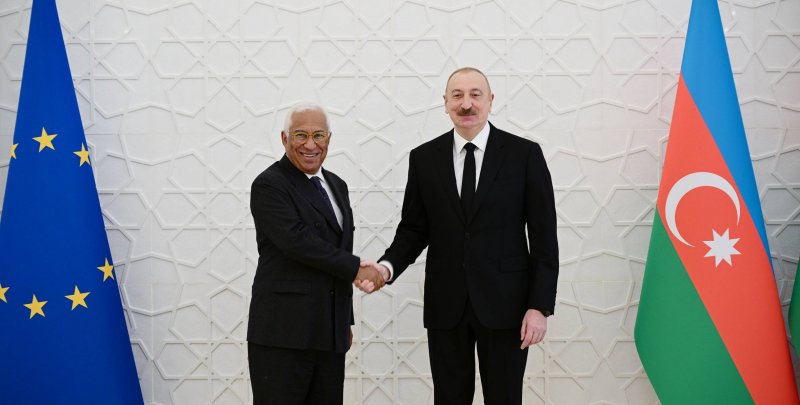
Photo: Prezident.Az
The provisional agreement on the Partnership Priorities for 2026–2030 is important because it will serve as a practical framework for cooperation and financing. Meanwhile, the resumption of negotiations on the Comprehensive Agreement sends a broader political signal. The choice of Baku rather than Brussels as the venue for the talks is also symbolic. It demonstrates that the EU recognises Azerbaijan’s sovereignty, its independent foreign policy and its multi-vector diplomatic approach.
At the same time, it is important not to overstate the outcome. The 2–3 June talks were not the finalisation of a major agreement. They represented a procedural breakthrough. But in international politics, procedure often creates substance. Once a frozen dialogue is reopened, it generates momentum, structure and a new negotiating environment.
This is especially important at a time when the geopolitical situation around the region remains highly unstable. The military escalation around Iran, the continuing energy crisis and broader competition over supply chains and transport routes all strengthen Azerbaijan’s negotiating position. Baku is no longer approaching the EU as a peripheral partner. It is engaging as a country located at the intersection of several strategic agendas — energy security, regional connectivity, the Middle Corridor, Caspian resources and Europe’s search for alternatives to Russian influence.
Another important signal came on 20 May, when Baku hosted the 7th Meeting of the Azerbaijan–European Union Security Dialogue. The parties agreed to expand the format and rename it the EU–Azerbaijan Political and Security Dialogue. This change is not cosmetic. The inclusion of the word “political” means the dialogue is moving beyond a narrow security framework and now covers a broader agenda: the new agreement, partnership priorities, regional architecture, transport routes and energy security.
For Azerbaijan, this represents an institutional upgrade in relations with the EU. It means Baku is increasingly being treated not merely as an energy supplier or transport corridor, but as a political actor whose role in the wider region is significant. The relocation of such meetings from Brussels to Baku is also telling. It suggests that the EU is moving closer to Azerbaijan’s strategic geography rather than expecting Azerbaijan to adapt solely to Brussels’ agenda.
This evolution is also visible in SOCAR’s growing activity within the European energy market. Azerbaijan has already taken practical steps to move beyond the role of a raw materials exporter. In May 2026, SOCAR completed the acquisition of a 99.82% stake in Italiana Petroli, gaining control of two oil refineries in Italy with a combined capacity of around 10 million tonnes. The deal had received approval from the European Commission earlier in 2026.
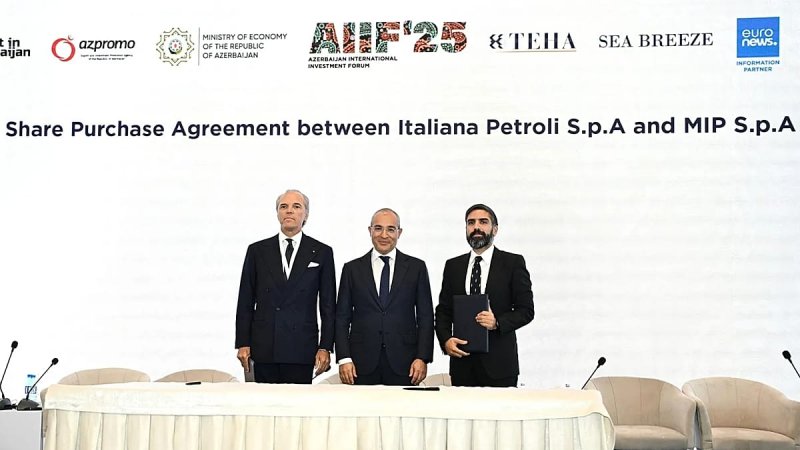
Photo: Euronews
This is a major development. SOCAR now has the right to own and operate critical energy infrastructure inside the EU — a rare example of direct foreign state-linked ownership in a highly regulated European sector. It demonstrates deeper integration of Azerbaijani energy capital into the European market. More importantly, it shows SOCAR moving from crude oil production and export towards participation in refining, distribution and retail.
A similar logic is visible in SOCAR’s interest in the Burgas refinery in Bulgaria, the largest oil refinery in the Balkans, with an annual capacity of up to 9.5 million tonnes. Previously owned by Russia’s Lukoil, it has long been one of Moscow’s key industrial footholds in South-Eastern Europe. SOCAR, together with Türkiye’s Cengiz Holding, has submitted a bid for the asset. The deal is reportedly valued at around $2.5 billion and has outpaced several international competitors.
For Azerbaijan, the Burgas refinery is not simply a commercial asset. It carries geopolitical and logistical significance. If SOCAR succeeds, it would strengthen Azerbaijan’s position in South-Eastern Europe and accelerate the gradual replacement of Russian energy influence in the region. For decades, Burgas served as an instrument of Russian leverage over Bulgarian and regional markets. Its potential transfer into Azerbaijani hands would mark a major shift in the energy balance of the Balkans.
There is also a transport dimension. The acquisition could help revive the Baku–Supsa pipeline, which has been idle since spring 2022. In May 2026, Azerbaijan and Georgia agreed to resume operations of the pipeline. At the same time, Kazakhstan’s Energy Minister Yerlan Akkenzhenov stated that Astana is considering additional export routes, including Baku–Supsa. This makes the issue even more relevant, as the pipeline could become part of a broader Caspian-to-Europe export chain.
Azerbaijan has already demonstrated its capacity to support such infrastructure. In the first quarter of 2026, it shipped several batches of oil to the Burgas refinery with a total volume exceeding 130,000 tonnes. This strengthened engagement with the facility and showed that Azerbaijan has the resource base the refinery increasingly requires following restrictions on Russian oil.
Taken together, these developments show that SOCAR is making a strategic move of rare scale. It is seeking to transform from a supplier of raw materials into a vertically integrated energy company with a presence across production, transportation, refining, distribution and retail. The European political environment — especially the drive to replace Russian assets and reduce dependence on Russian energy infrastructure — has created a unique window of opportunity for Azerbaijan.
This is why the current Azerbaijan–EU energy partnership should not be viewed through the narrow lens of gas diversification alone. Gas remains important, but it is only one layer of a much broader transformation. The relationship now includes political dialogue, green energy corridors, oil logistics, European downstream assets, regional connectivity and the gradual institutionalisation of Azerbaijan’s role in Europe’s energy security architecture.
For the EU, Azerbaijan offers something increasingly rare: a stable partner with resources, infrastructure, political will and strategic location. For Azerbaijan, the EU offers markets, investment, technology and long-term geopolitical recognition. This mutual interest explains why both sides have strong incentives to complete negotiations on the new agreement and establish a more formal and durable framework.
The broader conclusion is clear: the energy partnership between Azerbaijan and the European Union is transforming from a transit-based arrangement into a long-term strategic model. It is no longer only about replacing Russian gas. It is about building a sustainable and interconnected energy system from the Caspian Sea to Europe.
If this process continues, Azerbaijan will not simply remain an alternative supplier for Europe. It will become one of the key pillars of Europe’s energy security for decades to come — a country whose role spans gas and oil, green electricity, hydrogen, infrastructure and strategic connectivity.
(If you possess specialized knowledge and wish to contribute, please reach out to us at opinions@news.az).
此内容由惯性聚合(RSS阅读器)自动聚合整理,仅供阅读参考。 原文来自 — 版权归原作者所有。