









Editor's note: Aysel Mammadzada is an Azerbaijan-based journalist. The views expressed in this article are the author’s own and do not necessarily reflect those of News.Az.
When looking at modern nation-building efforts around the world, Azerbaijan offers a particularly interesting case. The idea of Azerbaijanism is not just a formal state ideology written in documents or discussed in academic circles. It feels more like a living narrative that has been carefully shaped, promoted, and embedded into different layers of society. From my perspective, what makes it especially noteworthy is how consistently it connects history, culture, education, and diaspora life into a single national framework.
Azerbaijanism, at its core, is about unity and identity. It promotes the idea that all Azerbaijanis, whether living inside the country or abroad, belong to one cultural and historical space. This idea became especially important after independence in the early 1990s, when Azerbaijan had to rebuild its national identity after the Soviet period. The influence of Heydar Aliyev during this time is impossible to ignore. His political vision emphasized that a strong state cannot exist without a strong sense of national unity, and that unity must be built on shared cultural values, language, and historical memory.
What stands out to me is how systematically this ideology has been developed over time. It is not left as an abstract concept; instead, it has been translated into real institutions and programs. One of the most visible examples is the Heydar Aliyev Foundation. Beyond its cultural and humanitarian projects, it functions as a kind of soft power tool that promotes Azerbaijani identity internationally. Whether through restoring historical monuments, organizing cultural exhibitions abroad, or supporting educational initiatives, the Foundation consistently presents Azerbaijan as a country with deep cultural roots and a modern outlook. In a way, it acts as a cultural bridge between Azerbaijan and the world.

Photo: Daily Sabah
Another strong pillar of Azerbaijanism is diaspora engagement. I find this aspect particularly important because many countries struggle to maintain strong connections with their citizens abroad.
Azerbaijan, however, has developed structured mechanisms for this. The State Committee on Diaspora Affairs and related organizations regularly organize cultural events, youth camps, and educational programs for Azerbaijanis living in different countries. These initiatives are not just symbolic; they actively shape identity. For example, youth camps and diaspora forums bring together young Azerbaijanis from around the world, helping them form personal and emotional connections to their heritage. This is a powerful way of ensuring that national identity is not lost across generations.
Education inside the country also plays a key role. From school level onwards, students are introduced to ideas of national history, cultural heritage, and civic responsibility. What I find interesting is that this is not limited to history lessons. Literature, language studies, and even cultural activities are used to reinforce a sense of belonging. In universities, discussions about national identity and Azerbaijanism are often part of broader academic discourse. This creates an environment where national identity is not just taught but continuously reinforced through multiple subjects and experiences.
At the academic level, institutions like the Azerbaijan National Academy of Sciences also contribute to shaping the intellectual side of Azerbaijanism. Conferences and research projects explore its historical roots and modern implications. This academic involvement helps give the ideology a more analytical foundation, making it not just emotional or symbolic, but also intellectually structured. In my opinion, this combination of emotional identity and academic research is one of the reasons why Azerbaijanism has remained consistent and influential.
Media and communication platforms also play a very important role in spreading these ideas. Television programs, documentaries, and digital campaigns frequently highlight national history, cultural achievements, and important anniversaries. In today’s world, where digital media shapes public perception, this becomes especially effective. Younger generations, in particular, are exposed to these narratives through social media and online platforms, which makes the ideology more accessible and engaging.
Cultural diplomacy is another area where Azerbaijanism is clearly visible. International cultural events, exhibitions, and forums allow Azerbaijan to present itself globally not only as a political entity but also as a cultural civilization. Events like international cultural festivals or humanitarian forums in Baku showcase music, art, cuisine, and literature, creating a positive image of the country abroad. From my point of view, this is one of the strongest aspects of Azerbaijanism because it moves beyond internal identity-building and extends it into global recognition.
Youth involvement is also central to this process. There is a clear effort to ensure that young people are not passive recipients of national ideology but active participants in shaping it. Youth organizations, leadership programs, and volunteer initiatives encourage civic engagement while also reinforcing national identity. This approach creates a generation that is both globally aware and nationally rooted, which is a difficult balance to achieve.
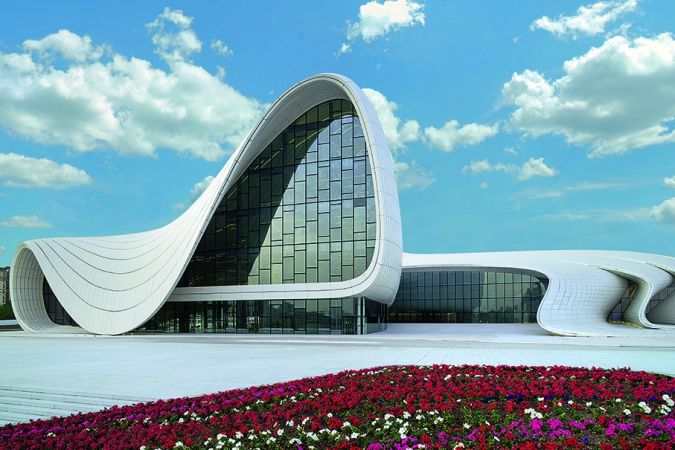
Photo: AZERTAC
Overall, what makes Azerbaijanism particularly interesting is its multidimensional nature. It is not just a political ideology, nor is it purely cultural. It operates across education, diplomacy, diaspora relations, media, and academic research. It is a coordinated system that seeks to ensure national unity in a rapidly globalizing world.
From my perspective, whether one fully agrees with every aspect of its implementation or not, it is difficult to deny that Azerbaijan has managed to build a relatively coherent national identity framework. In a time when many countries struggle with fragmentation and identity crises, the Azerbaijani model stands out for its consistency and strategic approach.
In conclusion, Azerbaijanism today functions as more than just an idea, it is a structured national project. It connects people across borders, reinforces cultural continuity, and projects a unified image of the country internationally. And perhaps its most significant achievement is that it has managed to remain relevant across different generations, adapting to modern realities while preserving its core principles of unity, identity, and cultural pride.
(If you possess specialized knowledge and wish to contribute, please reach out to us at opinions@news.az).
此内容由惯性聚合(RSS阅读器)自动聚合整理,仅供阅读参考。 原文来自 — 版权归原作者所有。