










Editor’s note: Abulfaz Babazadeh is a scientist, a scholar of Japanese studies, a political observer, and a member of the Union of Journalists of Azerbaijan. The views expressed in this article are the author’s own and do not necessarily reflect those of News.Az.
A new strategic reality is taking shape in Northern Europe. What only a few years ago looked like a secondary theatre of European security has now become one of the key front lines in NATO’s effort to deter Russia. The Baltic Sea, Scandinavia, the Arctic, northern supply routes, undersea infrastructure, military mobility and the protection of NATO’s eastern flank are increasingly being woven into a single defensive system that is reshaping Europe’s security map.
A symbolic moment in this transformation will come on 21–22 May 2026, when NATO foreign ministers meet in Helsingborg, Sweden. This will be the first NATO ministerial meeting hosted by Sweden since it joined the Alliance. The choice of venue is significant in itself: a country that for decades maintained a policy of military non-alignment is now not only a NATO member, but also a central pillar of the Alliance’s northern security architecture.
After Finland and Sweden joined NATO, the geography of the Alliance changed fundamentally. Northern Europe is no longer a fragmented space between the Baltic and the Arctic. It has become a near-continuous area of allied presence, stretching from Norway and Finland to Sweden, Denmark, Iceland and the Baltic states. For NATO, this creates new opportunities: stronger control over the Baltic Sea, deeper integration of northern armed forces, improved logistics and expanded capabilities in the Arctic. For Russia, it creates a major strategic constraint, as the former “grey zone” between Russian territory and NATO has effectively disappeared.
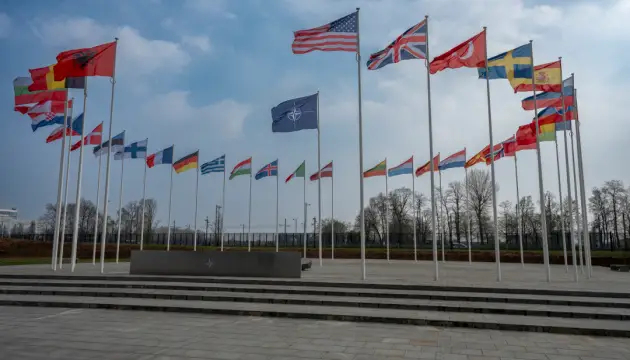
Photo: Getty Images
Helsingborg was not chosen by chance. The city lies on Sweden’s southern coast, in an area closely connected to the Baltic region and the Danish Straits. Today, the Baltic Sea is becoming one of the most sensitive spaces in European security. Since the start of Russia’s full-scale war against Ukraine, countries in the region have increasingly viewed the sea not only as a commercial route, but also as a potential arena for pressure, sabotage and hybrid operations. Damage to cables, threats to undersea infrastructure, suspicious maritime activity and the growth of military deployments have made Baltic security one of the central concerns for NATO’s northern members.
NATO itself has repeatedly emphasised that its eastern flank has been significantly strengthened from the Arctic Ocean to the Black Sea. Russia’s annexation of Crimea in 2014 and its full-scale invasion of Ukraine in 2022 radically changed Europe’s security environment. Moscow’s actions against NATO members and partners have included airspace violations, cyberattacks, disinformation, sabotage and pressure on critical infrastructure. In this context, the Alliance’s northern expansion is not an abstract geopolitical shift; it is a direct response to a security environment that has become more dangerous and unpredictable.
That is why NATO’s new defensive line in Northern Europe cannot be reduced to troop deployments or military exercises alone. It is a much broader system. It includes the protection of ports, airfields, energy facilities, maritime cables, pipelines, transport corridors and digital infrastructure. In the 21st century, conflict may begin not only with tanks crossing a border, but also with a damaged cable on the seabed, a cyberattack on an energy network or a provocation in the airspace of a NATO member. Northern Europe understands this risk very clearly.
The Arctic is acquiring particular importance in this new equation. The region is no longer viewed solely through the lens of climate, science and natural resources. It is becoming a theatre of strategic competition, where questions of sea routes, military infrastructure, energy, submarine activity and control over northern communications intersect. The accession of Finland and Sweden has strengthened NATO’s position in the High North and given the Alliance greater strategic depth in the Arctic.
Russia retains significant military capabilities in the north, including the Northern Fleet, bases, air assets, submarines and Arctic infrastructure. For NATO, this means it cannot simply observe the region from a distance. It must build a permanent system of presence, surveillance and rapid response. The High North is becoming one of the areas where deterrence must be credible not only on paper, but also in practice.
Sweden is emerging as one of the central links in this new configuration. Its geography allows NATO to connect the Baltic Sea, Northern Europe and the Arctic into a more coherent defence system. Swedish territory, ports, airfields, naval capabilities and the island of Gotland are all gaining greater strategic weight. Gotland, located in the Baltic Sea, has long been regarded by military analysts as a crucial point in the regional balance of power. Any serious discussion of Baltic security is impossible without the Swedish factor.
Finland is equally important. Its accession to NATO significantly increased the Alliance’s land border with Russia and strengthened the northeastern flank. Together, Sweden and Finland are turning Northern Europe into a denser and more integrated defence space. In the past, the Baltic states were often seen as a vulnerable NATO outpost, geographically exposed and dependent on reinforcement from elsewhere in Europe. Now, their security is increasingly linked to the northern flank through Sweden, Finland, Norway and Denmark.
Against this background, the Helsingborg meeting may amount to more than a diplomatic event. It will likely serve as a political signal that NATO’s northern strategy is entering a new phase. Northern and Baltic countries have already made their priorities clear: stronger European defence readiness, higher defence spending, closing critical capability gaps, expanding military production, improving military mobility and sustaining support for Ukraine. These are not separate issues, but elements of a broader strategy designed to make NATO’s northern flank more resilient and harder to pressure.
Photo: Getty Images
The Russian factor remains the central explanation for much of what is happening. NATO is not simply adapting to a changing map; it is seeking to build a northern deterrence system that would make any attempt to pressure the Baltic states, Scandinavia or the Arctic region too risky for Moscow. This does not mean war is inevitable. On the contrary, NATO’s logic is based on the idea that strong defence prevents conflict. But for deterrence to work, the defensive line must be visible, coherent and politically credible.
This is the real meaning of the new northern security architecture. NATO is not preparing a single base or an isolated military operation. It is building a defensive arc from the Baltic to the Arctic. Sweden is becoming one of its central hubs. Finland is strengthening the land dimension. Norway and Denmark are serving as maritime and Arctic anchors. The Baltic states remain the forward political and military line of deterrence.
(If you possess specialized knowledge and wish to contribute, please reach out to us at opinions@news.az).
此内容由惯性聚合(RSS阅读器)自动聚合整理,仅供阅读参考。 原文来自 — 版权归原作者所有。