





Editor’s note: Ahmet Sağlam is a specialist in business development, sales and marketing, B2B collaboration, and corporate communication. Most recently, he served as Business Development and International Relations Coordinator at the Hacettepe University Technology Development Zone. The views expressed are those of the author and do not necessarily reflect the views of News.Az.
It appears that the administrations of Xi Jinping and Donald Trump are seeking to move towards a model of “controlled competition and mandatory cooperation” rather than direct confrontation. In particular, the two leaders’ emphasis on “constructive strategic stability” may be interpreted as recognition that China and the United States will continue to remain rivals.
However, neither side wants this rivalry to escalate into war or economic decoupling. It may also be seen as an acknowledgment by both parties that they are obliged to manage the global system together.
When Trump’s visit to China is assessed in the context of economics and trade, it becomes clear that Xi Jinping adopts the view that “economic relations are mutually beneficial, and equal negotiation is the only correct path.” Xi’s emphasis that the trade talks produced “positive and balanced results”, together with the desire for American companies to continue investing in China, further supports this approach. Trump, meanwhile, appears to encourage American companies to expand cooperation with China. Within this framework, it may be argued that China seeks to preserve its manufacturing power, while the United States aims to maintain its superiority in capital, technology, and global finance.
At the same time, both sides appear to recognise that a possible economic war would seriously damage not only their own economies but also the global economy.
Beyond economics, China’s principal message appears to be: “We do not want war with the United States” and “A new model of major-power relations should be established.” It is also understood that the US side does not entirely reject this approach; rather, both parties appear willing to find common ground on keeping military communication channels open, maintaining diplomatic contacts, and establishing crisis-management mechanisms.
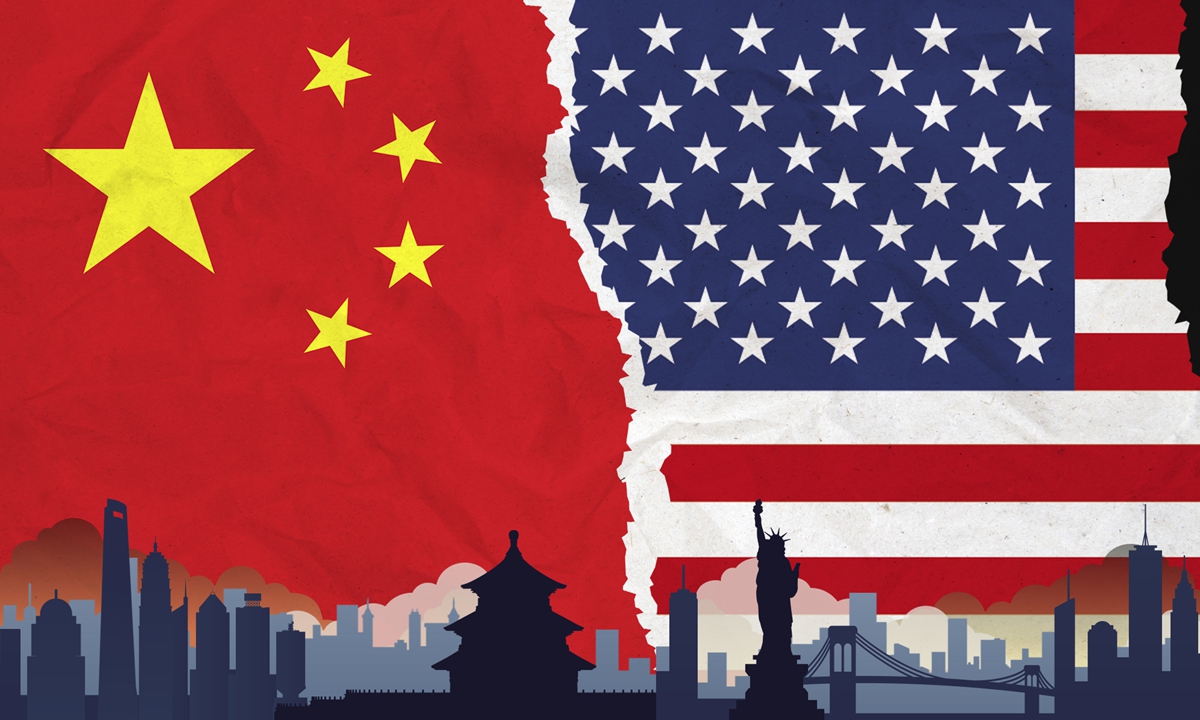
Source: globaltimes
The Taiwan issue stands out as the most sensitive topic. Xi Jinping strongly emphasises that Taiwan is the most important issue in China–US relations and that mismanagement of the matter could lead to conflict. However, upon closer examination, it appears that China, rather than issuing a direct threat of war, is conveying the message that “the United States should act cautiously.” The fact that the US side also refrains from using openly confrontational language on Taiwan demonstrates that both sides currently seek to avoid direct military confrontation.
If the US-Israel-Iran war were to drift into a stalemate similar to the Russia–Ukraine war, it could be expected that Trump would attempt to encourage the Beijing administration to persuade Tehran to reach an agreement with Washington. This is because China purchases a significant portion of Iran’s oil that remains under US sanctions. When Trump’s visit to China is evaluated, it appears that such discussions have gained further momentum. Nevertheless, Trump also appears to argue that China’s support is not necessary regarding Iran.
Source: Persu Media
At the same time, when the reports published by China’s official institutions regarding the meeting are examined, the expressions “world stability” and “future of humanity” convey a message concerning the emerging multipolar world order. China believes that the US-centred unipolar order is weakening; however, it is understood that Beijing wants the transition process to proceed in a controlled manner. The United States, meanwhile, appears to recognise that it cannot completely contain China, but instead seeks to manage its rise through balancing. Therefore, it may be argued that relations between the two countries are evolving not towards full alliance or outright hostility, but rather towards a model of “managed competition”.
Indeed, the world appears to be moving increasingly towards a multipolar international order. For example, during the Türkiye–Kazakhstan High-Level Strategic Cooperation Council meeting held on 14 May 2026, emphasis was also placed on the multipolar world, with references made to the doctrine frequently voiced by Recep Tayyip Erdoğan in international affairs: “The world is bigger than five.”
Nevertheless, attributing excessive significance to the US visit to China may not be entirely realistic. It may be argued that, through this visit, the parties were testing one another, while Trump was also seeking a way out of tensions with Iran, particularly in light of the approaching US elections. In addition, it is noteworthy that one of the rare issues on which the United States, China, and Europe appear to have reached consensus is the Middle Corridor. China is seen to be offering substantial investments and incentives for the Middle Corridor, while the United States is attempting to become involved in the process by approaching the Zangezur Corridor project as the “Trump Route”.
In this context, it may be argued that, apart from climate change, the Middle Corridor has become one of the strategic issues on which international actors have reached the broadest level of consensus on a global scale.
(If you possess specialized knowledge and wish to contribute, please reach out to us at opinions@news.az).
此内容由惯性聚合(RSS阅读器)自动聚合整理,仅供阅读参考。 原文来自 — 版权归原作者所有。
