


In this interview with News.Az, Tajik political scientist Muhammad Shamsuddinov analyses key aspects of Tajikistan’s foreign policy and its evolving relations with major global and regional actors.
The discussion focuses on Tajik President Emomali Rahmon’s recent state visit to China, the growing strategic and economic partnership between Dushanbe and Beijing, and the broader implications of shifting geopolitical dynamics in Central Asia.
Shamsuddinov also assesses Tajikistan’s position within the foreign policy frameworks of the United States and China, the potential impact of regional tensions involving Iran on Tajikistan’s economy, and the current trajectory of Tajikistan–Azerbaijan relations.
– Tajik President Emomali Rahmon paid a state visit to China on 11–14 May at the invitation of Chinese President Xi Jinping. How do you assess the results of this visit?
– I would like to elaborate in detail on Tajik–Chinese relations, as this is essential for understanding the significance of the visit. China is a strategic and highly important partner for Tajikistan. I would go as far as to describe it as a vital partner, and there are several reasons for this assessment.
First and foremost, China, in its broader Central Asia strategy, pays close attention to all five countries of the region. This can be contrasted with the United States, which primarily prioritises Kazakhstan and Uzbekistan due to their larger economic potential and more significant markets, while countries such as Tajikistan tend to remain more on the periphery of US regional policy. A similar pattern can be observed, to some extent, in the European Union’s approach as well.
In contrast, China’s strategy integrates all Central Asian states more closely. Beijing actively invests in Tajikistan’s economy and participates in a wide range of infrastructure projects. From this perspective, China is seen as highly attractive to Tajikistan.
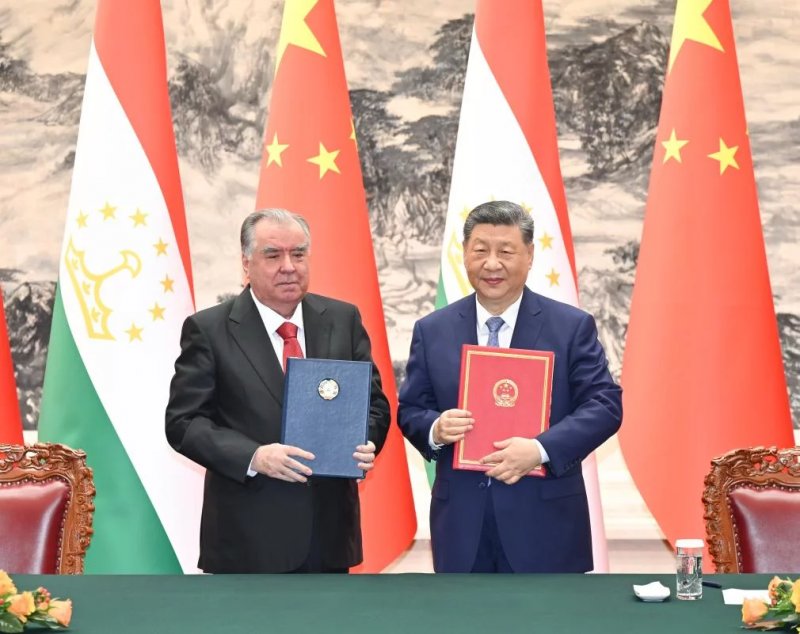
Source: Xinhua
Another important point, applicable to all Central Asian countries, is that China does not interfere in their internal affairs. Beijing does not condition its investments or loans on political changes or any form of political conditionality. As a result, Central Asian elites, including those in Tajikistan, tend to view Chinese partners as more predictable, reliable and attractive.
The level of bilateral relations is also reflected in economic indicators. In 2017, China became Tajikistan’s largest investor, and by 2025 it had become its largest trading partner, overtaking Russia in both categories. Security cooperation is also expanding. For instance, in March this year, China allocated $60 million to Tajikistan for the construction of nine border facilities along the Tajik–Afghan border. In this context, the Tajik president’s visit to China can be seen as part of efforts to further deepen bilateral relations.
During the visit, approximately 50 documents worth a total of $8 billion were signed, a substantial figure for Tajikistan. Such large-scale agreements are not frequently concluded by the country. By comparison, during Emomali Rahmon’s visit to Washington last November, agreements worth more than $3 billion were signed with the United States.
In addition, Emomali Rahmon held a series of meetings with China’s political leadership, including Premier Li Qiang, and held high-level talks with President Xi Jinping. Among the signed documents was the Treaty of Eternal Friendship and Good-Neighbourliness. The signing of such a treaty demonstrates the parties’ intention to further deepen and strengthen their strategic relations. It also signals a long-term framework for bilateral cooperation between Tajikistan and China.
As noted earlier, this document reflects mutual intentions on both sides and suggests that relations will continue to deepen over time.
Incidentally, trade turnover between Tajikistan and China has been growing rapidly, exceeding $790 million in the first quarter of 2026. By comparison, total trade turnover in 2025 amounted to $964 million. It is therefore highly likely that bilateral trade will increase further this year.
– In April, the United States announced the S7+ (Silk Seven Plus) initiative, which envisages regional integration among Central Asian countries. On 28–29 April, Sergio Gore, the US President’s Special Envoy for South and Central Asia, paid a two-day visit to Tajikistan. What value does Tajikistan represent for the United States?
– Continuing the point made in response to the first question, I would reiterate that China’s Central Asia strategy encompasses all five countries of the region. The United States, however, tends to focus primarily on Kazakhstan and Uzbekistan, given their political weight and substantial economic potential.
Sergio Gore visited Tajikistan at the end of April as part of a broader regional tour that began last October. Prior to Tajikistan, he visited Kazakhstan and Uzbekistan, and earlier this year he also travelled to Kyrgyzstan and Turkmenistan, with Tajikistan as his final stop. On the one hand, this suggests that Tajikistan remains somewhat peripheral in US Central Asia policy. On the other hand, it indicates that Washington is aware of this and is attempting to give Tajikistan greater attention.
Overall, I believe Gore’s visits are aimed at assessing regional dynamics in order to facilitate greater US business engagement in Central Asia. It is still difficult to assess the full extent of US interest in Tajikistan, and time will show how Washington develops its approach further. However, Gore’s visit to Dushanbe may indicate an attempt by the United States to adjust its Central Asia strategy and place greater emphasis on Tajikistan.
– The situation surrounding Iran remains tense and largely uncertain. How is this affecting Tajikistan?
– Trade turnover between Tajikistan and Iran decreased slightly in March this year. Tajik exports to Iran declined, while Iranian exports increased modestly.
Overall, Tajikistan places significant hopes on access to Iranian ports, and the current situation in the Strait of Hormuz is not in Dushanbe’s interests.
In other words, developments surrounding Iran could affect not only bilateral trade but also investment inflows into Tajikistan’s economy and the export of Tajik goods to global markets. One can only hope that this crisis, which is affecting many countries, will be resolved soon.
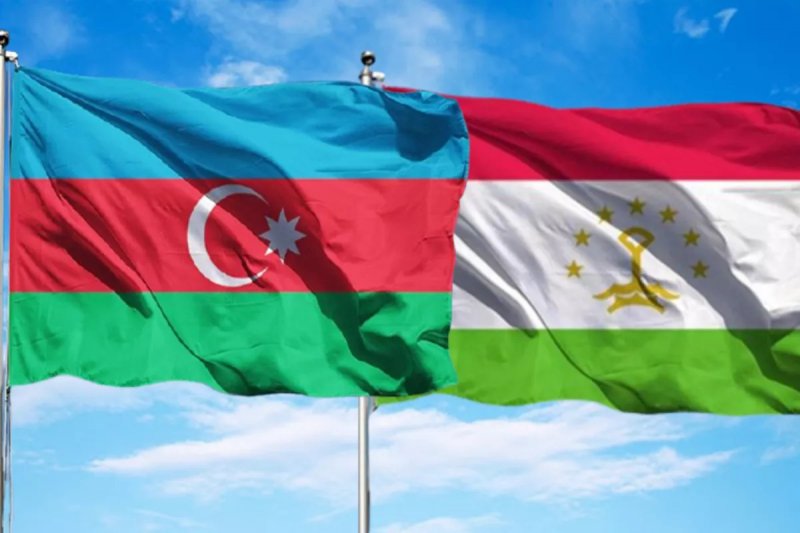
Source: Azernews
– 29 May marks 34 years since the establishment of diplomatic relations between Tajikistan and Azerbaijan. How would you assess the current level of bilateral relations?
– Tajikistan–Azerbaijan relations can be described as consistently friendly, with a clear orientation towards further deepening. Azerbaijan is currently pursuing a more active policy in Central Asia, and the development of relations between Dushanbe and Baku should be viewed in this context.
Although the two countries do not yet have the level of extensive economic cooperation seen in relations with Russia or China, both sides demonstrate a clear commitment to expanding ties, increasing trade and attracting investment. For example, Tajikistan has significant hydropower potential, which could be of interest to Azerbaijan, especially in light of discussions on exporting electricity from Central Asia to Europe.
Overall, the key factor is Azerbaijan’s growing engagement in Central Asia, which is likely to further strengthen relations between Baku and Dushanbe. Last year, Azerbaijan joined the format of consultative meetings of Central Asian heads of state, where key regional issues are discussed. Within this framework, Central Asian countries are deepening cooperation and coordinating efforts to address both regional and global challenges. Azerbaijan’s participation also strengthens its cooperation with Central Asian states in general and Tajikistan in particular.
In this sense, bilateral relations are gradually deepening, while multilateral formats allow the countries to coordinate foreign policy positions and potentially develop common approaches to regional and global issues.
Economic relations between Azerbaijan and Tajikistan are also developing actively. Although trade turnover is not yet large, both sides are working towards building a more sustainable model of cooperation, which will have a positive impact in the future.
此内容由惯性聚合(RSS阅读器)自动聚合整理,仅供阅读参考。 原文来自 — 版权归原作者所有。