






Editor’s note: Seymur Mammadov is a special commentator for News.Az and the director of the international expert club EurAsiaAz. The article reflects the author’s personal opinion and does not necessarily represent the views of News.Az.
The deal between the United States and Iran, signed after months of military escalation and crisis around the Strait of Hormuz, may appear to be a Middle Eastern story. But its consequences extend far beyond the Persian Gulf. For the South Caucasus — Azerbaijan, Armenia and Georgia — this is not merely a diplomatic headline. It is a development that could reshape regional security, transport routes, energy calculations and the balance among major powers, including the United States, Iran, Russia, Türkiye, the European Union and China.
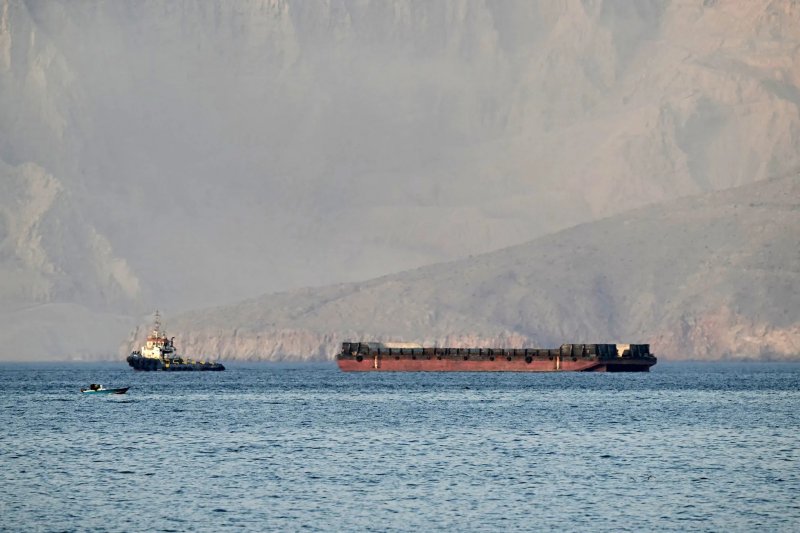
The core of the agreement is that Washington and Tehran have gained a 60-day window to move from a ceasefire towards a more durable arrangement. Under the interim memorandum, Iran is expected to ensure free commercial navigation through the Strait of Hormuz, while the United States is to begin lifting the naval blockade of Iranian ports and complete the process within 30 days. At first glance, this appears to concern only oil tankers and security in the Persian Gulf. In reality, however, stability in Hormuz affects the entire Eurasian transport system — from the Indian Ocean to the Caspian and the Black Sea.
Around 20 million barrels of oil per day pass through the Strait of Hormuz, roughly one-fifth of global petroleum liquids consumption. When this route comes under threat, markets immediately begin looking for alternatives: land corridors, the Caspian Sea, the South Caucasus, Türkiye and the Black Sea. That is why the crisis around Iran sharply increased the importance of the Middle Corridor — the route linking China, Central Asia, the Caspian Sea, Azerbaijan, Georgia, Türkiye and Europe. Following the deal, pressure on this route may temporarily ease, but its strategic importance has already become clear.
For Azerbaijan, this creates a complex but advantageous situation. On the one hand, reduced tensions around Iran lower the risk of the crisis spreading north of the Iranian border. This matters greatly for Baku: Azerbaijan shares a long border with Iran, has significant energy and transport interests, and remains highly sensitive to any conflict that could affect the Caspian region. On the other hand, the crisis itself has demonstrated to the West how important Azerbaijan is as a secure transit hub between Central Asia and Europe.
 Source: Bloomberg
If the Middle Corridor was once viewed mainly as a promising long-term project, it is now increasingly seen as a practical alternative to routes dependent on Russia, Iran or vulnerable maritime chokepoints. After Russia’s war against Ukraine, the northern route through Russia became politically toxic for many Western companies. After the Hormuz crisis, the southern maritime route through the Persian Gulf also exposed its vulnerability. Against this backdrop, the route through the Caspian and the South Caucasus looks less like a regional project and more like part of a new architecture of Eurasian trade.
Recent figures show that the Middle Corridor has already moved beyond the stage of political rhetoric. In 2024, cargo traffic along the route through the Caspian grew by more than 63%, reaching around 4.1 million tonnes. For comparison, before Russia’s full-scale invasion of Ukraine, volumes on this route were estimated at roughly 500,000 tonnes. In other words, in just a few years the corridor has expanded more than eightfold and become one of the main beneficiaries of the restructuring of Eurasian logistics.
The growth in container traffic is especially important. In 2025, around 77,000 TEU were transported via the Trans-Caspian International Transport Route, while the target for 2029 is 300,000 TEU. This means the corridor’s participants expect container traffic to almost quadruple within a few years. Containers matter not only as a statistical indicator; they show that the corridor is gradually moving beyond raw-material logistics towards more sophisticated trade between China, Central Asia, the South Caucasus and Europe.
The growth has continued into 2026. In May 2026, container traffic on the Caspian route between Aktau and Alat/Baku exceeded 7,451 TEU, more than double the May 2025 figure of 3,359 TEU. This is particularly significant for Azerbaijan. Baku is becoming not only an energy centre but also the key Caspian gateway of the Middle Corridor. The Port of Alat, railway infrastructure, ferry links across the Caspian and connections with Georgia are turning the country into one of the most important logistics hubs between China and Europe.
Azerbaijan’s role is also being strengthened by Chinese cargo flows. In the first 11 months of 2025, Azerbaijan Railways handled 350 block trains from China passing through Central Asia, including 128 transit trains. That was 34% more than in the same period a year earlier. These figures show that China is no longer merely considering the Middle Corridor as a backup route; it is gradually increasing its practical use.
The long-term potential is even greater. The World Bank estimates that, with the right investments and reforms, freight volumes along the Middle Corridor could reach 11 million tonnes by 2030. Its modelling also forecasts a 37% increase in trade among Azerbaijan, Georgia and Kazakhstan, and a 28% increase in their trade with the EU by 2030. This means the issue is not only transit, but also deeper economic integration between the South Caucasus, Central Asia and Europe.
For Georgia, the US–Iran deal also matters. Georgia remains the South Caucasus’s key outlet to the Black Sea. If Baku is the Caspian gateway of the route, then Tbilisi and Georgia’s ports are its western extension. Any strengthening of the Middle Corridor increases Georgia’s transit value, but it also requires political predictability and investment in ports, railways, customs infrastructure and digital logistics. The crisis around Iran has shown that a route becomes truly strategic only when it can absorb additional volumes quickly.
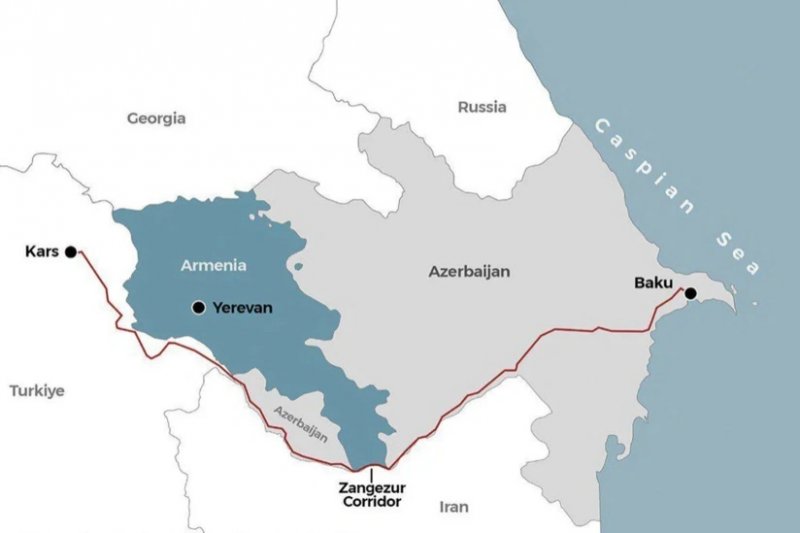
Armenia is in a more difficult position. On the one hand, de-escalation between the United States and Iran reduces the risk of the Armenian-Iranian border coming under military or sanctions pressure. For Yerevan, Iran remains an important southern window, especially given its history of tensions with Azerbaijan and Türkiye. On the other hand, if regional logistics increasingly revolve around Azerbaijan, the Caspian and Türkiye, Armenia risks remaining outside the main transit flows. That is why the unblocking of communications and a peace agreement with Baku are becoming even more important for Yerevan.
If communications between Azerbaijan and Armenia are unblocked, the region could gain additional logistical connectivity. But if the political settlement drags on, the main routes will continue to bypass Armenia through already functioning corridors. In this sense, the US–Iran deal indirectly increases pressure on Yerevan: regional logistics are accelerating, and the window of opportunity will not remain open indefinitely.
There is also an energy dimension. If Hormuz stabilises, global oil prices may lose part of their war-risk premium. This benefits consumers but creates a more complex pricing environment for exporting countries. Azerbaijan, as a producer of oil and gas, is interested not in chaos but in predictability. Excessive turbulence may temporarily lift prices, but it also deters investors, increases insurance costs and creates risks for infrastructure. For Baku, the more favourable scenario is one in which the South Caucasus strengthens its role as a stable energy and logistics bridge rather than becoming a zone of renewed military uncertainty.
 Source: AIR Center
The US–Iran deal also changes the diplomatic balance. If Washington returns to active diplomacy with Tehran, the South Caucasus will gain more room for manoeuvre. Azerbaijan can strengthen its role as a link between Central Asia, Türkiye, Europe and the Middle East. Georgia can promote its importance as a Black Sea transit hub. Armenia can try to use the easing of tensions around Iran to pursue calmer regional integration. But all of this is possible only if the 60-day window does not end in renewed escalation.
The risks remain high. The deal does not finally resolve the Iranian nuclear issue, eliminate tensions between Israel and Iran, address the issue of Tehran’s allied forces in the region or guarantee that Hormuz will remain open after the interim period. If the agreement collapses, the impact will be felt not only in the Persian Gulf and oil markets. The South Caucasus would again come under pressure through energy prices, cargo insurance, sanctions risks, migration flows and the diplomatic expectations of major powers.
The main conclusion for the South Caucasus is clear: the US–Iran deal does not automatically make the region safer, but it provides a strategic pause. During this pause, Azerbaijan, Georgia and Armenia need to recognise that their importance in Eurasia is growing precisely because old routes are becoming less reliable. Hormuz has exposed the vulnerability of maritime chokepoints. The war in Ukraine has exposed the risks of the northern route through Russia. Now the Caspian and the South Caucasus have an opportunity to consolidate their position as one of the key bridges between East and West.
But opportunity is not a guarantee. If the region fails to accelerate infrastructure projects, reduce political risks and strengthen the peace agenda, this historic moment could be missed. The US–Iran deal has opened a temporary window not only for the Middle East but also for the South Caucasus. The question is whether the region can seize it before the next crisis changes the rules of the game once again.
(If you possess specialized knowledge and wish to contribute, please reach out to us at opinions@news.az).
此内容由惯性聚合(RSS阅读器)自动聚合整理,仅供阅读参考。 原文来自 — 版权归原作者所有。