






Russian President Vladimir Putin’s visit to China on 19–20 May was not merely another bilateral meeting with Chinese leader Xi Jinping. Its main purpose was to demonstrate that, following the high-profile visit by US President Donald Trump, Beijing is not changing its strategic course and is unwilling to sacrifice its partnership with Moscow for a deal with Washington. Whatever Beijing may actually think about this, Moscow clearly enjoys showcasing its importance and rarely misses an opportunity to do so.
The Kremlin also wanted to show that efforts to isolate Russia internationally have failed. Amid Western sanctions and political pressure, it is critically important for Moscow to demonstrate that it still has major partners prepared to maintain economic ties. In this regard, China has effectively become Russia’s main foreign economic anchor. Today, China is the largest buyer of Russian oil and one of the key suppliers of electronics and equipment to the Russian market.
As is well known, Chinese foreign policy is rooted in a civilisation and political philosophy that is thousands of years old. Few have managed to fully understand its logic. Following Trump’s historic three-day visit, Putin’s trip provided Beijing with an opportunity to demonstrate that it remains in control of its own foreign policy and acts according to its own strategic interests. The Russian president sought to draw attention to himself, but ultimately ended up playing by China’s rules. Xi Jinping, meanwhile, signalled that China intends to act as an independent centre of power rather than align itself fully with either side.
Analysts also believe that Beijing uses its relationship with Moscow as leverage in its dealings with Washington. The greater the pressure from the United States on China, the more important it becomes for Xi to preserve strong ties with Russia. At the same time, China continues trying to maintain a careful balance, and so far it has largely succeeded.
Initially, according to Current Time, Putin’s visit was planned as a two-day trip, but in reality it lasted only 11 hours. During the visit, the two sides signed 40 bilateral documents, including a declaration on the establishment of a multipolar world and a new type of international relations.
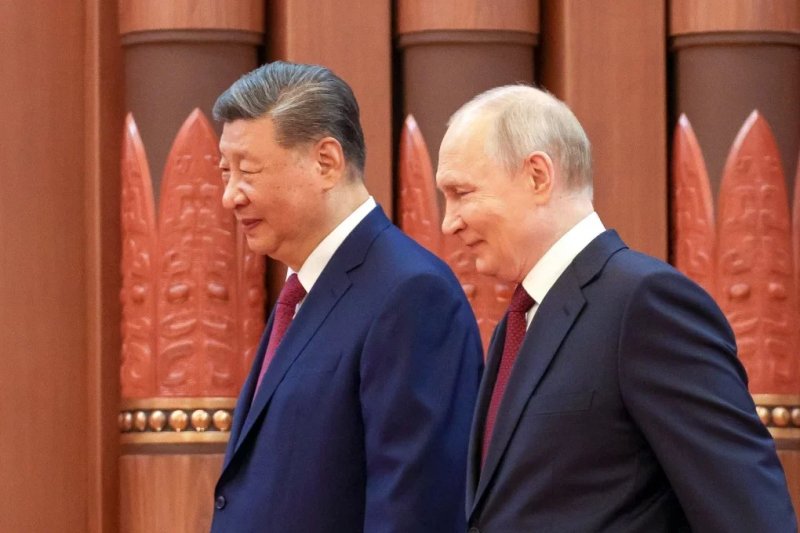
Photo: EPA/ Sputnik/ Kremlin Pool
Current Time noted that none of the signed documents included an agreement on the construction of the Power of Siberia 2 gas pipeline. The project is critically important for Russia, and many expected Putin’s trip to focus heavily on it. According to Bloomberg, Moscow had hoped instability in the Middle East would encourage Beijing to seriously consider alternative supplies of Russian gas and oil, making China more flexible regarding future energy purchases. However, this evidently did not happen.
Another point that attracted widespread attention was the absence of a press conference by Putin following the visit, suggesting that no concrete agreements had been reached on the most important issues.
In essence, the Russian president’s visit, coming immediately after Trump’s trip, was largely symbolic.
The key difference between Trump’s and Putin's visits lay in the nature of their respective relationships with China.
The details of what Trump and Xi discussed were not widely publicised. Most of the information released was general in nature, making it difficult to assess whether Washington achieved its objectives. However, the lack of progress on the Power of Siberia 2 pipeline allows some conclusions to be drawn.
Trump’s visit appeared to be an attempt to “reset” US-China dialogue after months of trade disputes, mutual tariffs and tensions over Taiwan. The talks were pragmatic and focused on trade, supply chains, technology and security issues in Asia. However, the two sides announced virtually no major breakthrough agreements. Both Chinese and Western media noted that the meeting took place in an atmosphere of caution and mutual distrust.
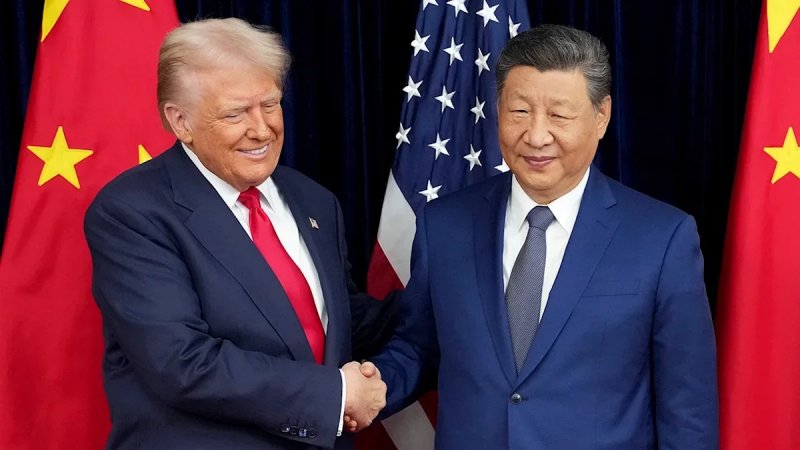
Credit: aol.com
Putin, by contrast, did not travel to China to negotiate relations from scratch, but rather to reaffirm an already existing strategic partnership. As a result, the tone of the visit was markedly different: deliberately warm, ideologically charged and openly anti-Western. Joint statements once again referred to a “multipolar world”, opposition to “hegemony”, and coordination on the international stage, as Euronews noted.
According to analysts, the symbolism of the visit was no less important than its practical outcomes. First, Putin arrived in Beijing immediately after Trump. The Kremlin officially denied any connection between the two visits, yet the sequence itself appeared to send a clear diplomatic signal. Second, the Chinese side organised the highest possible level of reception for Putin and repeatedly emphasised the “special relationship” between the two countries.
As Novaya Gazeta Europe pointed out, while the US president was greeted by Chinese Vice President Han Zheng, Putin was welcomed by Foreign Minister Wang Yi. Formally, Han Zheng ranks higher in the state hierarchy, but in practice Wang Yi’s influence within the Communist Party apparatus is considerably greater, as he is a member of the Communist Party Politburo.
The practical results of the visit were also evident, although no major breakthroughs were achieved.
Russian media report that Russia and China have increasingly conducted trade in national currencies in recent years. By the end of 2024, the share of settlements conducted in roubles and yuan had approached 90 per cent. In 2026, the two countries discussed further expansion of energy and industrial cooperation, including gas and oil supplies, nuclear energy and joint infrastructure projects. As for Power of Siberia 2, Beijing continues to negotiate cautiously, seeking favourable pricing terms while avoiding final commitments.
Both Washington and Moscow want a power such as China on their side. Putin would likely have travelled to Beijing after Trump even if there had been no major items on the bilateral agenda.
Each side pursued its own objectives. According to Euronews analysts, Trump attempted through negotiations to weaken the growing rapprochement between Moscow and Beijing. Putin, meanwhile, came to demonstrate the opposite — that the Russia-China partnership remains intact and continues to be one of the key pillars of the emerging world order. Judging by Xi Jinping’s rhetoric, China has no intention of changing this course for now.
In any case, this simultaneous geopolitical contest appears to have been won by Xi Jinping. At this stage, few dispute that conclusion.
By Tural Heybatov
此内容由惯性聚合(RSS阅读器)自动聚合整理,仅供阅读参考。 原文来自 — 版权归原作者所有。