惯性聚合 高效追踪和阅读你感兴趣的博客、新闻、科技资讯
阅读原文 在惯性聚合中打开

推荐订阅源

S
Schneier on Security
cs.AI updates on arXiv.org
T
Threat Research - Cisco Blogs
C
Cyber Attacks, Cyber Crime and Cyber Security
C
CXSECURITY Database RSS Feed - CXSecurity.com
A
Arctic Wolf
Security Latest
Security Latest
Simon Willison's Weblog
I
Intezer
cs.CV updates on arXiv.org
T
Troy Hunt's Blog
Latest news
Latest news
Help Net Security
Help Net Security
S
Security Affairs
Webroot Blog
Webroot Blog
The Hacker News
The Hacker News
AI
AI
cs.CL updates on arXiv.org
T
Tor Project blog
Forbes - Security
Forbes - Security
Google DeepMind News
AWS News Blog
AWS News Blog
Attack and Defense Labs
P
Proofpoint News Feed
www.infosecurity-magazine.com
H
Help Net Security
L
Lohrmann on Cybersecurity
S
SegmentFault 最新的问题
Google Online Security Blog
MongoDB | Blog
MongoDB | Blog
Cyberwarzone
Cyberwarzone
The Last Watchdog
The Last Watchdog
S
Securelist
N
News and Events Feed by Topic
S
Secure Thoughts
F
Fortinet All Blogs
博客园_首页
C
Cybersecurity and Infrastructure Security Agency CISA
量子位
M
MIT News - Artificial intelligence
F
Full Disclosure
T
The Blog of Author Tim Ferriss
T
Tailwind CSS Blog
Recent Commits to openclaw:main
Microsoft Security Blog
I
InfoQ
P
Privacy International News Feed
L
LangChain Blog
Know Your Adversary
Know Your Adversary
C
CERT Recently Published Vulnerability Notes

PYMNTS.com

Crypto Payments Are Back. Will Merchants Actually Care This Time? B2B’s New Battlefield Is Everything Before the Button Amazon Targets the GLP-1 Gap Big Pharma Left Open LendingClub Signals Expanded Capabilities With Happen Bank Rebrand Congress Moves to Give FinTechs Direct Fed Payment Access Microsoft Tests Mythos to Identify and Mitigate Vulnerabilities United Airlines Hikes Fares as Fuel Costs Surge OpenAI Images 2.0 Is a Real Leap With a Real Price Tag Morgan Stanley Says Gaming Could Score $22 Billion With AI FTC Shuts Down Alleged Healthcare Fraud Scheme Sam’s Club Offers eCommerce Shoppers Hour-or-Less Deliveries FinTechs Cut Staff as AI and Margins Redefine Growth JPMorganChase Extends Critical Industries Investment Program to Continental Europe OpenAI Lands $75 Million Investment From Robinhood Ventures House Bill Would Reduce Small Lenders’ Reporting Requirements Coinbase Lists tGBP to Expand Locally-Denominated Stablecoin Access BNY Names New Head for Payments/Trade Client Platform KnowBe4 Automates Global Cash Flow Via Flywire Partnership Treasury Calls for Programmable Financial Enforcement Across Crypto DeepSeek Seeks $20 Billion Valuation as Tech Giants Weigh Investment Google Accelerates Agentic AI Shift With New Enterprise Platform OpenAI Begins Briefing Governments on Cybersecurity Capabilities DeFi Security Suffers New Blow With $3 Million Volo Exploit Uninvited Users Access Anthropic’s Mythos AI Model Block and Uber Expand Partnership Across Several Global Markets OpenAI Pledges $1.5 Billion to PE Enterprise AI Project Podcast: Inside the $9 Billion DeFi Hack That’s Shaking Crypto’s Foundations Synchrony CFO Flags Momentum in Spending and Credit Banks Risk Slowing the Emerging Middle Market Firms Driving Growth Paysafe Expands Digital Wallet Availability Across 18 European Markets Bad Data Can Break Good AI in Payments 50% More Digital Shopping Days Put Parents at the Center of Retail’s Shift 65% Call Insurance Essential. Why Most Spending Isn’t So Clear-Cut Amazon Recasts Marketplace Fraud as a Broader Trust Problem Capital One’s Q1 Shifts Attention From Spending to Strategy Lawmakers Question JetBlue About Surveillance Pricing Allegations Payments Modernization Is Insurance’s Next Big Margin Engine How Visa Is Rewiring Bank Infrastructure for the AI Era Instant Payments Grow but the Real Barrier Is Human The Old-School Card Product Banks May Need Most 43% of SMBs Would Pay to Make Purchases in Installments The Real AI Edge in Payments Comes From Better Judgment In the Age of Agentic AI, Data Control Is Power Verizon’s Dan Schulman Tells CEOs to Be Open About AI Job Cuts Walmart Eyes Stores as Warehouse Space for Same-Day Delivery France’s CB Payments Network Aims to Take on Visa/Mastercard in EU QVC Was TikTok Shop Before TikTok Shop Loop Raises $95 Million to Bridge Supply Chain Data Gap Cursor Eyes $50 Billion Valuation as AI Coding Demand Surges Commercial Lending Rescues Regional Banks From Consumer Slowdown Anthropic and White House Aim to Make Peace in Friday Meeting Home Depot Buys SIMPL Automation to Support Same-Day Delivery The Riskiest Words in B2B: This Is How We’ve Always Done It France Urges Euro Stablecoins to Break Dollar Dependency Importers Prep for Monday Opening of Tariff Refund Portal Permitting Hurdles and Labor Shortages Threaten AI Data Center Timelines Token Freezes Force CFOs to Rethink Stablecoin Risk X Money Tests Whether Social Commerce Can Hold Consumer Deposits Anthropic Briefs EU Regulators on Mythos Cybersecurity Concerns Welcome to Vibe Ordering, ChatGPT Is Taking Your Order Now Nvidia Says AI Can Finally Make Quantum Computing Work QVC Files Chapter 11 to Slash Debt and Pursue Growth Uber Eats Lets Customers Return Their Retail Purchases Financial Officials Sound Alarm About Anthropic’s Banking Risk 71% of Billion-Dollar Firms Face Agent Identity Threats What If Clearing Had Its Stripe Moment? OpenAI Targets Pharma Giants With Purpose-Built AI Model California Claims Amazon Punishes Sellers for Lower Prices on Other Sites CFTC Chairman Says AI Helps Agency Run More Like a Business Global Finance Chiefs Call for Mythos Information Sharing Big Bank Earnings Show Digital Activity Drives Deposits OCC Clears JPMorgan Chase After Trade Surveillance Program Upgrade Accounts Receivable Gets an AI Upgrade BNY’s AI Strategy Signals a New Era of Platform Banking Bank of England Probes AI Threats to UK Financial Stability Rising AI Adoption Is Driving Up Enterprise Costs Google Faces EU Order to Share Search Data With Rivals Delivery Robots Lead Grab’s AI Expansion Circle Chief Says China Could Issue Stablecoin in 3 to 5 Years Amex Acquires Hyper to Boost AI and Expense Management Offerings Anthropic Ready to Offer Mythos to British Banks Issuers Face a New Reality as Credit Goes Real Time How Payments Gaps Are Limiting Deposit Growth at Community Banks AI May Run Payments but Humans Still Own the Risk 90% of Millennials Feel Pressure at the Grocery Store The New Checkout Is Where the Best Offer Wins Insurance Sector’s Private Credit Ties Has Investors Concerned Oil Price Spike Erodes Small Business Confidence, NFIB Says Synctera Looks to Beef Up Compliance With Cable Acquisition Velera Launches Cloud Platform to Modernize Credit Union Tech Kraken Lands $200 Million Investment From Deutsche Börse Walmart CFO Says Marketplace Revenue Up 20% Over 2025 The US Operationalized Stablecoins This Week, But Who’s Using Them? AI Is the New Sales Associate in Physical Retail Fed Finds Stablecoins Idle, Confirms PYMNTS Usage Gap BMO Accelerates Quantum Push With New Tech Institute Bank of France Pushes EU to Rein in Non-Euro-Backed Stablecoins Perplexity Uses Plaid to Personalize Financial Insights Blackstone Accelerates Push to Lead AI Infrastructure Boom Feds Warn Major Banks of Anthropic Mythos Cyber Threat
AI Shopping Makes Context the New Payments Currency
PYMNTS · 2026-05-13 · via PYMNTS.com

 | 

AI Agents Take Commerce Beyond the Search Bar

Highlights

47% of organizations struggle with poor-quality data that limits AI decision-making effectiveness.

Issuer false declines contribute to an estimated $30 billion in lost global sales annually.

Behavioral, contextual and credential data are emerging as core inputs for agentic commerce systems.

Payments are no longer defined by moving money alone. They are defined by the quality, speed and intelligence of the data surrounding each transaction.

A new report from PYMNTS Intelligence and FIS finds issuer processing is evolving from what was traditionally a back-end utility into a “decisioning layer” that determines how payments are approved, optimized and secured in real time. Commerce itself is becoming more automated, personalized and AI-driven, especially as agentic commerce models emerge.

The report’s central finding is that not all data are equal. Historical transaction records alone are no longer sufficient for modern payments environments where AI systems increasingly initiate or influence transactions.
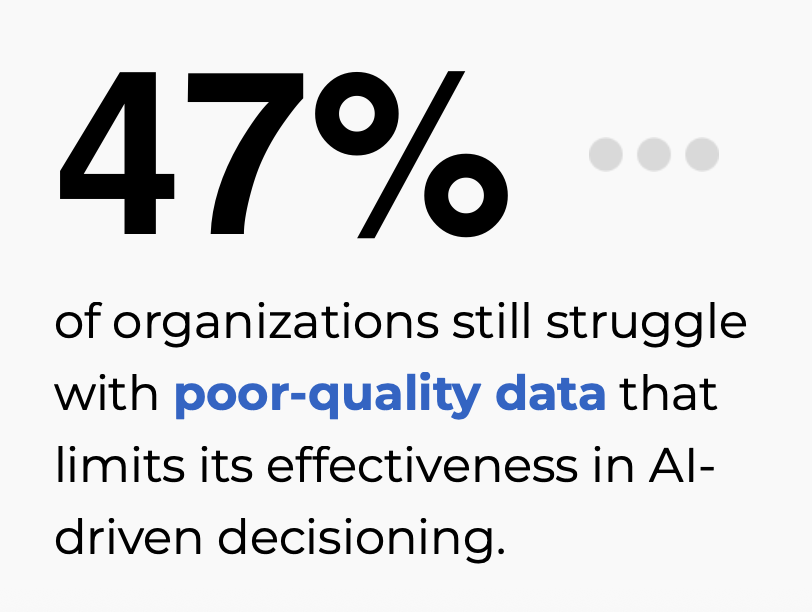
stat callout

Issuers and processors are being pushed to aggregate behavioral, contextual and real-time operational data that can improve authorization decisions, reduce fraud and minimize checkout friction.

Traditional issuer processing systems were built primarily for execution reliability and speed, according to the report. But those rules-based systems struggle in environments where transactions are increasingly shaped by contextual signals, consumer behavior and AI-enabled commerce flows. The report estimates that issuer false declines contribute to roughly $30 billion in annual lost sales globally.

From Processing Transactions to Orchestrating Decisions

That friction becomes even more problematic in agentic commerce environments, where artificial intelligence agents may eventually initiate purchases on behalf of consumers without the traditional cues associated with card-present transactions. The report notes that payments are no longer simply triggered by users but increasingly by systems acting on their behalf, elevating the importance of infrastructure capable of evaluating and authorizing those transactions in real time.

Advertisement: Scroll to Continue

The data requirements for that future are extensive. Machine learning systems rely on transaction histories, risk indicators, spending patterns, behavioral insights and contextual data to make effective decisions. The report found that 47% of organizations still struggle with poor-quality data that limits AI effectiveness in decision-making.

For agentic commerce specifically, the report points to several critical data types that will become increasingly valuable.

Behavioral data is one of the most important because artificial intelligence systems need to distinguish legitimate autonomous activity from fraud or anomalous behavior. Spending histories and transaction patterns help create models capable of recognizing when an AI agent is operating within expected consumer preferences.

Credential and authentication data also become essential. In agentic commerce, AI systems may need to validate payment credentials, apply spending controls and execute transactions without direct user intervention. That raises the stakes for identity verification and real-time authorization frameworks.

Operational and contextual data are equally important. The report notes that more modern payment data is emerging as a real-time signal of customer behavior and operational performance. That includes device information, timing patterns, merchant characteristics and ecosystem-level connectivity data that help determine whether a transaction should proceed.

The report’s findings indicate that firms capable of aggregating and activating those data streams at scale will gain a significant competitive advantage. Rather than merely processing payments, issuer platforms are evolving into orchestration layers that connect data, processing and ecosystem participants in real time.

Agentic Commerce Raises the Stakes for Data Readiness

Still, the report makes clear that many organizations are not fully prepared for the transition to data-centric payments infrastructure.

One challenge is fragmentation. Legacy systems often isolate fraud tools, authorization systems and customer data into separate silos, limiting the ability to create unified, real-time intelligence layers. Another issue is activation. Simply collecting data is no longer enough. The report emphasizes that the differentiator increasingly lies in operationalizing data into actionable insights that can improve approvals, reduce false declines and adapt dynamically to changing conditions.

To prepare for agentic commerce, the FIS and PYMNTS Intelligence report outlines several areas where organizations need to focus. Those include improving how issuer data is captured and integrated, investing in platforms that support real-time decisioning, strengthening ecosystem connectivity and leveraging AI analytics to improve fraud management and authorization outcomes.

The broader implication is that payments infrastructure is shifting from systems of record to systems of action. In an AI-driven commerce environment, the winners may not necessarily be the organizations with the most data, but those most capable of transforming fragmented information into real-time intelligence that supports autonomous, secure and frictionless transactions.