惯性聚合 高效追踪和阅读你感兴趣的博客、新闻、科技资讯
阅读原文 在惯性聚合中打开

推荐订阅源

H
Heimdal Security Blog
A
Arctic Wolf
K
Kaspersky official blog
V
Vulnerabilities – Threatpost
Threat Intelligence Blog | Flashpoint
Simon Willison's Weblog
L
LINUX DO - 热门话题
MongoDB | Blog
MongoDB | Blog
T
Threat Research - Cisco Blogs
D
Docker
爱范儿
爱范儿
T
Tenable Blog
C
Check Point Blog
B
Blog
C
Cisco Blogs
Vercel News
Vercel News
The Cloudflare Blog
T
Threatpost
NISL@THU
NISL@THU
T
Tor Project blog
V2EX - 技术
V2EX - 技术
P
Palo Alto Networks Blog
Application and Cybersecurity Blog
T
Tailwind CSS Blog
G
GRAHAM CLULEY
P
Privacy & Cybersecurity Law Blog
SecWiki News
SecWiki News
博客园 - 司徒正美
S
Security @ Cisco Blogs
GbyAI
GbyAI
S
Secure Thoughts
Microsoft Security Blog
The Register - Security
Recorded Future
Recorded Future
Cloudbric
Cloudbric
Webroot Blog
Webroot Blog
N
News and Events Feed by Topic
Y
Y Combinator Blog
博客园_首页
T
Troy Hunt's Blog
The Hacker News
The Hacker News
雷峰网
雷峰网
Google DeepMind News
U
Unit 42
AWS News Blog
AWS News Blog
PCI Perspectives
PCI Perspectives
V
Visual Studio Blog
博客园 - 聂微东
有赞技术团队
有赞技术团队
酷 壳 – CoolShell
酷 壳 – CoolShell

PYMNTS.com

Crypto Payments Are Back. Will Merchants Actually Care This Time? B2B’s New Battlefield Is Everything Before the Button Amazon Targets the GLP-1 Gap Big Pharma Left Open LendingClub Signals Expanded Capabilities With Happen Bank Rebrand Congress Moves to Give FinTechs Direct Fed Payment Access Microsoft Tests Mythos to Identify and Mitigate Vulnerabilities United Airlines Hikes Fares as Fuel Costs Surge OpenAI Images 2.0 Is a Real Leap With a Real Price Tag Morgan Stanley Says Gaming Could Score $22 Billion With AI FTC Shuts Down Alleged Healthcare Fraud Scheme Sam’s Club Offers eCommerce Shoppers Hour-or-Less Deliveries FinTechs Cut Staff as AI and Margins Redefine Growth JPMorganChase Extends Critical Industries Investment Program to Continental Europe OpenAI Lands $75 Million Investment From Robinhood Ventures House Bill Would Reduce Small Lenders’ Reporting Requirements Coinbase Lists tGBP to Expand Locally-Denominated Stablecoin Access BNY Names New Head for Payments/Trade Client Platform KnowBe4 Automates Global Cash Flow Via Flywire Partnership Treasury Calls for Programmable Financial Enforcement Across Crypto DeepSeek Seeks $20 Billion Valuation as Tech Giants Weigh Investment Google Accelerates Agentic AI Shift With New Enterprise Platform OpenAI Begins Briefing Governments on Cybersecurity Capabilities DeFi Security Suffers New Blow With $3 Million Volo Exploit Uninvited Users Access Anthropic’s Mythos AI Model Block and Uber Expand Partnership Across Several Global Markets OpenAI Pledges $1.5 Billion to PE Enterprise AI Project Podcast: Inside the $9 Billion DeFi Hack That’s Shaking Crypto’s Foundations Synchrony CFO Flags Momentum in Spending and Credit Banks Risk Slowing the Emerging Middle Market Firms Driving Growth Paysafe Expands Digital Wallet Availability Across 18 European Markets Bad Data Can Break Good AI in Payments 50% More Digital Shopping Days Put Parents at the Center of Retail’s Shift 65% Call Insurance Essential. Why Most Spending Isn’t So Clear-Cut Amazon Recasts Marketplace Fraud as a Broader Trust Problem Capital One’s Q1 Shifts Attention From Spending to Strategy Lawmakers Question JetBlue About Surveillance Pricing Allegations Payments Modernization Is Insurance’s Next Big Margin Engine How Visa Is Rewiring Bank Infrastructure for the AI Era Instant Payments Grow but the Real Barrier Is Human The Old-School Card Product Banks May Need Most 43% of SMBs Would Pay to Make Purchases in Installments The Real AI Edge in Payments Comes From Better Judgment In the Age of Agentic AI, Data Control Is Power Verizon’s Dan Schulman Tells CEOs to Be Open About AI Job Cuts Walmart Eyes Stores as Warehouse Space for Same-Day Delivery France’s CB Payments Network Aims to Take on Visa/Mastercard in EU QVC Was TikTok Shop Before TikTok Shop Loop Raises $95 Million to Bridge Supply Chain Data Gap Cursor Eyes $50 Billion Valuation as AI Coding Demand Surges Commercial Lending Rescues Regional Banks From Consumer Slowdown Anthropic and White House Aim to Make Peace in Friday Meeting Home Depot Buys SIMPL Automation to Support Same-Day Delivery The Riskiest Words in B2B: This Is How We’ve Always Done It France Urges Euro Stablecoins to Break Dollar Dependency Importers Prep for Monday Opening of Tariff Refund Portal Permitting Hurdles and Labor Shortages Threaten AI Data Center Timelines Token Freezes Force CFOs to Rethink Stablecoin Risk X Money Tests Whether Social Commerce Can Hold Consumer Deposits Anthropic Briefs EU Regulators on Mythos Cybersecurity Concerns Welcome to Vibe Ordering, ChatGPT Is Taking Your Order Now Nvidia Says AI Can Finally Make Quantum Computing Work QVC Files Chapter 11 to Slash Debt and Pursue Growth Uber Eats Lets Customers Return Their Retail Purchases Financial Officials Sound Alarm About Anthropic’s Banking Risk 71% of Billion-Dollar Firms Face Agent Identity Threats What If Clearing Had Its Stripe Moment? OpenAI Targets Pharma Giants With Purpose-Built AI Model California Claims Amazon Punishes Sellers for Lower Prices on Other Sites CFTC Chairman Says AI Helps Agency Run More Like a Business Global Finance Chiefs Call for Mythos Information Sharing Big Bank Earnings Show Digital Activity Drives Deposits OCC Clears JPMorgan Chase After Trade Surveillance Program Upgrade Accounts Receivable Gets an AI Upgrade BNY’s AI Strategy Signals a New Era of Platform Banking Bank of England Probes AI Threats to UK Financial Stability Rising AI Adoption Is Driving Up Enterprise Costs Google Faces EU Order to Share Search Data With Rivals Delivery Robots Lead Grab’s AI Expansion Circle Chief Says China Could Issue Stablecoin in 3 to 5 Years Amex Acquires Hyper to Boost AI and Expense Management Offerings Anthropic Ready to Offer Mythos to British Banks Issuers Face a New Reality as Credit Goes Real Time How Payments Gaps Are Limiting Deposit Growth at Community Banks AI May Run Payments but Humans Still Own the Risk 90% of Millennials Feel Pressure at the Grocery Store The New Checkout Is Where the Best Offer Wins Insurance Sector’s Private Credit Ties Has Investors Concerned Oil Price Spike Erodes Small Business Confidence, NFIB Says Synctera Looks to Beef Up Compliance With Cable Acquisition Velera Launches Cloud Platform to Modernize Credit Union Tech Kraken Lands $200 Million Investment From Deutsche Börse Walmart CFO Says Marketplace Revenue Up 20% Over 2025 The US Operationalized Stablecoins This Week, But Who’s Using Them? AI Is the New Sales Associate in Physical Retail Fed Finds Stablecoins Idle, Confirms PYMNTS Usage Gap BMO Accelerates Quantum Push With New Tech Institute Bank of France Pushes EU to Rein in Non-Euro-Backed Stablecoins Perplexity Uses Plaid to Personalize Financial Insights Blackstone Accelerates Push to Lead AI Infrastructure Boom Feds Warn Major Banks of Anthropic Mythos Cyber Threat
The Real Risk in AI Payments Isn’t the Model but the Gaps Around It
PYMNTS · 2026-04-24 · via PYMNTS.com

By  |  April 24, 2026

 | 

PYMNTS eBook, i2c

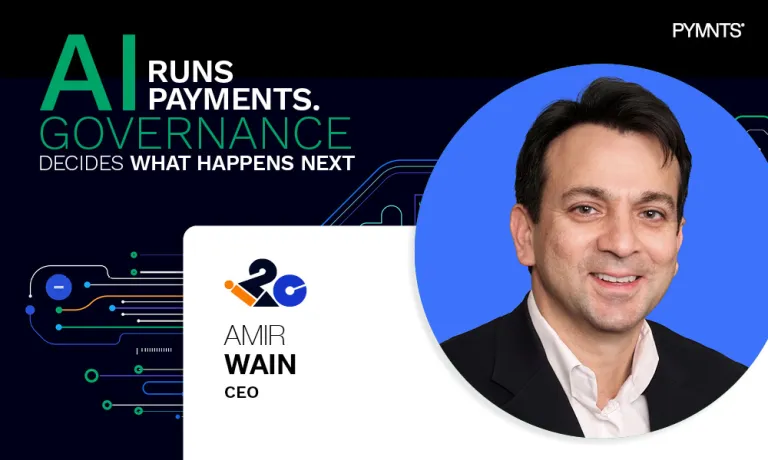
AI governance is not a one-time decision; it is an ongoing discipline and a continuously evolving effort, i2c CEO Amir Wain writes in a new PYMNTS eBook, “AI Runs Payments. Governance Decides What Happens Next.”

Artificial intelligence is no longer just influencing decisions in payments — it is starting to make them. And the pace of that shift is accelerating faster than most institutions are prepared to govern. There has never been a technology where development and adoption have occurred at the rate we are now seeing with AI.

That acceleration brings both opportunity and risk. On one hand, it has the potential to be a great equalizer, giving small and mid-sized institutions the ability to compete with much larger players. But it is also a threat. On the other hand, it forces a more urgent question: if AI is acting, who is accountable?

To answer that, it helps to step back. When I think about AI in payments, I don’t start with the model — I start with the system. Architecture ultimately determines the destiny of the business.

For years, the industry has relied on a fragmented approach — stitching together different systems to solve business problems across credit, debit and core banking. Over time, that fragmentation created gaps. When AI is introduced into that environment, governance doesn’t fail at the model level — it fails in the gaps between systems, decisions and ownership.

Advertisement: Scroll to Continue

That realization led to a different architectural choice: building a platform that is not product-centric, but customer-centric — product-agnostic and geography-agnostic. The premise is simple: there will always be new products we cannot predict today, so the system itself must be adaptable.

That choice was not the fastest path. It was a big decision, a difficult one and it took longer up front. But it created consistency and control — principles that now apply directly to AI governance.

Governance is not a one-time decision; it is an ongoing discipline and a continuously evolving effort that must be built into the organization. At the same time, product and feature cycles are compressing rapidly.

Nowhere is that tension more visible than in fraud. It is easy to eliminate fraud entirely — you could decline every transaction and have zero fraud. But that is not a strategy. The real objective is minimizing friction while maximizing fraud capture.

The risk environment is also shifting quickly. Platforms that cannot respond dynamically to emerging threats will fall behind. Preparation requires agility, scalability and real-time intelligence.

This is where the next phase becomes critical. Agentic AI is not just about smarter models, it is about systems that can perceive, reason and act within defined guardrails, learning from outcomes over time.

But autonomy does not remove accountability. Responsible AI governance is non-negotiable. It requires transparency, consent and traceability in how data is used. And critically, the human role becomes more strategic — overseeing AI to ensure decisions remain fair, explainable and aligned with business outcomes.

The institutions that succeed will not be the ones that simply move fastest. They will be the ones that build the discipline, architecture and accountability to govern AI — because in payments, every decision is now real time, automated and consequential.

In a world where AI makes the decision, governance is what earns the right to make it.
PYMNTS eBook download button