







By PYMNTS | April 27, 2026

The biggest obstacle to real-time payments adoption may not be fraud, but the fear of fraud.
That’s the central finding of “Reality Check: Fact vs. Fiction in Real-Time Payments Fraud,” a PYMNTS Intelligence report produced in collaboration with The Clearing House. The report puts hard data against widely held assumptions, and the gap is striking: real-time payment rails carry substantially lower fraud rates than traditional methods including checks, wires and ACH. Yet many financial institutions remain on the sidelines, limiting themselves to receive-only participation.
The report’s conclusion is pointed: misperception, not actual exposure, is the primary drag on adoption. Aligning perception with reality could unlock the full promise of faster payments.
While many banks remain cautious, often limiting participation to receive-only capabilities, the findings indicate.
Findings
- 63% of firms report check fraud, compared with just 2% reporting fraud on real-time rails such as RTP and FedNow, highlighting a wide gap between legacy and instant payment risk.
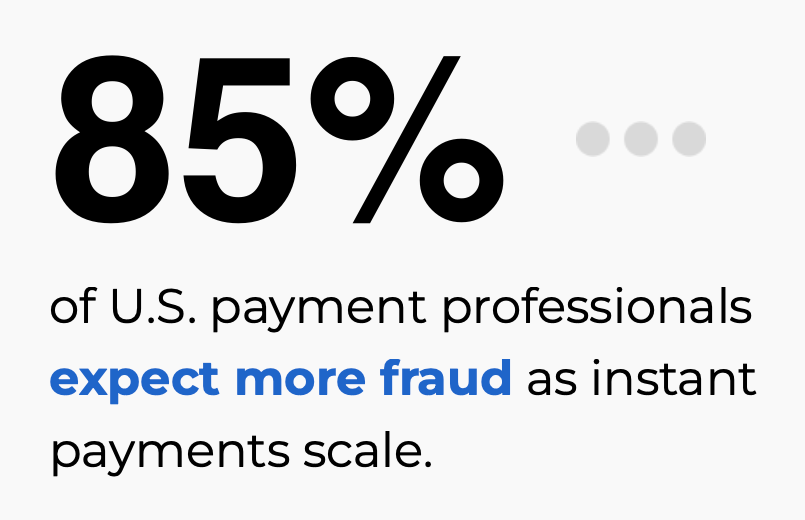
- 85% of U.S. payments professionals expect fraud to increase as instant payments scale, even as current data shows lower fraud rates on those rails.
- 96% of banks support identity verification tools such as Confirmation of Payee, signaling broad agreement on how to mitigate fraud risk in real-time environments.
Beyond those figures, the report points to a structural issue in how the industry approaches innovation. Many institutions are still calibrating risk based on the speed of transactions rather than the controls embedded in modern payment systems.
Real-time rails operate in environments that emphasize push payments, tokenization and immediate confirmation, which can limit certain types of unauthorized activity. Yet those advantages are often overshadowed by concerns tied to scams and user error, particularly authorized push payment fraud.
Advertisement: Scroll to Continue
That dynamic is shaping real-world behavior. A large share of institutions are opting to roll out instant payments with restricted functionality, delaying full send-and-receive capabilities. This approach may reduce perceived exposure, but it also creates bottlenecks that limit the network effects of faster payments. The report suggests that this cautious stance, while understandable, may slow the broader shift toward always-on money movement.
At the same time, the data offers a more constructive view of the path forward. Fraud on real-time rails is not only lower in frequency but often lower in impact, with most incidents categorized as minor. Financial institutions are also coalescing around a set of tools to address remaining risks, including real-time monitoring, multifactor authentication and AI-driven detection. Network operators are reinforcing these efforts with shared frameworks and collaborative data approaches, which can help identify and stop fraud before funds move.
The broader takeaway is that faster payments have reached a point where the technology and controls are largely in place. What remains is a shift in mindset. As institutions align their risk models with the realities of modern payment infrastructure, real-time rails could move from cautious adoption to a more central role in the payments ecosystem.
Education and coordination will determine how quickly that shift happens. Closing the perception gap between risk and reality could unlock broader participation, giving banks and payments providers a clearer path to scale real-time offerings while maintaining strong protections for consumers and businesses alike.
At PYMNTS Intelligence, we work with businesses to uncover insights that fuel intelligent, data-driven discussions on changing customer expectations, a more connected economy and the strategic shifts necessary to achieve outcomes. With rigorous research methodologies and unwavering commitment to objective quality, we offer trusted data to grow your business. As our partner, you’ll have access to our diverse team of PhDs, researchers, data analysts, number crunchers, subject matter veterans and editorial experts.