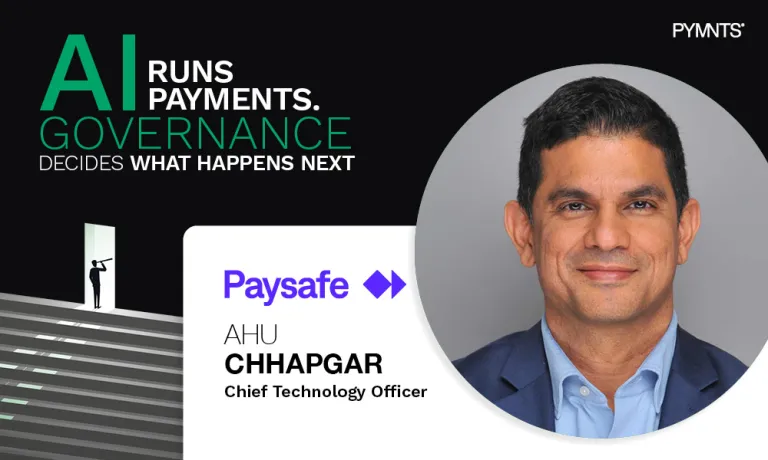
Artificial intelligence is now embedded across the payments ecosystem. It influences approval rates, fraud outcomes, customer experience and access to financial services in real time. For payments companies, the question is no longer whether to use AI, it’s how to govern it in a way that preserves control, trust and accountability as systems scale.
In payments, weak governance does not just create isolated risk, it creates risk at scale. AI models evolve constantly, decisions are made in milliseconds and outcomes have direct financial and regulatory impact. That reality demands governance designed for speed, complexity and shared responsibility.
Where Governance Breaks Down
The most common failure point in AI governance is fragmented accountability. Governance often breaks down at the seams, between product, engineering, risk, compliance and operations. Each function may own part of the system, but no one owns the end‑to‑end outcome.
Effective AI governance requires clear ownership for how models perform in production, how decisions are made and how outcomes are monitored over time. Governance frameworks must also evolve alongside models, rather than treating AI as a static system subject to one‑time approval.
Advertisement: Scroll to Continue
Speed Versus Control in Real‑Time Systems
Payments platforms are continuously optimizing for better approvals, lower fraud and higher conversion. That creates pressure to push changes quickly and capture incremental gains. The hardest trade-off is balancing real‑time optimization with the discipline governance requires.
Strong governance depends on structured experimentation, including defined baselines, controlled rollouts, auditability and measurable outcomes. Move too fast and visibility is lost. Move too slowly and material value is left on the table. The challenge is building experimentation frameworks that operate at the same speed as the business.
Governing AI Beyond Your Own Walls
One of the most underappreciated risks in payments is reliance on third‑party models and data. Payments companies partner with fraud vendors, risk providers and data suppliers that influence critical decisions.
Governance cannot stop at vendor‑reported metrics. Companies need their own observability across approval rates, false positives and bias signals. Contracts should include expectations around explainability, model changes, data usage and audit rights. No single external model should be relied on for critical decisions. Internal checks and balances are essential.
Building Governance Early
Establishing an AI decisioning and oversight layer early pays dividends. It helps define the AI operating model and ensures that models evolve existing policies rather than bypass them. AI governance is an iterative learning process. Without consistent frameworks and accountability defined early, organizations risk scaling artificial intelligence faster than they can govern it.
What Leaders Should Be Asking
Boards and CEOs should be asking whether they truly control how AI is making decisions at scale. Can decisions be explained? Is AI risk integrated into enterprise risk management, including third parties? Are unintended consequences being measured?
AI governance is no longer just a compliance issue. It is a trust issue. Getting it right will increasingly define which payments companies can scale AI responsibly and sustainably.