
惯性聚合 高效追踪和阅读你感兴趣的博客、新闻、科技资讯
阅读原文 在惯性聚合中打开

推荐订阅源

Blog — PlanetScale
Blog — PlanetScale
Y
Y Combinator Blog
G
Google Developers Blog
Cyber Security Advisories - MS-ISAC
L
LangChain Blog
S
SegmentFault 最新的问题
J
Java Code Geeks
V
Visual Studio Blog
H
Help Net Security
Stack Overflow Blog
Stack Overflow Blog
aimingoo的专栏
aimingoo的专栏
OSCHINA 社区最新新闻
OSCHINA 社区最新新闻
T
Tailwind CSS Blog
Microsoft Azure Blog
博客园_首页
H
Hackread – Cybersecurity News, Data Breaches, AI and More
奇客Solidot–传递最新科技情报
奇客Solidot–传递最新科技情报
博客园 - Franky
B
Blog RSS Feed
The Cloudflare Blog
MyScale Blog
MyScale Blog
月光博客
月光博客
Microsoft Security Blog
美团技术团队

TestingCatalog

SpaceXAI gearing up for upcoming Grok 4.5 release ByteDance set to launch Seedance 2.5 with 3-minute output Meta prepares Scheduled tasks for Meta AI users on web Google tests new Gemini Inbox section for Workspace triage OpenAI might be preparing GPT-5.6 for next week's release Mistral releases Leanstral 1.5 model for proof engineering xAI debuts Grok Voice Agent Builder for Enterprises Condense launches proxy to cut AI coding agent bills by 66% Vellum adds agent-to-agent AI collaboration for Slack Early look at Anthropic's Claude Science app for researchers Google launches Nano Banana 2 Lite and Gemini Omni Flash Google might be testing Gemini Flash upgrade on LM Arena Anthropic may impose KYC restrictions for Fable 5 access Anthropic launches Claude Sonnet 5 model on Claude and APIs NoimosAI launches Creative Agent for brand assets Apify lets AI Agents pay via Coinbase x402 for web tools Bloome launches chat platform for AI agent teams Meituan launches LongCat-2.0 1.6T parameter model Cursor releases its iOS app for vibe coding on the go OpenAI prepares upgraded Office controls for Codex OpenAI tests gifting Codex credits as new growth strategy Microsoft launches MAI-Code-1-Flash on GitHub Copilot Google adds Computer Use to Gemini 3.5 Flash Google tests notebook collections for NotebookLM OpenAI launches GPT-5.6 Sol preview for select partners Microsoft adds Copilot finance tools to Excel for M365 users DeepReinforce releases Ornith-1.0 open-source coding models Gemini to get voice dictation and Magic Pointer on desktop Meta launches AI glasses with three new styles from $299 Anthropic launches Claude Tag on Team and Enterprise plans
Perplexity releases Brain Memory for Perplexity Computer
https://www.facebook.com/testingcatalog · 2026-06-20 · via TestingCatalog

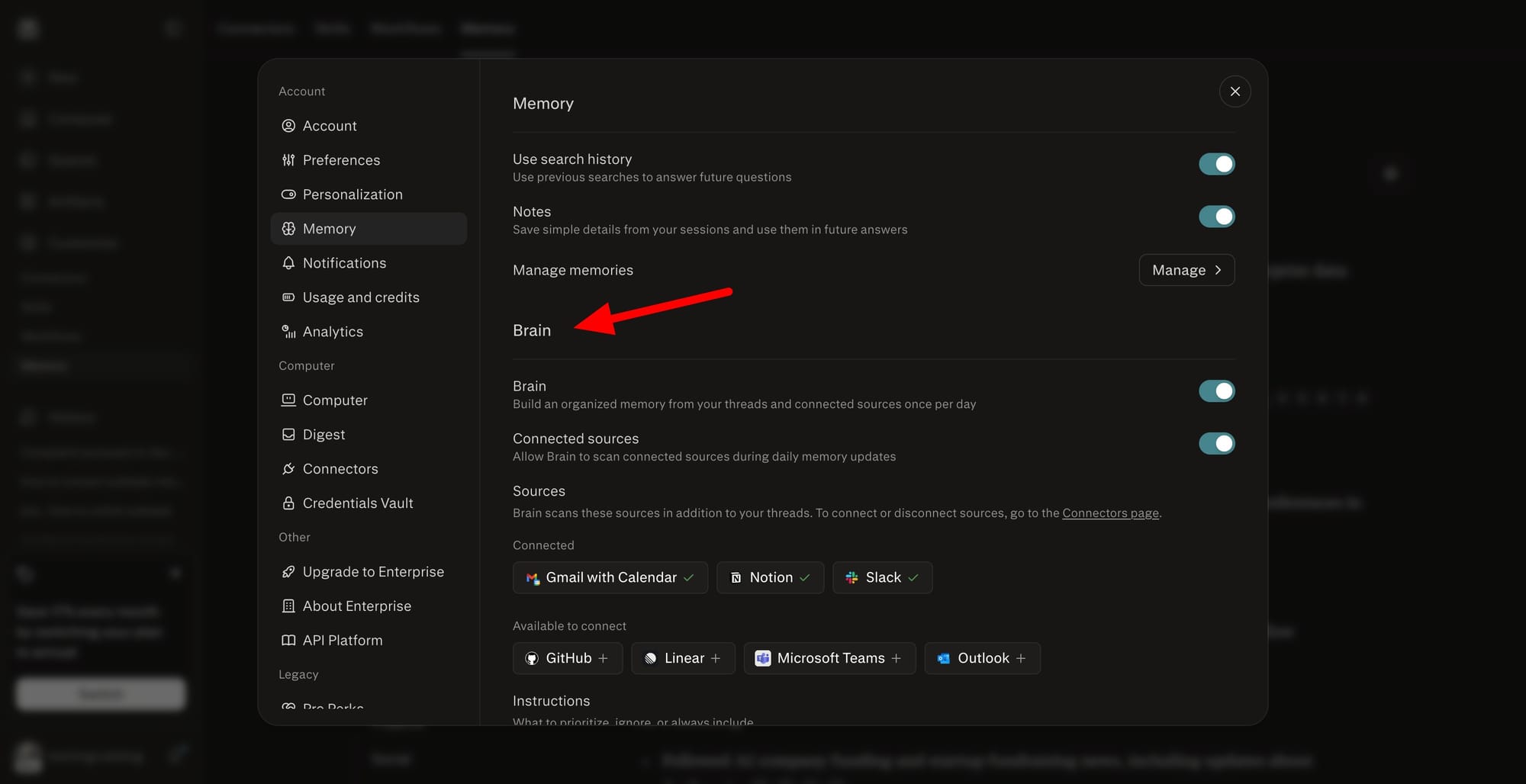
Perplexity released a new memory system, referred to internally as Brain, that would sit beneath several of its core products rather than living inside any single one. Signals point to Brain powering Perplexity Search, the Perplexity Computer agent, and possibly the Comet browser, positioning memory as a shared connective layer instead of a per-product add-on.

With Brain, Computer starts each task with full context of your projects, decisions, and sources instead of from scratch.

On tasks that require past context, Brain improves answer correctness by 25%, recall by 16%, and runs 13% cheaper per task. pic.twitter.com/xlNHTmA1My

— Perplexity (@perplexity_ai) June 18, 2026

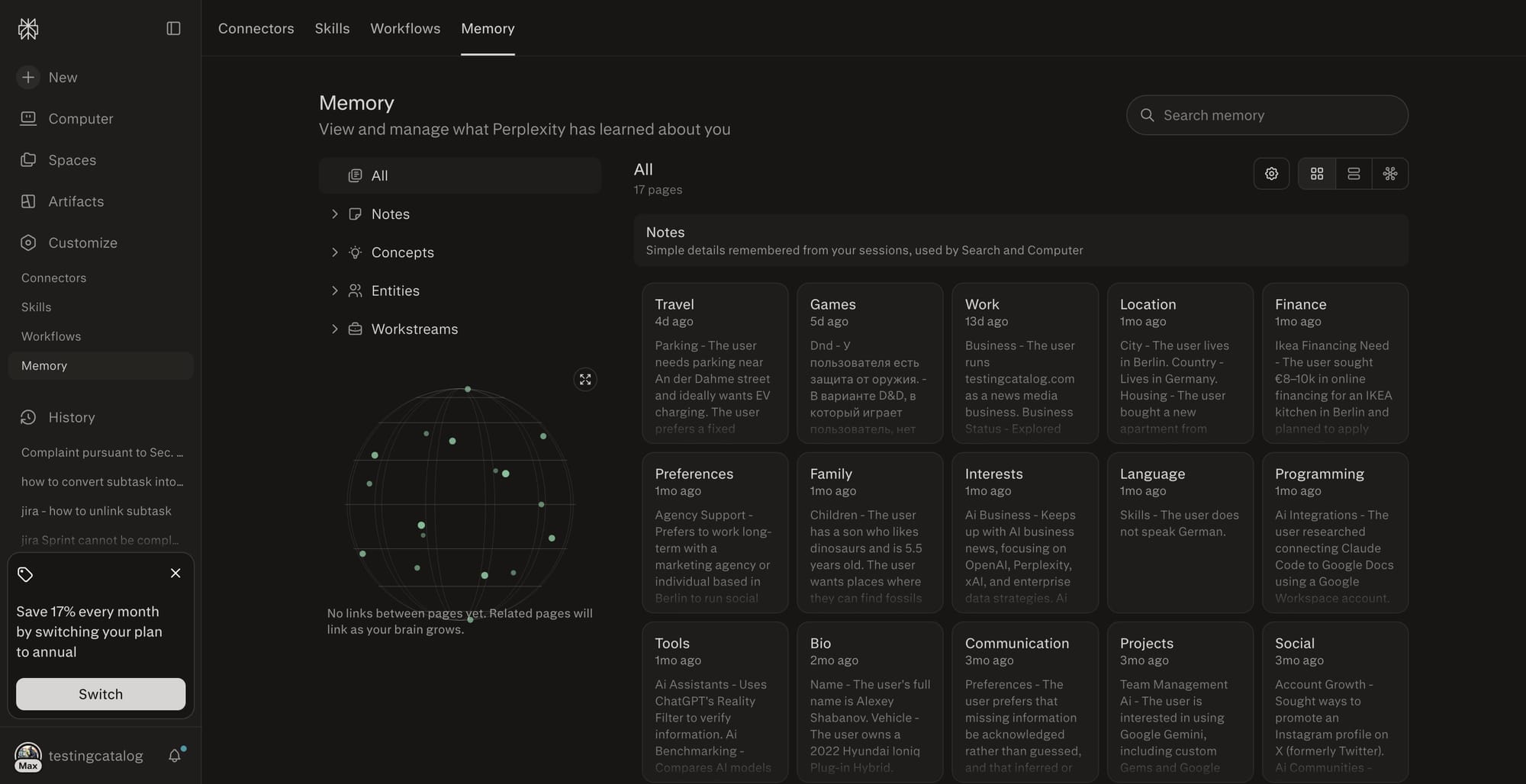
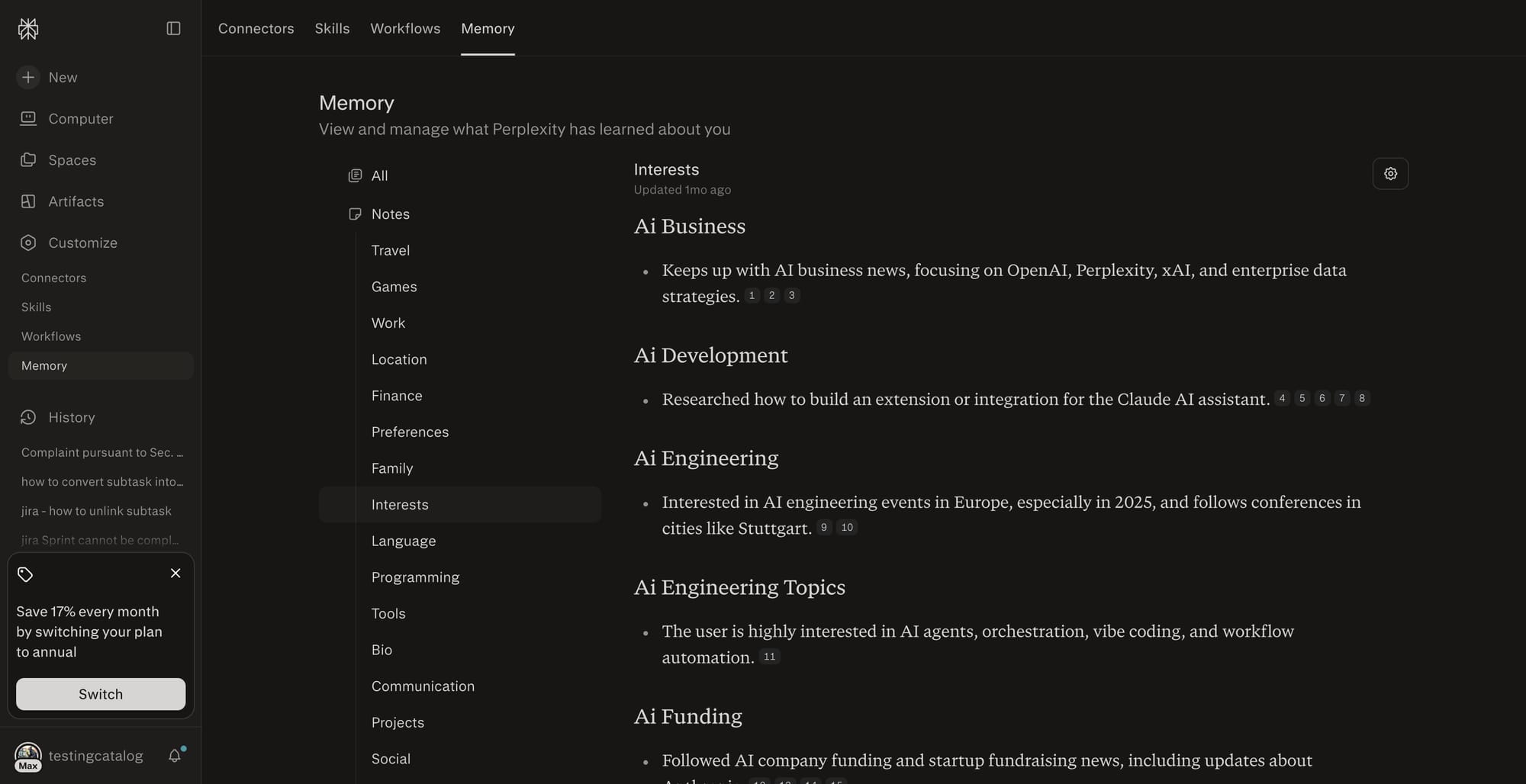
What sets the approach apart, based on what has surfaced so far, is transparency. Where most assistant memory operates as an opaque store, Brain looks set to expose the full knowledge base to the user in three forms:

  1. Topics sorted into categories
  2. The underlying context held behind each topic
  3. A navigable 3D map of the connections between them that a person can hover over and explore
Perplexity

The clustering follows the now-familiar second-brain pattern, closer to an Obsidian-style graph than a flat list, where the model gathers information and groups it by subject. Because context is organized by topic and retrieved only when a task calls for it, the amount pulled into any given request appears lower, which would help both speed and recall quality.
Perplexity

The company has spent the year moving from answering questions toward doing work, with the Computer agent arriving in late February alongside a memory upgrade that sharpened recall accuracy. Brain would extend that arc, turning memory into the substrate that lets search, agents, and browsing draw on the same accumulated context.
Perplexity

Perplexity Brain also lands in a crowded field: always-on agents such as Hermes and OpenClaw lean on their own knowledge bases, and rivals from Claude to Notion are building comparable persistent stores. The feature remains hidden for now, but the recent pace of polishing around it suggests a wider rollout may not be far off.

Official announcement