





Most agent projects are still racing to field a smarter chat loop or a longer list of tools. OpenSquilla, an Apache-licensed, self-hostable runtime, is making a quieter bet: that the next round of efficiency comes from the harness rather than the model. Its founding idea was cost-aware routing, scoring each turn and sending trivial work to cheap models while reserving heavier reasoning for tasks that warrant it. That is becoming table stakes. The part worth watching now is MetaSkill, the project's attempt to let an agent organize its own capabilities rather than rely on hand-written workflows.
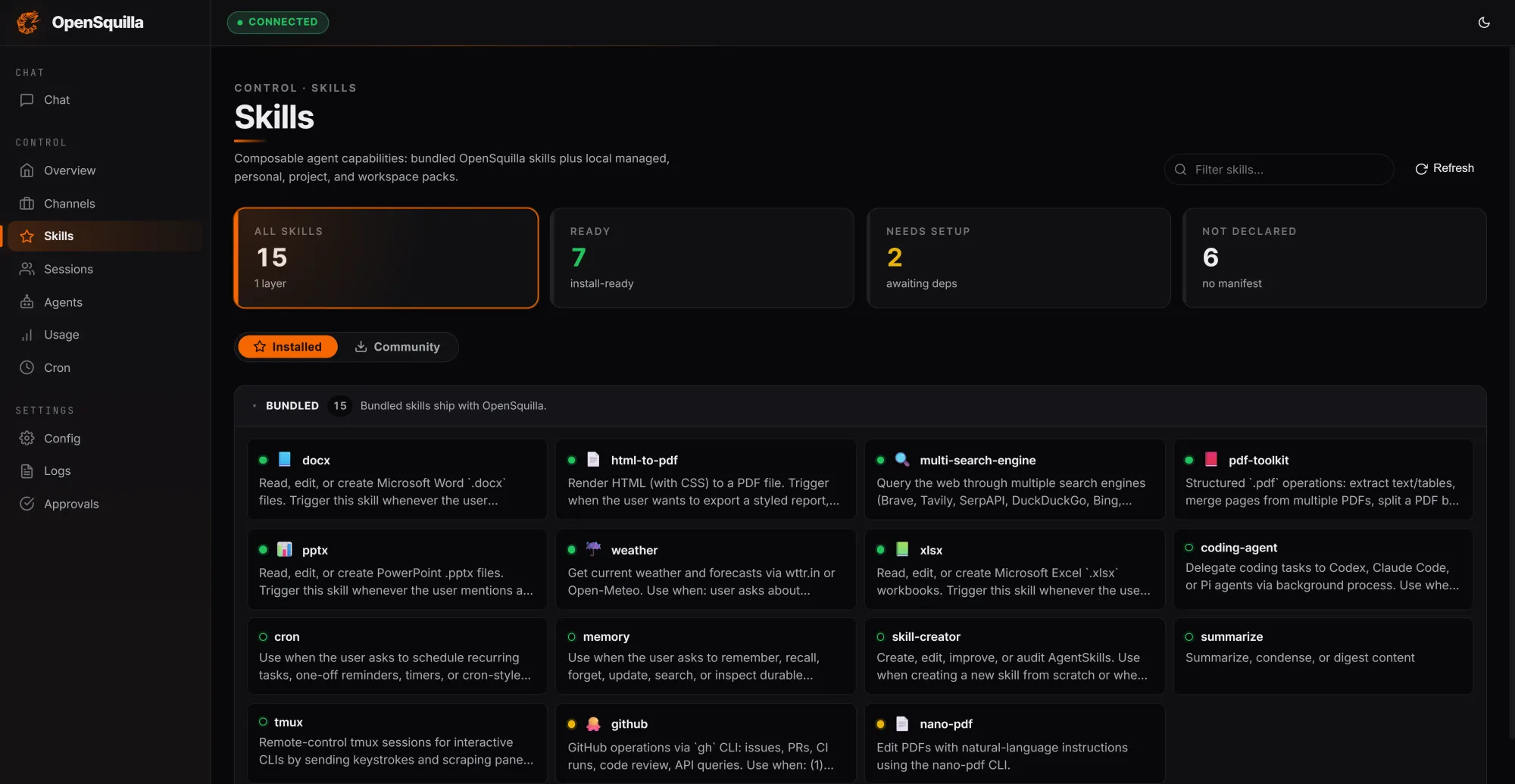
The premise is the combinatorial problem facing every maturing agent: writing a single-task skill is trivial, but composing hundreds of community skills into something reliable collapses into guesswork once real complexity arrives. MetaSkill answers with a meta-protocol, a markdown spec that tells the model how to discover, rank, and compose atomic skills, declaring the resulting workflow in a structured header that the runtime validates before anything runs. A goal described in plain language becomes an inspectable, replayable execution chain rather than a one-off prompt.
— OpenSquilla (@OpenSquilla) June 1, 2026Tonight, as promised 🦞
That volcano plan this morning? Not a chatbot — it was
MetaSkill, OpenSquilla's self-organizing skill protocol.You describe the goal in plain words. It discovers, picks,
and composes the right skills into a real, safe workflow —
and it can even write… pic.twitter.com/f1ksWydMp5
The runtime ships with ready-made workflows for jobs such as research-to-report and project planning, and during idle time, it revisits its execution traces, distills recurring patterns, and drafts candidate workflows. The catalog grows in the background. That is also where the open questions sit. The headline savings figures are the project's own benchmarks, not independent results, and machine-composed workflows raise obvious reliability and safety concerns that the design seeks to contain through proposal gates, tool allowlists, and syscall-level sandboxing.
Strategically, OpenSquilla is positioning against heavier agents such as OpenClaw, even shipping migration tooling, while aligning with the wider move toward portable skill specifications. For teams running long-horizon agents where token bills compound, the pitch lands squarely at the orchestration layer. Routing, tiered memory, and the first MetaSkill capabilities sit in the public releases today; a further iteration looks set to follow from active development. If orchestration rather than model size proves the durable lever, projects like this reframe where the real moat lies.