
惯性聚合 高效追踪和阅读你感兴趣的博客、新闻、科技资讯
阅读原文 在惯性聚合中打开

推荐订阅源

T
The Blog of Author Tim Ferriss
IT之家
IT之家
Engineering at Meta
Engineering at Meta
WordPress大学
WordPress大学
博客园 - 三生石上(FineUI控件)
博客园 - 聂微东
C
Check Point Blog
T
Tailwind CSS Blog
博客园 - Franky
H
Help Net Security
钛媒体:引领未来商业与生活新知
钛媒体:引领未来商业与生活新知
Google DeepMind News
博客园 - 叶小钗
J
Java Code Geeks
腾讯CDC
罗磊的独立博客
爱范儿
爱范儿
阮一峰的网络日志
阮一峰的网络日志
Martin Fowler
Martin Fowler
酷 壳 – CoolShell
酷 壳 – CoolShell
I
InfoQ
B
Blog
V
Visual Studio Blog
F
Fortinet All Blogs

TestingCatalog

SpaceXAI gearing up for upcoming Grok 4.5 release ByteDance set to launch Seedance 2.5 with 3-minute output Meta prepares Scheduled tasks for Meta AI users on web Google tests new Gemini Inbox section for Workspace triage OpenAI might be preparing GPT-5.6 for next week's release Mistral releases Leanstral 1.5 model for proof engineering xAI debuts Grok Voice Agent Builder for Enterprises Condense launches proxy to cut AI coding agent bills by 66% Vellum adds agent-to-agent AI collaboration for Slack Early look at Anthropic's Claude Science app for researchers Google launches Nano Banana 2 Lite and Gemini Omni Flash Google might be testing Gemini Flash upgrade on LM Arena Anthropic may impose KYC restrictions for Fable 5 access Anthropic launches Claude Sonnet 5 model on Claude and APIs NoimosAI launches Creative Agent for brand assets Apify lets AI Agents pay via Coinbase x402 for web tools Bloome launches chat platform for AI agent teams Meituan launches LongCat-2.0 1.6T parameter model Cursor releases its iOS app for vibe coding on the go OpenAI prepares upgraded Office controls for Codex OpenAI tests gifting Codex credits as new growth strategy Microsoft launches MAI-Code-1-Flash on GitHub Copilot Google adds Computer Use to Gemini 3.5 Flash OpenAI launches GPT-5.6 Sol preview for select partners Microsoft adds Copilot finance tools to Excel for M365 users DeepReinforce releases Ornith-1.0 open-source coding models Gemini to get voice dictation and Magic Pointer on desktop Meta launches AI glasses with three new styles from $299 Anthropic launches Claude Tag on Team and Enterprise plans Mistral launches OCR 4 for multilingual document extraction
Google tests notebook collections for NotebookLM
https://www.facebook.com/testingcatalog · 2026-06-27 · via TestingCatalog

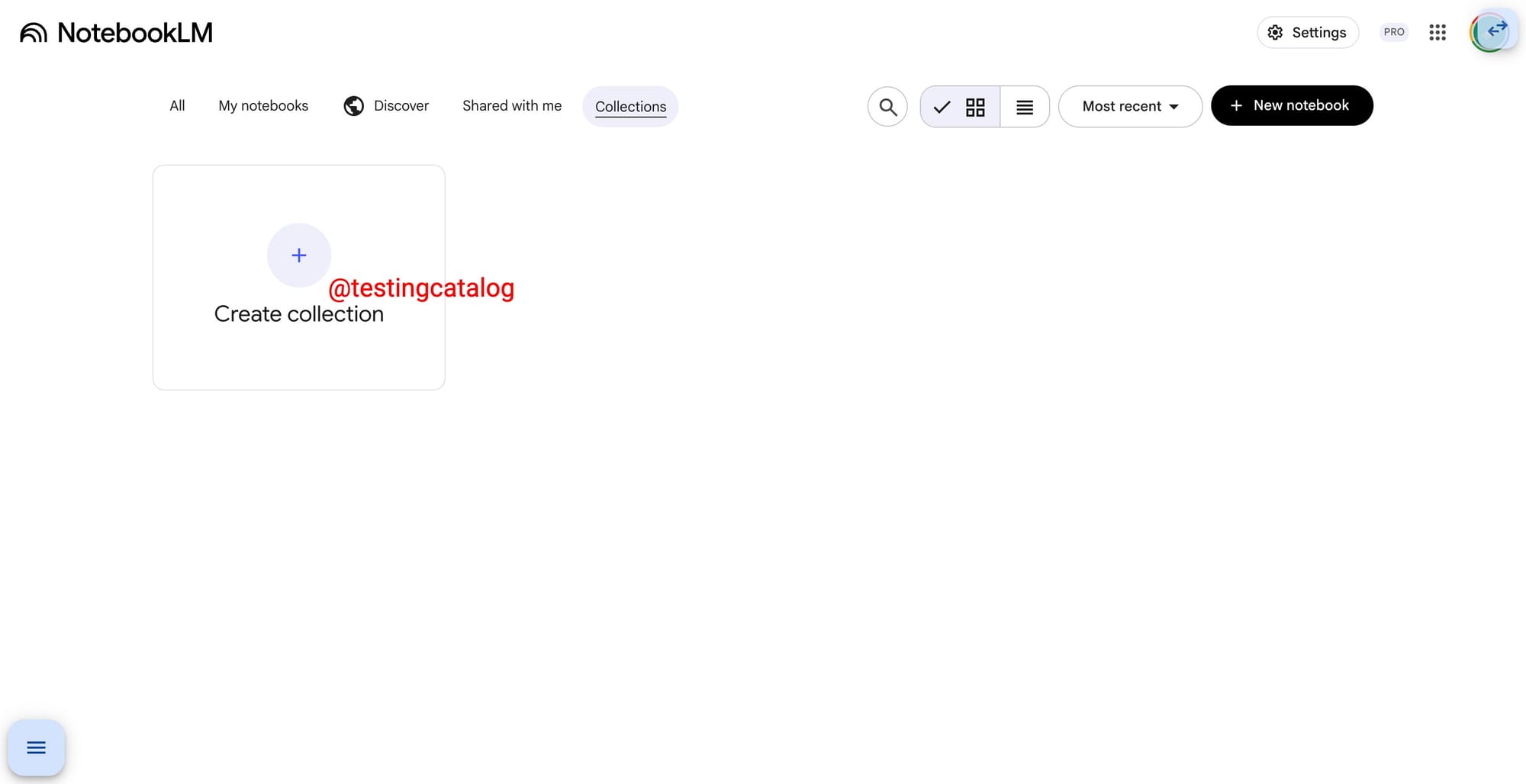
Google appears to be developing a collections system for NotebookLM that would let people group several notebooks under a single heading, surfaced via a dedicated tab in the main navigation. The capability has not been officially confirmed and looks to be early in development, with no timeline attached, but it points to a gap the tool has carried for some time.

NotebookLM already reads and clusters the sources inside an individual notebook, a source-level organization layer that reached full rollout in early May 2026. What it has lacked is any native way to group whole notebooks. Power users have leaned on browser extensions to approximate folders, and the team itself has acknowledged notebook-level grouping as the main piece still missing. Collections would fill that role, providing a top-level structure rather than a flat, scrolling list.
NotebookLM

The people most likely to benefit are heavy users juggling many notebooks, particularly those who treat notebooks as project workspaces within Gemini. The two products now sync, so a source added in one place appears in the other. Notebook projects went free for all Gemini web users earlier this year, so the population sitting on large libraries has grown quickly. With the free tier allowing up to 100 notebooks, navigation friction was always going to surface.

There are signs that Google first weighed a label-based approach to notebook organization before leaning toward collections, though the reasoning behind any shift remains unclear.

The move fits a year spent reshaping NotebookLM from a question-and-answer layer over documents into a research-to-output hub welded to Gemini. Rivals face the same organizational weak spot: ChatGPT Projects, Claude Projects, and Perplexity Spaces all offer single containers, but none gracefully support grouping across dozens of them. A clean top-level layer would give Google an early answer to a problem the whole category is starting to feel.