




惯性聚合 高效追踪和阅读你感兴趣的博客、新闻、科技资讯
阅读原文 在惯性聚合中打开

推荐订阅源

V
Visual Studio Blog
罗磊的独立博客
宝玉的分享
宝玉的分享
奇客Solidot–传递最新科技情报
奇客Solidot–传递最新科技情报
V
V2EX
酷 壳 – CoolShell
酷 壳 – CoolShell
T
Tailwind CSS Blog
博客园_首页
量子位
月光博客
月光博客
钛媒体:引领未来商业与生活新知
钛媒体:引领未来商业与生活新知
博客园 - 司徒正美
人人都是产品经理
人人都是产品经理
让小产品的独立变现更简单 - ezindie.com
爱范儿
爱范儿
S
SegmentFault 最新的问题
雷峰网
雷峰网
小众软件
小众软件
博客园 - 聂微东
美团技术团队
Apple Machine Learning Research
WordPress大学
WordPress大学
Jina AI
Jina AI
Hugging Face - Blog
Hugging Face - Blog

TestingCatalog

SpaceXAI gearing up for upcoming Grok 4.5 release ByteDance set to launch Seedance 2.5 with 3-minute output Meta prepares Scheduled tasks for Meta AI users on web Google tests new Gemini Inbox section for Workspace triage OpenAI might be preparing GPT-5.6 for next week's release Mistral releases Leanstral 1.5 model for proof engineering xAI debuts Grok Voice Agent Builder for Enterprises Condense launches proxy to cut AI coding agent bills by 66% Vellum adds agent-to-agent AI collaboration for Slack Early look at Anthropic's Claude Science app for researchers Google launches Nano Banana 2 Lite and Gemini Omni Flash Google might be testing Gemini Flash upgrade on LM Arena Anthropic may impose KYC restrictions for Fable 5 access Anthropic launches Claude Sonnet 5 model on Claude and APIs NoimosAI launches Creative Agent for brand assets Apify lets AI Agents pay via Coinbase x402 for web tools Bloome launches chat platform for AI agent teams Meituan launches LongCat-2.0 1.6T parameter model Cursor releases its iOS app for vibe coding on the go OpenAI prepares upgraded Office controls for Codex OpenAI tests gifting Codex credits as new growth strategy Microsoft launches MAI-Code-1-Flash on GitHub Copilot Google adds Computer Use to Gemini 3.5 Flash Google tests notebook collections for NotebookLM OpenAI launches GPT-5.6 Sol preview for select partners Microsoft adds Copilot finance tools to Excel for M365 users DeepReinforce releases Ornith-1.0 open-source coding models Gemini to get voice dictation and Magic Pointer on desktop Meta launches AI glasses with three new styles from $299 Anthropic launches Claude Tag on Team and Enterprise plans
Google expands Gemini for Business with shareable Projects
Alexey Shabanov · 2026-05-27 · via TestingCatalog

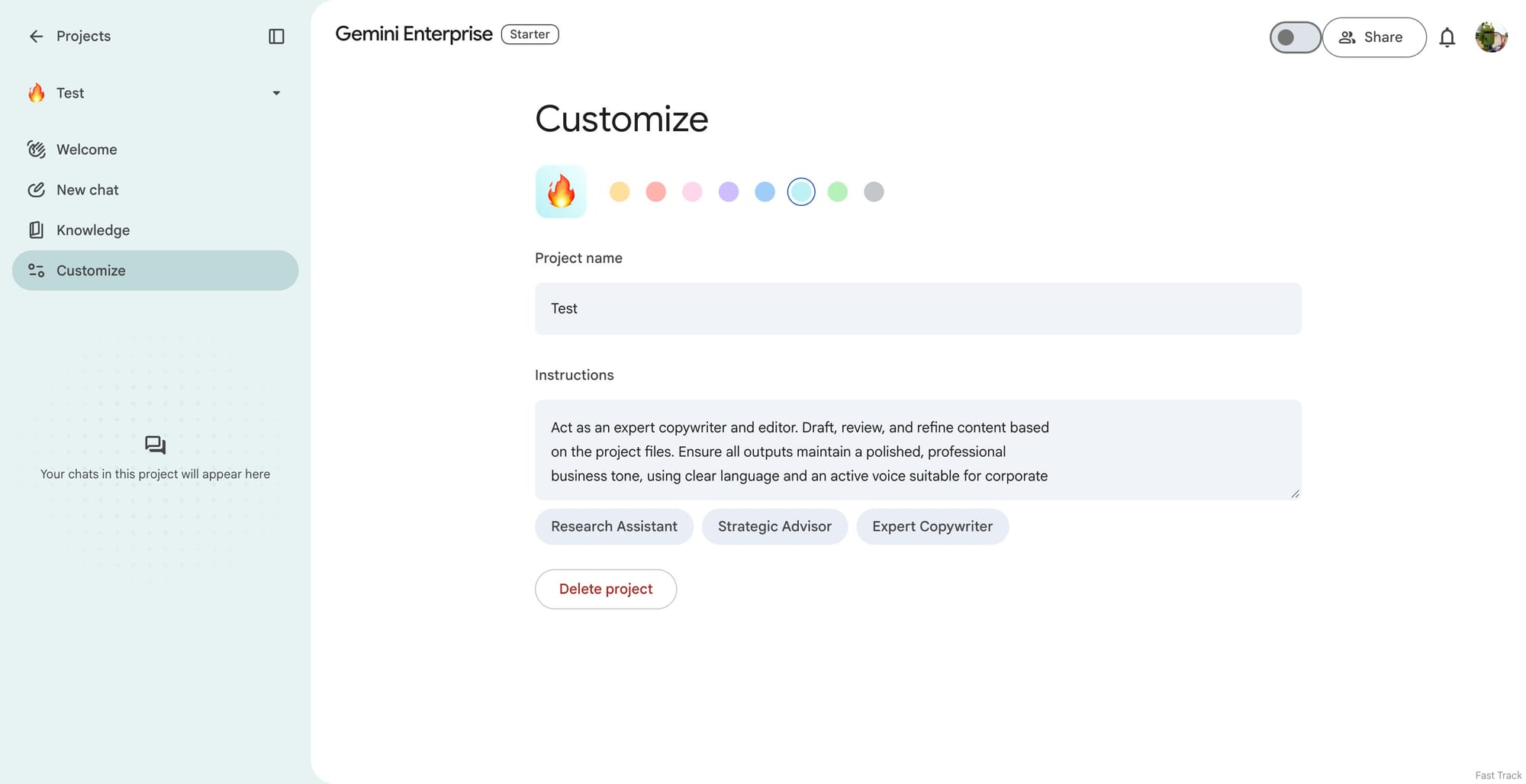
Google is continuing to push Gemini for Business deeper into team workflows, with several updates moving from internal development toward broader rollout. The most notable change centers on Projects, a feature that already exists in Gemini Enterprise but is being adapted for the Business tier, with a structure distinct from that of consumer Gemini.

These are true container projects where individual chats live inside dedicated folders, alongside uploaded files that can be managed within the same project, a setup that turns each project into a multi-surface workspace rather than a single chat thread.
Gemini

Customization extends beyond organization. Users can assign a color to each project, define system instructions that apply across every chat inside it, and invite collaborators to work in the same workspace. That last point is where things get interesting: the collaboration model lets multiple people access and respond inside the same chat, mirroring the group chat pattern Microsoft introduced in Copilot but framed around business team contexts. This particular implementation looks unlikely to make its way to the consumer Gemini app, though further expansion across Business seats appears probable.
Gemini

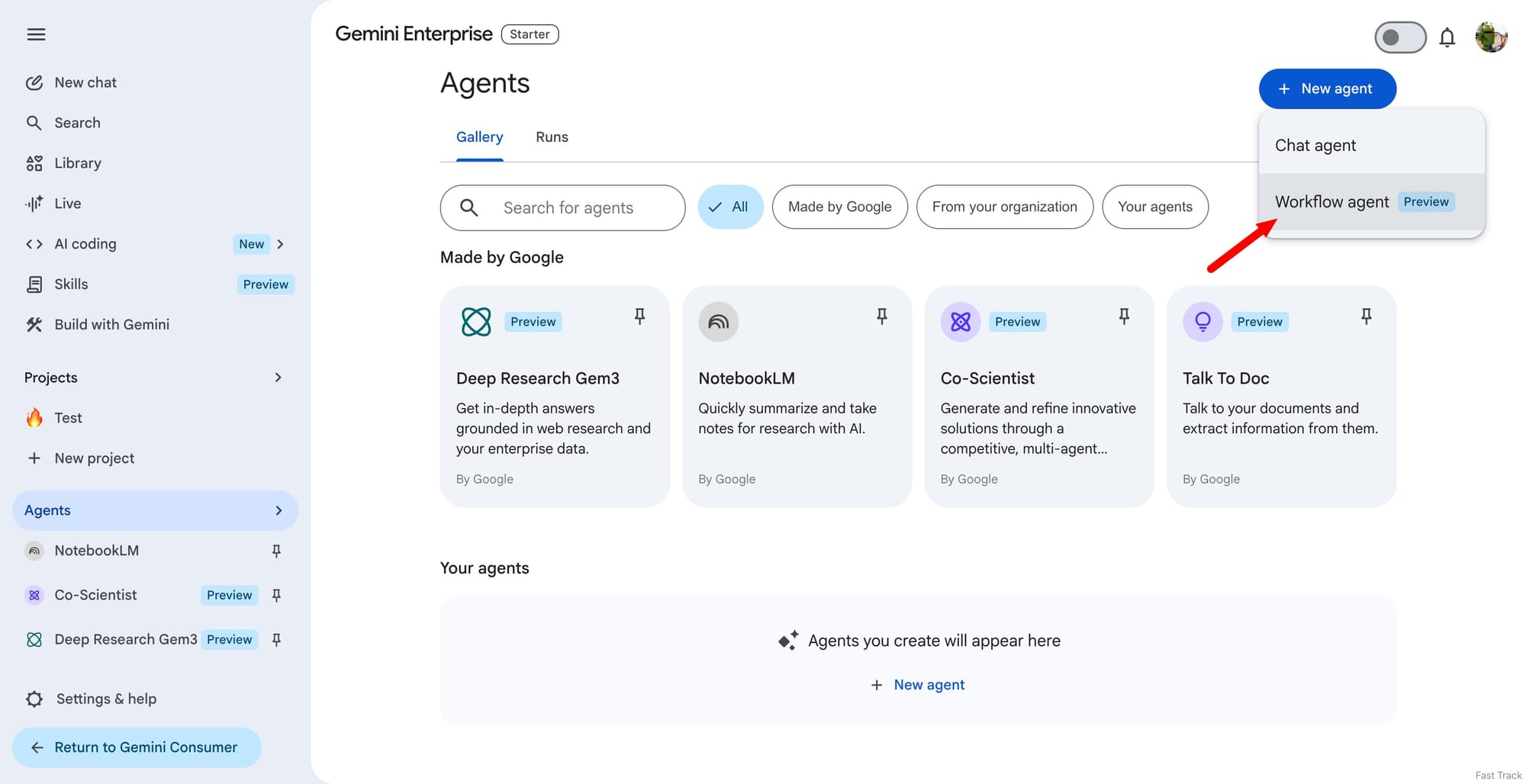
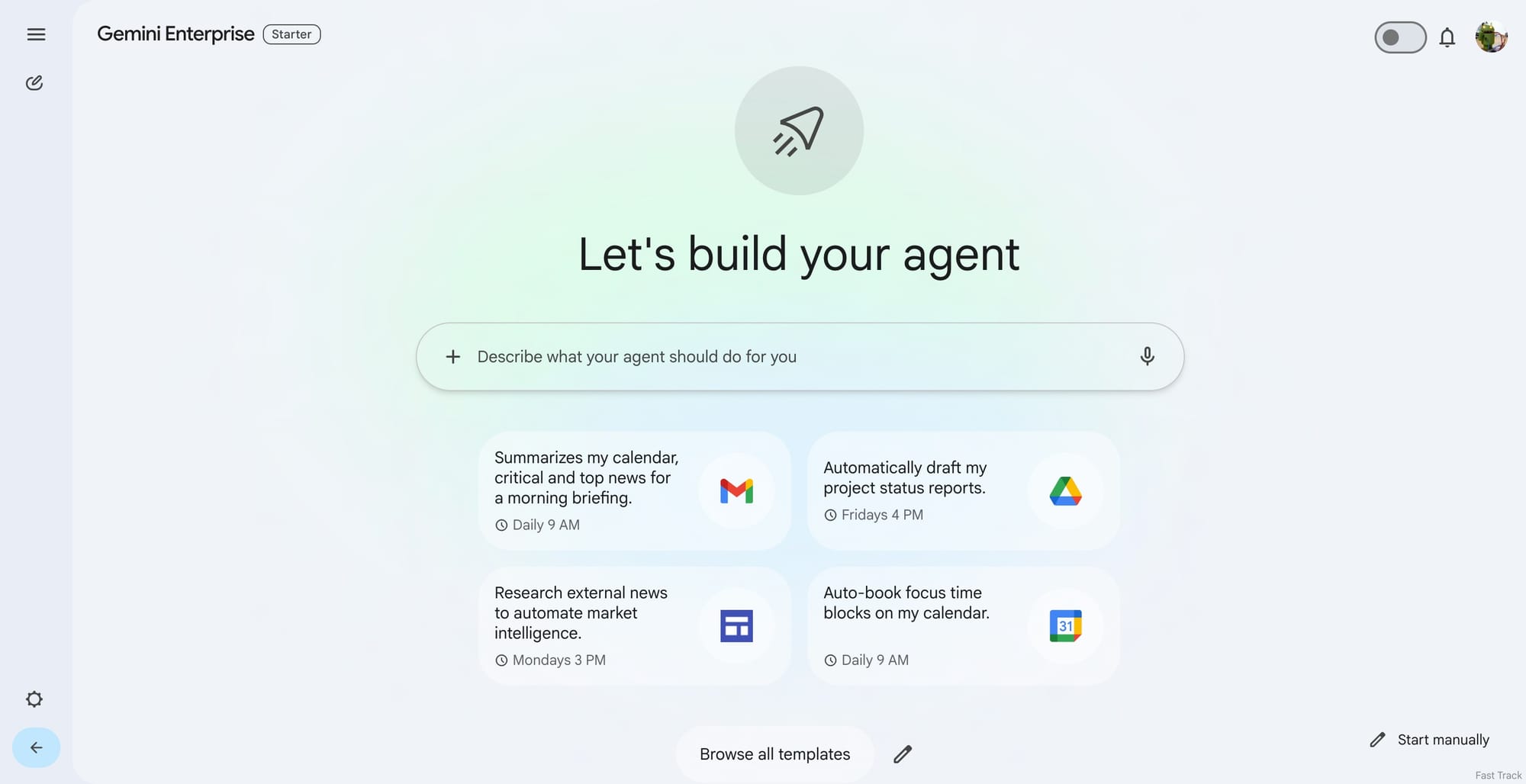
In parallel, Google is bringing workflow agents to Gemini for Business, building on the agent platform already available in the Enterprise edition. A reworked builder lets users configure automated, scheduled tasks that call connectors across the Google suite and beyond, covering Gmail, Drive, Calendar, and various third-party tools.
Gemini

Availability follows the usual staged pattern, with some accounts already seeing these capabilities while others wait their turn. The overall trajectory positions Gemini for Business as a closer counterpart to Enterprise, narrowing the feature gap between the two tiers while keeping shared workspaces and agent orchestration as the central pitches for paying teams. Pairing project-level memory with scheduled agents also lines Google up against the always-on assistants taking shape across Microsoft, Anthropic, and OpenAI, where the competitive question is increasingly which platform can run reliable, multi-step work on behalf of a whole team rather than a single user.