



惯性聚合 高效追踪和阅读你感兴趣的博客、新闻、科技资讯
阅读原文 在惯性聚合中打开

推荐订阅源

爱范儿
爱范儿
T
The Blog of Author Tim Ferriss
G
Google Developers Blog
博客园_首页
博客园 - 【当耐特】
量子位
S
SegmentFault 最新的问题
B
Blog RSS Feed
酷 壳 – CoolShell
酷 壳 – CoolShell
V
Visual Studio Blog
T
Tailwind CSS Blog
阮一峰的网络日志
阮一峰的网络日志
V
V2EX
Y
Y Combinator Blog
博客园 - 聂微东
The Cloudflare Blog
小众软件
小众软件
J
Java Code Geeks
freeCodeCamp Programming Tutorials: Python, JavaScript, Git & More
月光博客
月光博客
H
Help Net Security
Jina AI
Jina AI
钛媒体:引领未来商业与生活新知
钛媒体:引领未来商业与生活新知
宝玉的分享
宝玉的分享

TestingCatalog

SpaceXAI gearing up for upcoming Grok 4.5 release ByteDance set to launch Seedance 2.5 with 3-minute output Meta prepares Scheduled tasks for Meta AI users on web Google tests new Gemini Inbox section for Workspace triage OpenAI might be preparing GPT-5.6 for next week's release Mistral releases Leanstral 1.5 model for proof engineering xAI debuts Grok Voice Agent Builder for Enterprises Condense launches proxy to cut AI coding agent bills by 66% Vellum adds agent-to-agent AI collaboration for Slack Early look at Anthropic's Claude Science app for researchers Google launches Nano Banana 2 Lite and Gemini Omni Flash Google might be testing Gemini Flash upgrade on LM Arena Anthropic may impose KYC restrictions for Fable 5 access Anthropic launches Claude Sonnet 5 model on Claude and APIs NoimosAI launches Creative Agent for brand assets Apify lets AI Agents pay via Coinbase x402 for web tools Bloome launches chat platform for AI agent teams Meituan launches LongCat-2.0 1.6T parameter model Cursor releases its iOS app for vibe coding on the go OpenAI prepares upgraded Office controls for Codex OpenAI tests gifting Codex credits as new growth strategy Microsoft launches MAI-Code-1-Flash on GitHub Copilot Google adds Computer Use to Gemini 3.5 Flash Google tests notebook collections for NotebookLM OpenAI launches GPT-5.6 Sol preview for select partners Microsoft adds Copilot finance tools to Excel for M365 users DeepReinforce releases Ornith-1.0 open-source coding models Gemini to get voice dictation and Magic Pointer on desktop Meta launches AI glasses with three new styles from $299 Anthropic launches Claude Tag on Team and Enterprise plans
3 upcoming NotebookLM features we all should be waiting for
https://www.facebook.com/testingcatalog · 2026-05-31 · via TestingCatalog

Google appears to be lining up a batch of NotebookLM features that have been in the works for months, surfacing quietly in recent builds even as the team drops hints that an announcement may not be far off. Three additions stand out, and together they sketch a clear direction.

as is tradition, NotebookLM’s big update is not on IO day…

Team has cooked.

— Simon (@tokumin) May 24, 2026

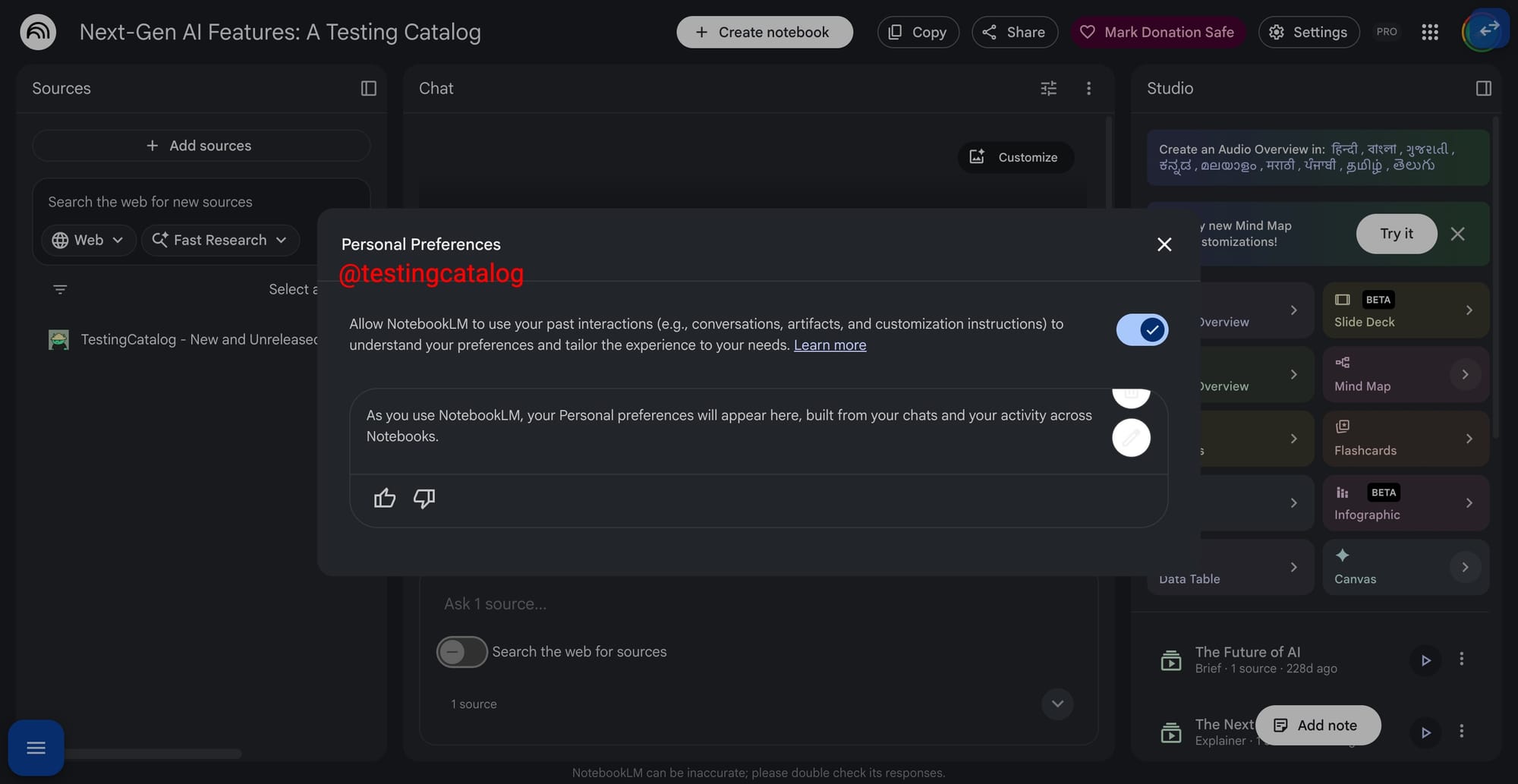
The first is Personal Preferences, which debuted in Gemini and is now set to reach NotebookLM. It would let the tool learn from your activity and build editable personas, adjusting tone and technical depth to how you work. While Gemini’s version reaches into Gmail, Drive, Photos, and Calendar, the NotebookLM signals so far lean toward in-app personalization drawn from your notebooks and chats, which is useful for anyone doing repeated, deep-context research.

Allow NotebookLM to use your past interactions (e.g., conversations, artifacts, and customization instructions) to understand your preferences and tailor the experience to your needs. 
NotebookLM

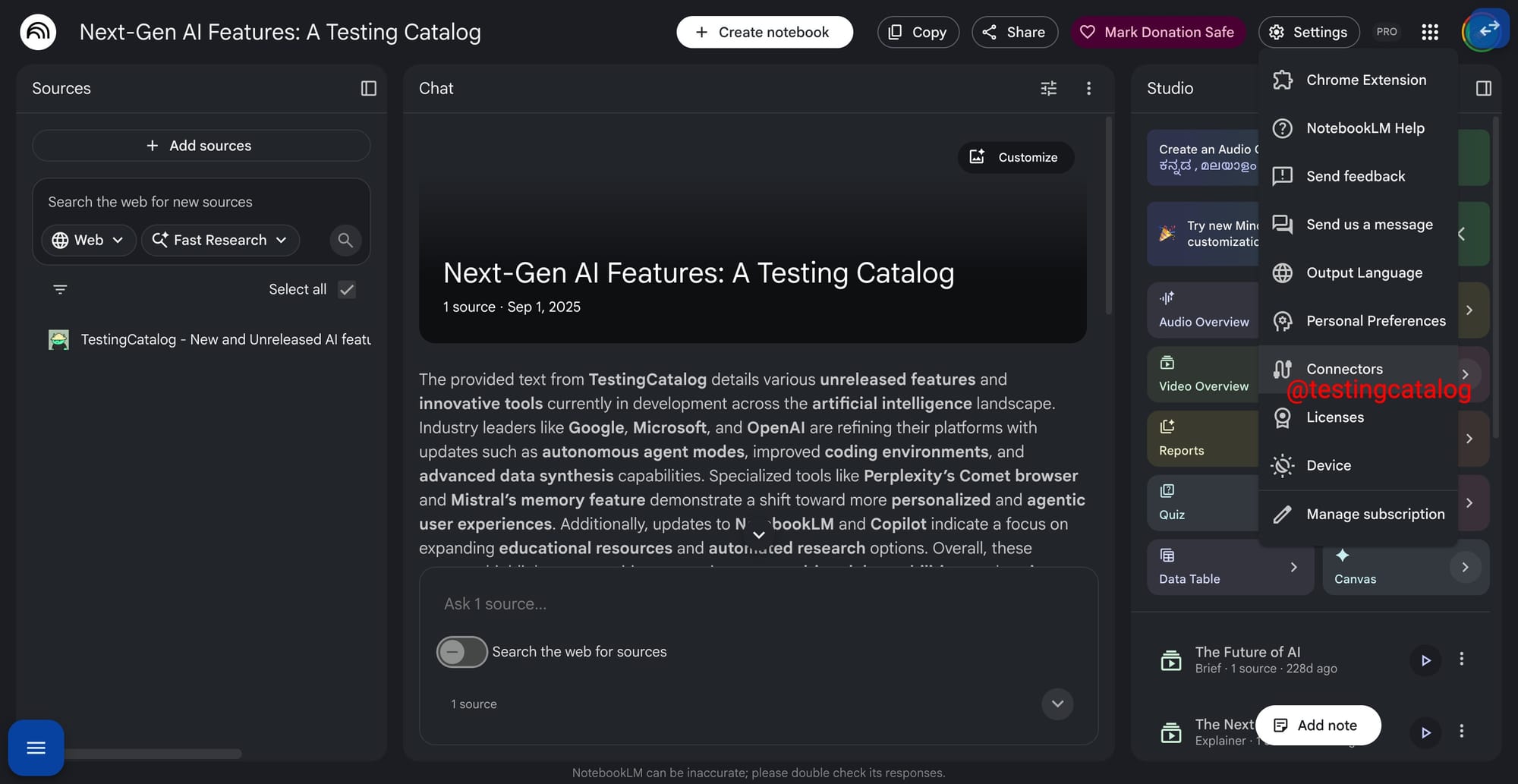
Connectors, sitting alongside it in settings, would close that gap. Working much like MCP, it would pull outside data into a notebook, most likely starting with Google’s own services such as Calendar, Gmail, and Drive. The piece is not yet operational, and the roster of supported sources remains open.
NotebookLM

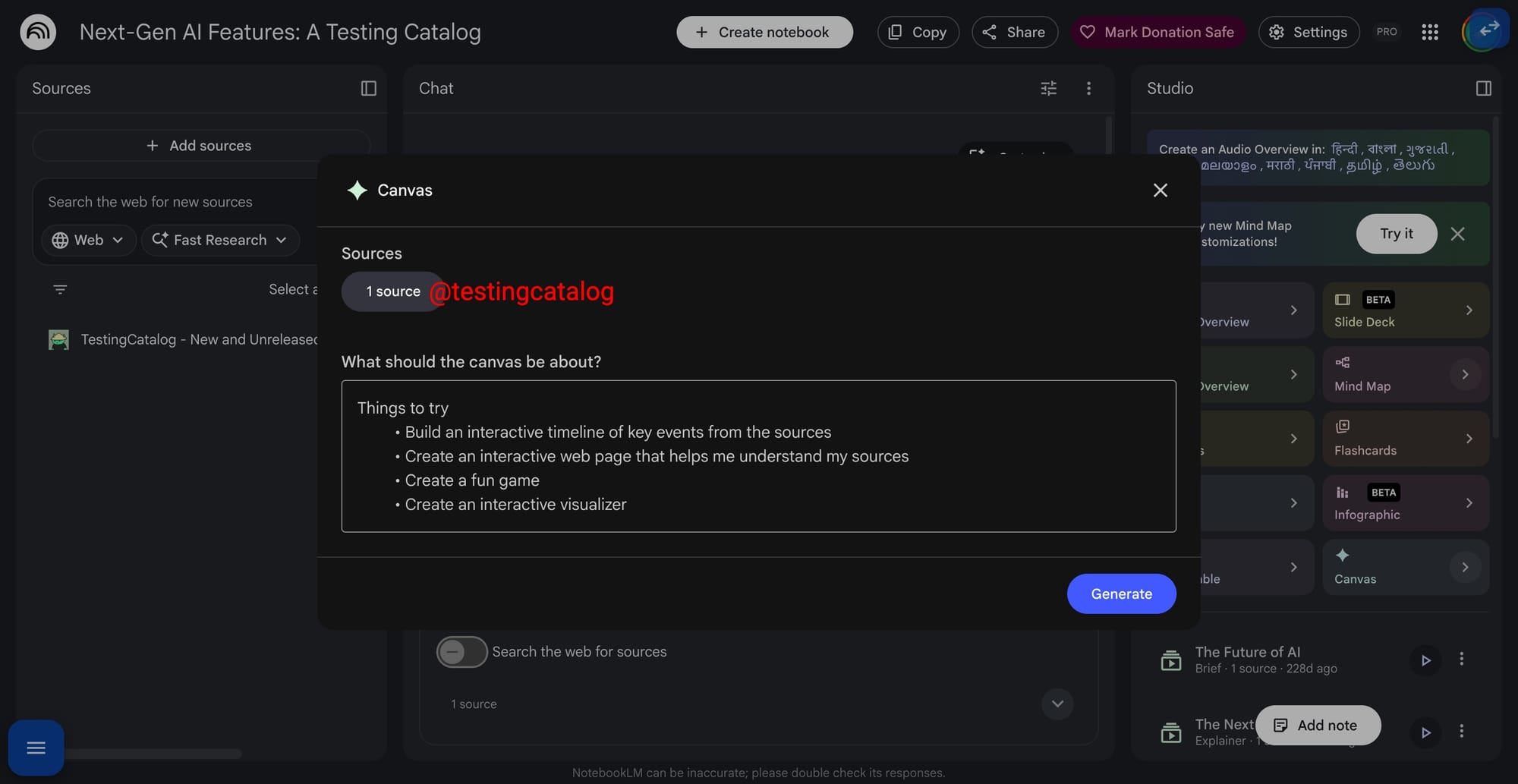
Canvas is arguably the headline. Found in the Studio panel, it would turn sources into a custom artifact — an interactive timeline, an explainer web page, a lightweight game, or a visualizer, guided by a prompt describing what you want and how. It extends the outputs that NotebookLM already offers, including infographics, slide decks, data tables, and mind maps.
NotebookLM

The combination is where it gets compelling. With NotebookLM now living inside Gemini, the three would let people work across their sources without copying material between tools, matching Google’s push to turn a source-grounded reader into a workspace for building structured, visual experiences on top of documents.

On models, NotebookLM moved to Gemini 3 late last year; with Gemini 3.5 Flash now the global default after I/O 2026, the Flash branch of that family is the natural next base. A firm timeline is still missing, so the open question is when, not whether.