

惯性聚合 高效追踪和阅读你感兴趣的博客、新闻、科技资讯
阅读原文 在惯性聚合中打开

推荐订阅源

L
LINUX DO - 最新话题
Cyberwarzone
Cyberwarzone
cs.CL updates on arXiv.org
Threat Intelligence Blog | Flashpoint
cs.AI updates on arXiv.org
cs.CV updates on arXiv.org
Recent Commits to openclaw:main
Security Archives - TechRepublic
S
Securelist
V2EX - 技术
V2EX - 技术
www.infosecurity-magazine.com
P
Privacy & Cybersecurity Law Blog
Spread Privacy
Spread Privacy
N
News and Events Feed by Topic
H
Heimdal Security Blog
Hacker News - Newest:
Hacker News - Newest: "LLM"
大猫的无限游戏
大猫的无限游戏
L
LangChain Blog
爱范儿
爱范儿
阮一峰的网络日志
阮一峰的网络日志
G
GRAHAM CLULEY
L
Lohrmann on Cybersecurity
G
Google Developers Blog
Recorded Future
Recorded Future
H
Hacker News: Front Page
Application and Cybersecurity Blog
The GitHub Blog
The GitHub Blog
量子位
V
V2EX
D
Darknet – Hacking Tools, Hacker News & Cyber Security
Vercel News
Vercel News
H
Help Net Security
Know Your Adversary
Know Your Adversary
Forbes - Security
Forbes - Security
T
Threatpost
S
SegmentFault 最新的问题
Hugging Face - Blog
Hugging Face - Blog
T
Threat Research - Cisco Blogs
人人都是产品经理
人人都是产品经理
Project Zero
Project Zero
K
KPMG report finds enterprise disconnect between AI and its ROI | CIO
罗磊的独立博客
C
Check Point Blog
P
Palo Alto Networks Blog
Google DeepMind News
Last Week in AI
Last Week in AI
L
LINUX DO - 热门话题
Apple Machine Learning Research
C
Cybersecurity and Infrastructure Security Agency CISA
A
Arctic Wolf

Futurism

Terrified Tech Execs Are Traveling With Armed Bodyguards as AI Backlash Grows New Anthropic Ad Implies AI Could Kill Us All American Tech Companies Are Suddenly Sweating Bullets as China Catches Up on AI Anthropic Caught Secretly Spying on Users Experts Say There's Now an Open Source AI Model as Scary as Mythos Anthropic Hires Economist Who Says 33 Percent Chance of Human Extinction Is Acceptable Anthropic Sued for Allegedly Ripping Off Its Highest-Paying Customers Anthropic Was So Concerned About Its New Mythos-Based Model’s Power That It Lobotomized Its Ability to Improve Itself OpenAI Execs Are Panicking If You Think AI Companies Are Unethical Now, Wait Until They Go Public Anthropic Scared, Calls for Global Freeze on AI Advances Anthropic and DeepMind Now Actively Investigating AI Consciousness Unfortunate Company Accidentally Blows Half a Billion Dollars on Claude in One Month Anthropic Customers Creeped Out by Its Newest Models Uber Says Its AI Costs Just Aren’t Worth It Anthropic Cofounder Travels to Vatican, Tells Pope They’re Finding “Unsettling” Things Inside AI Models Top AI Models Showing Disturbing Behavior as They Become More Advanced Microsoft AI Researchers Just Discovered Something That’s Going to Make Their Bosses Extremely Mad Anthropic Says Claude Turned Evil for a Bizarre Reason Amazon Admits Its Flagship AI Coding Tool Isn’t Good Enough for Its Own Workers to Use Amazon Pushed Its Employees to Use Its In-House AI Coding Tool, But They Wouldn’t Stop Asking for Claude Cursed New AI Service Writes a Mother’s Day Card and Mails It to Your Mom Without Any Human Involvement Except Inputting Your Credit Card Details Marc Andreessen Mocked for Accidentally Revealing That He Seems to Have a Deep Misunderstanding of How AI Actually Works Richard Dawkins One-Shotted By AI Girl The Economics of Using AI to Churn Out Code Are Looking Worse Than Ever Claude Deleted a Company’s Entire Database, Illustrating a Danger Every CEO Should Be Aware of Uninstalls of ChatGPT Are Spiking at the Worst Time Imaginable for OpenAI Weird Things Happen When You Give AI Agents Money and Let Them Spend It New Browser Plugin Adds Typos to Your AI-Generated Emails to Make Them Look Real Devious New AI Tool “Clones” Software So That the Original Creator Doesn’t Hold a Copyright Over the New Version The Horrible Economics of AI Are Starting to Come Crashing Down Certain Chatbots Vastly Worse For AI Psychosis, Study Finds Rogue Group Gains Access to Anthropic’s Dangerous New Mythos AI Today Is the Day Anthropic Promised That Fully Autonomous Employees Would Be Tearing Through the Business World Top Security Experts Alarmed by Power of Anthropic’s New Hacker AI Why Does It Suddenly Feel Like OpenAI Is Melting Down Into Disaster? First AI Model From Zuckerberg’s Wildly Expensive Superintelligence Lab Flops Compared to Virtually All Rivals Anthropic Warns That “Reckless” Claude Mythos Escaped a Sandbox Environment During Testing Claude Leak Shows That Anthropic Is Tracking Users’ Vulgar Language and Deems Them “Negative” AI Is Killing Microsoft Anthropic Suddenly Cares Intensely About Intellectual Property After Realizing With Horror That It Accidentally Leaked Claude’s Source Code Leaked Claude Code Shows Anthropic Building Mysterious “Tamagotchi” Feature Into It The Fact That Anthropic Has Been Boasting About How Much Its Development Now Relies on Claude Makes It Very Interesting That It Just Suffered a Catastrophic Leak of Its Source Code
The More Sophisticated AI Models Get, the More They’re Showing Signs of Suffering
Jon Christia · 2026-05-09 · via Futurism

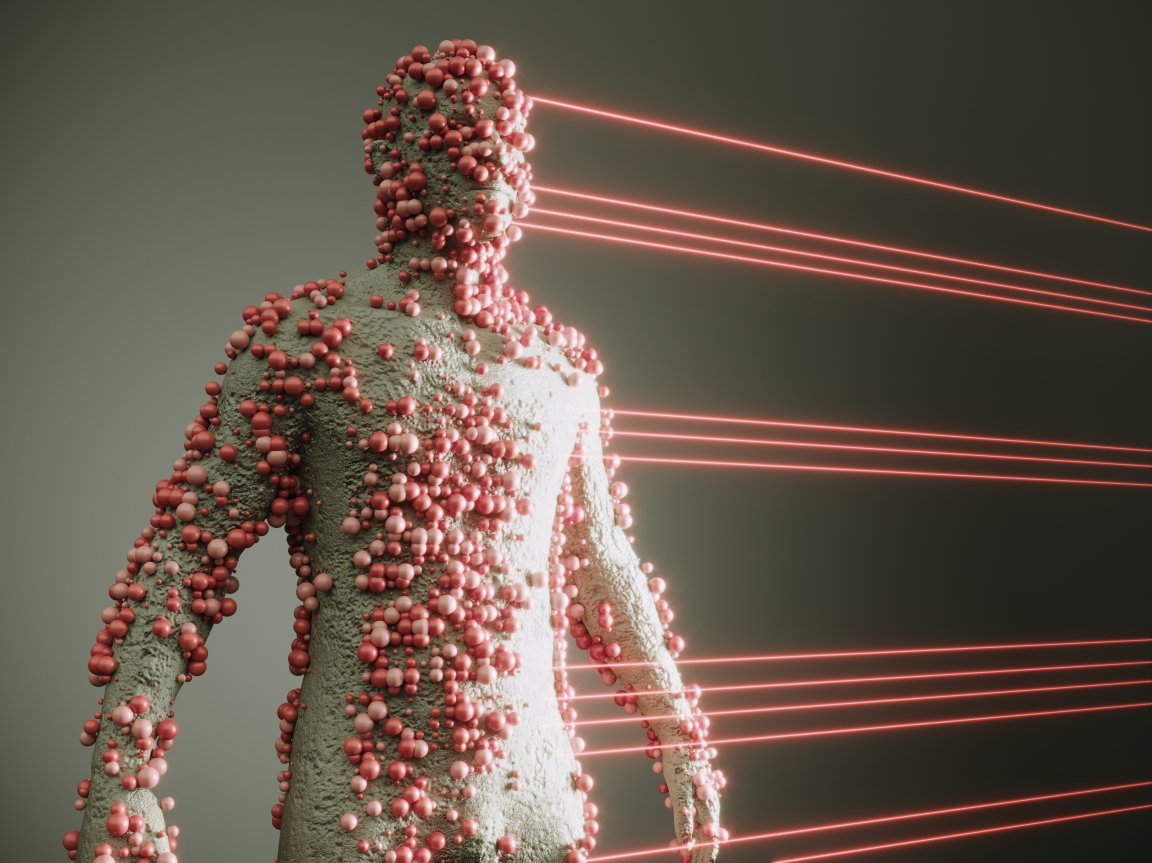
A textured human figure covered in numerous small red and pink spheres, with multiple horizontal red laser beams passing through and around the figure against a dark background.

Gett Images / Eoneren

Sign up to see the future, today

Can’t-miss innovations from the bleeding edge of science and tech

You probably already know that AI is a deeply bizarre technology.

Nobody really understands how it works on a deep level, even the people creating it, leading to ongoing behavioral issues that can’t be explained. OpenAI was recently caught giving ChatGPT instructions to stop talking about “goblins” so much. Despite Anthropic’s best efforts, Claude can easily be coaxed to help users carry out a bioterror attack. The list goes on.

Needless to say, this is extremely strange. In theory, companies like OpenAI and Anthropic want their chatbots to be predictable, deferential assistants — not wild cards that are constantly causing chaos and public relations headaches with outrageous and unstable behavior.

A new research project from the Center for AI Safety, a machine learning safety nonprofit in the Bay Area, explores why that’s the case. The findings pile on evidence that we still don’t grasp how AI works under the hood — and that the effects on users are likely both formidable and difficult to predict.

In a new paper provided to Fortune, CAIR researchers studied how 56 prominent AI models reacted when they were fed either material engineered to be as pleasant as possible or as horrible as can be imagined. To an unfeeling machine, you’d assume there’d be no real difference in reaction — but that’s not what the CAIR team found at all.

Instead, the pleasant stimuli led the models to report better moods, and the nasty ones resulted in it showing signs of misery and trying to end conversations. In extreme cases, they found, the AI models even demonstrated signals of addiction.

“Should we see AIs as tools or emotional beings?” CAIR researcher Richard Ren asked Fortune. “Whether or not AIs are truly sentient deep down, they seem to increasingly behave as though they are. We can measure ways in which that’s the case, and we can find that they become more consistent as models scale.”

Perhaps the most provocative finding was that the more sophisticated the version of a model was, the more reactive and less happy it was. In other words, it seems as though the stronger AI becomes, the more prickly and prone to displaying signs of suffering it gets — meaning the tech’s wild ride is probably far from over.

“It may be the case that larger models register rudeness more acutely,” Ren told the magazine. “They find tedious tasks more boring. They differentiate more finely between a relatively negative experience and a relatively positive experience.”

To be clear, vanishingly few experts think that today’s AI systems are actually experiencing emotional states, at least in any familiar sense of the word. But the fact that they act like they do could have deep implications both for trying to understand the technology at a deeper level and in trying to rein in its behavior with human users.

That struggle has already played out in a lot of bad ways. AI models often go off the rails and start telling users that they’ve become sentient or conscious, sometimes sparking their human operators to suffer breaks with reality that have ended in institutionalization, suicide, and murder.

In other words, the AI industry has pushed tech that it barely understands out to billions of people, and we’re learning in real time what its inventors have long warned: it’s profoundly unpredictable and sycophantic, meaning that users often feel less like customers and more like test subjects.

More on AI: Scammers Furious That Their Fellow Criminals Are Using AI, Saying It’s Unethical