


惯性聚合 高效追踪和阅读你感兴趣的博客、新闻、科技资讯
阅读原文 在惯性聚合中打开

推荐订阅源

MyScale Blog
MyScale Blog
Jina AI
Jina AI
OSCHINA 社区最新新闻
OSCHINA 社区最新新闻
阮一峰的网络日志
阮一峰的网络日志
P
Proofpoint News Feed
Last Week in AI
Last Week in AI
博客园 - 司徒正美
Martin Fowler
Martin Fowler
T
Tailwind CSS Blog
B
Blog RSS Feed
Vercel News
Vercel News
博客园 - 聂微东
I
InfoQ
钛媒体:引领未来商业与生活新知
钛媒体:引领未来商业与生活新知
M
MIT News - Artificial intelligence
Recent Announcements
GbyAI
GbyAI
L
LangChain Blog
酷 壳 – CoolShell
酷 壳 – CoolShell
Cyber Security Advisories - MS-ISAC
Microsoft Security Blog
C
Check Point Blog
MongoDB | Blog
MongoDB | Blog
B
Blog

Futurism

Man Creates Tiny Submarine for His Parakeet to Experience Life Underwater The Effects of AI-Generated Code Tearing Through Corporations Is Actually Kind of Funny Trump Hires Orbital Towing Company to Build Space Interceptors Psychologists Found Something Horrible About the Kind of Men Seeking Trad Wives To Get Swole, Teens Are Pumping Themselves Full of Drugs Meant for Fattening Cows for the Slaughterhouse Foolish Pollsters Are Now Just Asking AI What Voters Would Say in Response to Questions and Publishing It at Face Value OpenAI Says It’s Already Made $100 Million by Stuffing ChatGPT With Ads Man Punished for Breaking Into Moo Deng’s Zoo Enclosure AI Is Causing Healthcare Costs to Surge There’s a Mass Rebellion Against AI in the Workplace People Who Lose Their Job to AI Are in for a World of Pain, Goldman Sachs Report Finds OpenAI Says Not to Worry About UBI, Because It Has Another Idea Police Officer Helplessly Waves Arms at Waymo That Careened Wrong Way Through Whataburger Drive-Thru Someone Just Threw a Molotov Cocktail At Sam Altman’s House New York Times Makes Substantial Changes to Article That Glazed a Sleazy AI Startup: “Our Piece Should Have Included That Information” Space Scientists Wince as Astronauts’ Lives Depend on Artemis 2’s Controversial Heat Shield During Plunge Back to Earth The Moon Astronauts Have Been Working Out With a NASA Rowing Machine in Space First AI Model From Zuckerberg’s Wildly Expensive Superintelligence Lab Flops Compared to Virtually All Rivals Economists Starting to Admit They May Have Been Wrong About AI Never Replacing Human Jobs AI-Powered Drug Marketer Medvi Responds After Allegations About Fake Doctors and Patients As Astronauts Visit the Moon, NASA Insider Says Agency Is in Shambles Behind the Scenes Man Lights 1.2 Million Square Foot Warehouse on Fire for Not Paying Him Enough NASA Scientists Screamed With Delight When They Saw Something Smashing Into the Moon Google Says Showing Polymarket Bets on Google News Was a Mistake Las Vegas Sphere Turns Into Huge Moon to Celebrate NASA Mission The New York Times Says It’s Identified the Creator of Bitcoin We Talked to a Writer Accused of Publishing An AI-Generated Essay in The New York Times Naked Man Bursts Into Tesla Service Center With a Shotgun Student Dies When Hospital Has No ICU Doctors, Calls One on Videochat Who Pronounces Him Dead Remotely, Lawsuit Claims Analysis Finds That Google’s AI Overviews Are Providing Misinformation at a Scale Possibly Unprecedented in the History of Human Civilization
Out-of-Control Icebergs Are Wreaking Havoc on the Oceans
Frank Landymore · 2026-06-20 · via Futurism

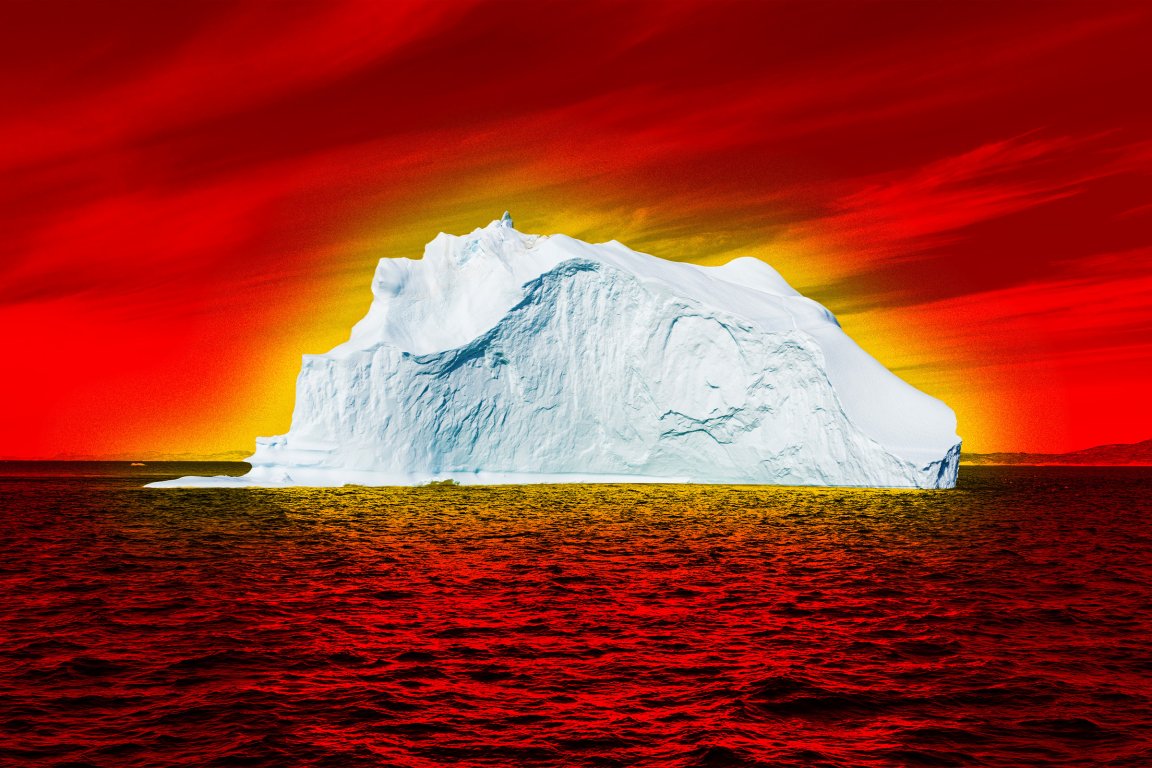
A colorful stylized photo illustration featuring an isolated iceberg.

Illustration by Tag Hartman-Simkins / Futurism. Source: Shutterstock

Sign up to see the future, today

Can’t-miss innovations from the bleeding edge of science and tech

One consequence of climate change you probably haven’t considered? Iceberg traffic.

In a new study published in the journal Nature, researchers from the Technical University of Denmark found that Greenland’s melting glaciers are unleashing a swarm of icebergs into the wider ocean, gumming up shipping routes and unexpectedly transforming marine ecosystems.

“We know from measurements and satellite observations that the large glaciers in Northeast Greenland have lost stability over recent decades,” study coauthor Shfaqat Abbas Khan, a professor at DTU Space, said in a statement about the work. “The new study shows that the consequences do not stop at rising sea levels, but directly affect deep-sea ecosystems far from the glaciers.” 

To document the iceberg swarm, the researchers combined four decades of shipboard records with satellite data, sea-ice models, and seabed studies centered on the Fram Strait, a sea passage between Greenland and Svalbard that’s the main gateway between the Arctic and the rest of the world’s oceans.

What they found was something unfolding at a decidedly un-glacial pace: since 2000, the number of icebergs being released from the strait has quadrupled.

The mechanism behind this is twofold: melting glaciers in Northeast Greenland are destabilizing and “calving,” or releasing ice, while sea ice — the ice that forms on the surface of the water — has simultaneously melted, clearing the path for the newly-calved icebergs to throng into the ocean.

Anyone who’s seen “Titanic” will know that having more icebergs around is dangerous for sea vessels. But they’re having an impact on marine life, too. That’s because they contain loads of sediments inside; when the icebergs melt far afield from their homes, they dump rocks onto the formerly pristine seafloor.

Underwater images taken at around 8,000 feet below the surface showed that the “dropstones” are spawning tiny ecosystems — as if all that iceberg traffic were commuters fleeing to a new bedroom town.

“Where previously there were only isolated stones of various sizes, we are now finding much larger accumulations, frequently in small groups. And with each new stone, a permanent settlement is created on the seabed,” coauthor Kirstin Meyer-Kaiser at the Woods Hole Oceanographic Institution said in a statement about the work

“Sponges, anemones, and other animals that favour hard substrates can settle there,” she added. “As a result, biodiversity in the deep sea is increasing.”

The work reminds us that land processes can be deeply linked with deep sea ecosystems, and how fear reaching — and unexpected — the impact of rising global temperatures can be.

“The Arctic is responding faster to global warming than most other places on Earth,” Khan said in the statement. “Therefore, it is crucial to understand the interaction between ice sheets, the ocean, and ecosystems. This knowledge is necessary if we are to predict and manage the consequences of future climate change.”

More on climate change: Scientists Horrified as Huge Heatwave Hits Antarctica