

惯性聚合 高效追踪和阅读你感兴趣的博客、新闻、科技资讯
阅读原文 在惯性聚合中打开

推荐订阅源

The Cloudflare Blog
小众软件
小众软件
奇客Solidot–传递最新科技情报
奇客Solidot–传递最新科技情报
T
Tailwind CSS Blog
WordPress大学
WordPress大学
有赞技术团队
有赞技术团队
博客园 - 司徒正美
V
Visual Studio Blog
G
Google Developers Blog
freeCodeCamp Programming Tutorials: Python, JavaScript, Git & More
月光博客
月光博客
aimingoo的专栏
aimingoo的专栏
博客园_首页
Blog — PlanetScale
Blog — PlanetScale
博客园 - 聂微东
S
SegmentFault 最新的问题
T
The Blog of Author Tim Ferriss
D
Docker
Vercel News
Vercel News
Recent Announcements
Last Week in AI
Last Week in AI
爱范儿
爱范儿
J
Java Code Geeks
大猫的无限游戏
大猫的无限游戏

Futurism

Man Creates Tiny Submarine for His Parakeet to Experience Life Underwater The Effects of AI-Generated Code Tearing Through Corporations Is Actually Kind of Funny Trump Hires Orbital Towing Company to Build Space Interceptors Psychologists Found Something Horrible About the Kind of Men Seeking Trad Wives To Get Swole, Teens Are Pumping Themselves Full of Drugs Meant for Fattening Cows for the Slaughterhouse Foolish Pollsters Are Now Just Asking AI What Voters Would Say in Response to Questions and Publishing It at Face Value OpenAI Says It’s Already Made $100 Million by Stuffing ChatGPT With Ads Man Punished for Breaking Into Moo Deng’s Zoo Enclosure AI Is Causing Healthcare Costs to Surge There’s a Mass Rebellion Against AI in the Workplace People Who Lose Their Job to AI Are in for a World of Pain, Goldman Sachs Report Finds OpenAI Says Not to Worry About UBI, Because It Has Another Idea Police Officer Helplessly Waves Arms at Waymo That Careened Wrong Way Through Whataburger Drive-Thru Someone Just Threw a Molotov Cocktail At Sam Altman’s House New York Times Makes Substantial Changes to Article That Glazed a Sleazy AI Startup: “Our Piece Should Have Included That Information” Space Scientists Wince as Astronauts’ Lives Depend on Artemis 2’s Controversial Heat Shield During Plunge Back to Earth The Moon Astronauts Have Been Working Out With a NASA Rowing Machine in Space First AI Model From Zuckerberg’s Wildly Expensive Superintelligence Lab Flops Compared to Virtually All Rivals Economists Starting to Admit They May Have Been Wrong About AI Never Replacing Human Jobs AI-Powered Drug Marketer Medvi Responds After Allegations About Fake Doctors and Patients As Astronauts Visit the Moon, NASA Insider Says Agency Is in Shambles Behind the Scenes Man Lights 1.2 Million Square Foot Warehouse on Fire for Not Paying Him Enough NASA Scientists Screamed With Delight When They Saw Something Smashing Into the Moon Google Says Showing Polymarket Bets on Google News Was a Mistake Las Vegas Sphere Turns Into Huge Moon to Celebrate NASA Mission The New York Times Says It’s Identified the Creator of Bitcoin We Talked to a Writer Accused of Publishing An AI-Generated Essay in The New York Times Naked Man Bursts Into Tesla Service Center With a Shotgun Student Dies When Hospital Has No ICU Doctors, Calls One on Videochat Who Pronounces Him Dead Remotely, Lawsuit Claims Analysis Finds That Google’s AI Overviews Are Providing Misinformation at a Scale Possibly Unprecedented in the History of Human Civilization
Study Finds AI Use Eats Away at Users’ Confidence in Thei...
Joe Wilkins · 2026-04-19 · via Futurism

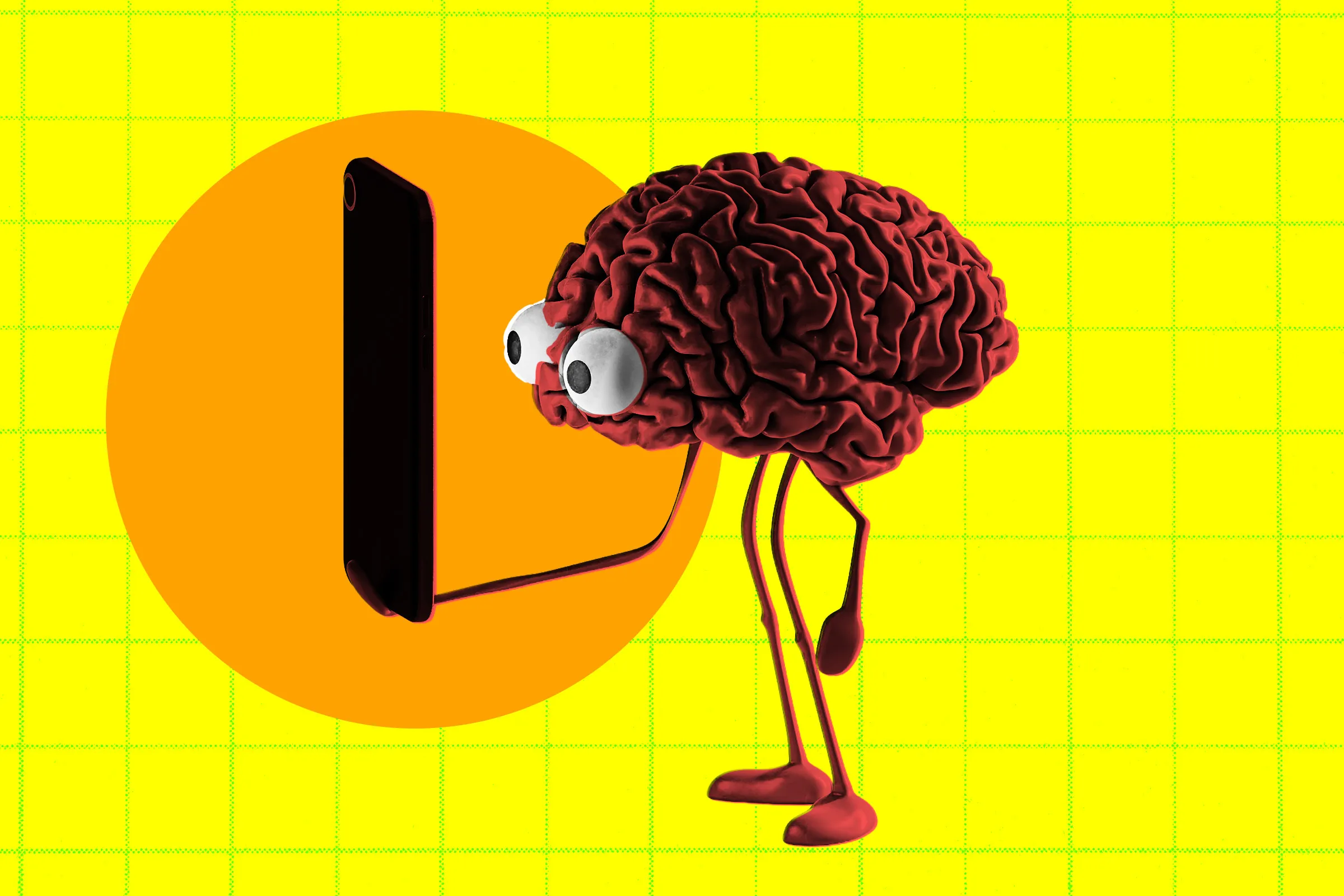
A cartoonish red brain with large, googly eyes and thin, stick-like arms and legs is looking at a smartphone held up in front of it. The background is bright yellow with a grid pattern and an orange circle behind the phone.

Illustration by Tag Hartman-Simkins / Futurism. Source: Getty Images

Sign up to see the future, today

Can’t-miss innovations from the bleeding edge of science and tech

Researchers are growing increasingly suspicious that outsourcing intellectual tasks to AI is causing a range of cognitive deficits. A new study adds a wrinkle worth paying attention to: that use of the bots can eat away at users’ faith in their own abilities, resulting in lower confidence in their own independent reasoning.

The new peer-reviewed study, published in the journal Technology, Mind and Behavior and flagged by TIME, found that those who showed a heavy reliance on AI were more likely to admit chatbots were “thinking” for them — and seem to show decreased confidence in their own ideas.

By the same token, participants who took control over their AI’s output by editing, questioning, or scrapping it showed a greater confidence and sense of ownership over the final output, even though the tools used were the same.

As the study’s author Sarah Baldeo — a PhD candidate in AI and neuroscience at Middlesex University — told TIME, the ultimate cognitive effects “depends on your interaction style.”

“When we look at brain activity contingent on how people choose to use the tool, we can see increases or decreases,” Baldeo said. “It really doesn’t have to do with the tool itself.”

That finding lines up with the “boiling frog study” we covered earlier this week. That yet-to-be-peer-reviewed paper, by researchers at MIT and Carnegie Mellon, claimed to have found the first causal evidence that AI can rapidly degrade users’ intellectual abilities, particularly when we use the tech for “reasoning-intensive” work.

During that study, participants in the experimental group were given AI access to complete a series of equations. The researchers then pulled the plug in the middle of their work, forcing them to continue without it. Those who had been abandoned by their AI chatbots saw rapid declines in reasoning ability, as well as a swift drop in willingness to follow-through and complete the math tasks.

Both studies converge on the same core mechanism: how you use AI is an important factor in determining whether it harms your cognitive ability. Basically, they argue that offloading all of your work to the machine degrades your capacity for independent reasoning, while using AI as a supplement may help to preserve it.

Whether you’re measuring confidence or raw reasoning, both pieces of research seem to pose an important question: are you using AI to help you think, or is AI doing the thinking for you?

More on AI: College Students Losing Ability to Participate in Class Discussions Due to Offloading Their Thinking to AI