





惯性聚合 高效追踪和阅读你感兴趣的博客、新闻、科技资讯
阅读原文 在惯性聚合中打开

推荐订阅源

Martin Fowler
Martin Fowler
WordPress大学
WordPress大学
月光博客
月光博客
OSCHINA 社区最新新闻
OSCHINA 社区最新新闻
大猫的无限游戏
大猫的无限游戏
让小产品的独立变现更简单 - ezindie.com
博客园 - 聂微东
Apple Machine Learning Research
钛媒体:引领未来商业与生活新知
钛媒体:引领未来商业与生活新知
雷峰网
雷峰网
小众软件
小众软件
酷 壳 – CoolShell
酷 壳 – CoolShell
博客园 - 叶小钗
美团技术团队
宝玉的分享
宝玉的分享
Hugging Face - Blog
Hugging Face - Blog
阮一峰的网络日志
阮一峰的网络日志
A
About on SuperTechFans
Jina AI
Jina AI
D
Docker
Last Week in AI
Last Week in AI
MongoDB | Blog
MongoDB | Blog
Stack Overflow Blog
Stack Overflow Blog
Microsoft Azure Blog

Futurism

Man Creates Tiny Submarine for His Parakeet to Experience Life Underwater The Effects of AI-Generated Code Tearing Through Corporations Is Actually Kind of Funny Trump Hires Orbital Towing Company to Build Space Interceptors Psychologists Found Something Horrible About the Kind of Men Seeking Trad Wives To Get Swole, Teens Are Pumping Themselves Full of Drugs Meant for Fattening Cows for the Slaughterhouse Foolish Pollsters Are Now Just Asking AI What Voters Would Say in Response to Questions and Publishing It at Face Value OpenAI Says It’s Already Made $100 Million by Stuffing ChatGPT With Ads Man Punished for Breaking Into Moo Deng’s Zoo Enclosure AI Is Causing Healthcare Costs to Surge There’s a Mass Rebellion Against AI in the Workplace People Who Lose Their Job to AI Are in for a World of Pain, Goldman Sachs Report Finds OpenAI Says Not to Worry About UBI, Because It Has Another Idea Police Officer Helplessly Waves Arms at Waymo That Careened Wrong Way Through Whataburger Drive-Thru Someone Just Threw a Molotov Cocktail At Sam Altman’s House New York Times Makes Substantial Changes to Article That Glazed a Sleazy AI Startup: “Our Piece Should Have Included That Information” Space Scientists Wince as Astronauts’ Lives Depend on Artemis 2’s Controversial Heat Shield During Plunge Back to Earth The Moon Astronauts Have Been Working Out With a NASA Rowing Machine in Space First AI Model From Zuckerberg’s Wildly Expensive Superintelligence Lab Flops Compared to Virtually All Rivals Economists Starting to Admit They May Have Been Wrong About AI Never Replacing Human Jobs AI-Powered Drug Marketer Medvi Responds After Allegations About Fake Doctors and Patients As Astronauts Visit the Moon, NASA Insider Says Agency Is in Shambles Behind the Scenes Man Lights 1.2 Million Square Foot Warehouse on Fire for Not Paying Him Enough NASA Scientists Screamed With Delight When They Saw Something Smashing Into the Moon Google Says Showing Polymarket Bets on Google News Was a Mistake Las Vegas Sphere Turns Into Huge Moon to Celebrate NASA Mission The New York Times Says It’s Identified the Creator of Bitcoin We Talked to a Writer Accused of Publishing An AI-Generated Essay in The New York Times Naked Man Bursts Into Tesla Service Center With a Shotgun Student Dies When Hospital Has No ICU Doctors, Calls One on Videochat Who Pronounces Him Dead Remotely, Lawsuit Claims Analysis Finds That Google’s AI Overviews Are Providing Misinformation at a Scale Possibly Unprecedented in the History of Human Civilization
NASA Has a Major Problem Threatening Its Entire Moon Plans
Victor Tangermann · 2026-06-27 · via Futurism

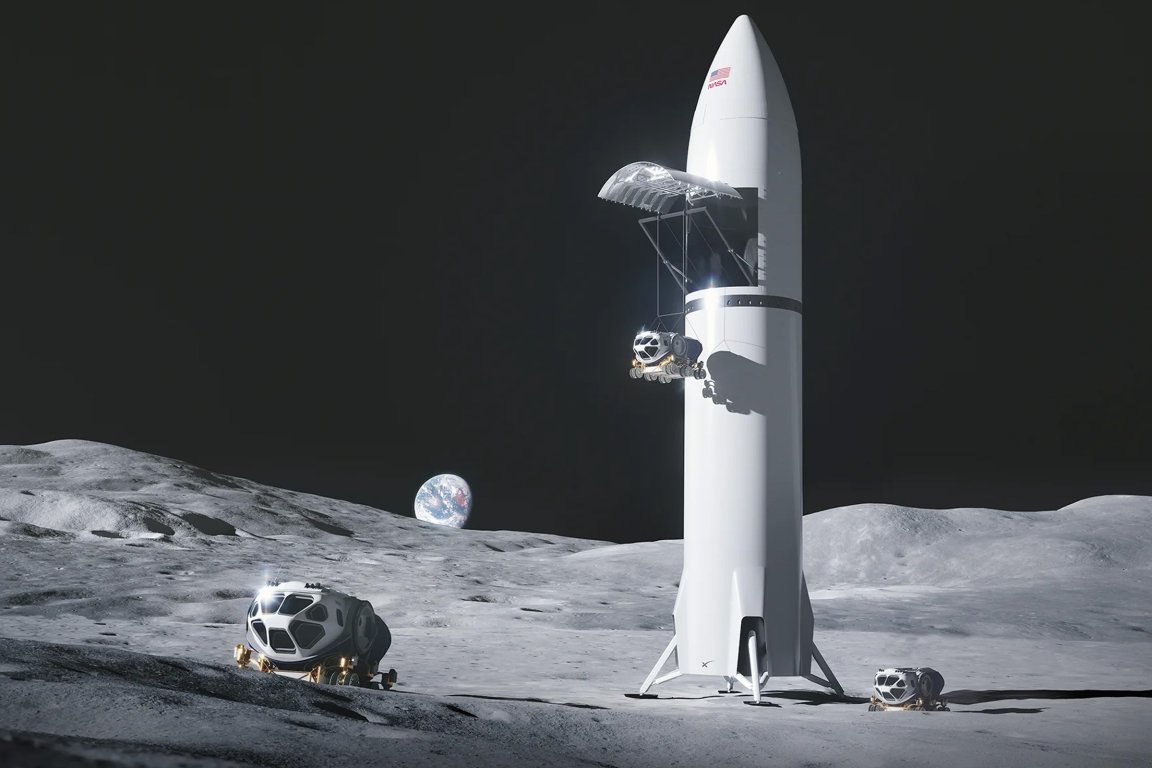
Early conceptual renderings of cargo variants of human lunar landing systems from NASA’s provider SpaceX.

SpaceX / NASA

Sign up to see the future, today

Can’t-miss innovations from the bleeding edge of science and tech

To get SpaceX’s mammoth Starship all the way to the Moon and back with astronauts on board will require an enormous amount of fuel.

Over a period of eight days, Elon Musk’s space company will need to launch at least 15 of them to fully load a fuel depot in low-Earth orbit. That fuel will then have to be transferred into a separately-launched Human Landing System variant of the spacecraft that astronauts will board before descending to the lunar surface.

Needless to say, SpaceX certainly has its work cut out to have its Starship ready for NASA’s Artemis 4 mission in 2028, the first crewed attempt to land on the Moon since 1972 — let alone dramatically increasing its launch cadence, as it has yet to launch and safely land the rocket.

It gets worse. Now, the space agency’s watchdog says there’s an even bigger problem that could threaten NASA’s ambitious plans. According to a new report by the Office of the Inspector General (OIG), “NASA’s launch infrastructure is dated and lacks the capacity to meet the growing demands of the Agency and government and commercial partners.”

A major surge in commercial launches has put the launch pads at NASA’s Kennedy Space Center in Florida and Wallops Flight Facility in Virginia under major strain. And simply building more pads is far easier said than done. Growing “demand for super heavy-lift launch vehicles” is “driving the need for additional launch pads that can accommodate these vehicles, but locations for new launch pads are limited and will require extensive time and resources to develop,” the OIG frets.

Meanwhile, electrical power distribution is “being used beyond its design life and needs to be upgraded,” while the infrastructure for fuel components, like nitrogen and helium, could also “lead to delays.” Even the roadways around Kennedy were “not designed to accommodate the volume, frequency, and weight of modern heavy transport operations.” And declining budgets for maintenance and construction have resulted in lagging infrastructure that exacerbate it all.

The news comes after the Federal Aviation Administration approved SpaceX to launch its Starship from launch complex 39A, from which many Apollo and Space Shuttle program missions launched starting in the 1960s. Musk’s company is hoping to greatly expand the complex for its enormous spacecraft, including the addition of the many necessary structures on top of the launch pad, like towers and fuel tanks.

Meanwhile, Jeff Bezos’ Blue Origin, which NASA has also selected to develop a competing Human Landing Systems spacecraft for the Moon landing, will also need plenty of space and capacity for launching its powerful New Glenn rocket, further complicating matters.

In short, as the OIG notes in its report, NASA and its commercial partners need to make some major changes to ensure that the Artemis Moon program remains on track.

And that certainly doesn’t bode well, considering the development of both New Glenn and Starship are already running into numerous delays and failed test launches.

More on Artemis: NASA’s Next Moon Mission Is a Rube Goldberg Machine of Corporate Failure Points