

惯性聚合 高效追踪和阅读你感兴趣的博客、新闻、科技资讯
阅读原文 在惯性聚合中打开

推荐订阅源

D
DataBreaches.Net
GbyAI
GbyAI
aimingoo的专栏
aimingoo的专栏
freeCodeCamp Programming Tutorials: Python, JavaScript, Git & More
月光博客
月光博客
大猫的无限游戏
大猫的无限游戏
M
MIT News - Artificial intelligence
腾讯CDC
博客园 - Franky
Engineering at Meta
Engineering at Meta
C
Check Point Blog
T
The Blog of Author Tim Ferriss
有赞技术团队
有赞技术团队
Microsoft Azure Blog
MyScale Blog
MyScale Blog
I
InfoQ
Blog — PlanetScale
Blog — PlanetScale
P
Proofpoint News Feed
The GitHub Blog
The GitHub Blog
N
Netflix TechBlog - Medium
Last Week in AI
Last Week in AI
S
SegmentFault 最新的问题
Cyber Security Advisories - MS-ISAC
WordPress大学
WordPress大学

Futurism

Man Creates Tiny Submarine for His Parakeet to Experience Life Underwater The Effects of AI-Generated Code Tearing Through Corporations Is Actually Kind of Funny Trump Hires Orbital Towing Company to Build Space Interceptors Psychologists Found Something Horrible About the Kind of Men Seeking Trad Wives To Get Swole, Teens Are Pumping Themselves Full of Drugs Meant for Fattening Cows for the Slaughterhouse Foolish Pollsters Are Now Just Asking AI What Voters Would Say in Response to Questions and Publishing It at Face Value OpenAI Says It’s Already Made $100 Million by Stuffing ChatGPT With Ads DOGE Made Drastic Cuts to a Global Vaccine Assistance Program. Now There’s a Deadly Measles Outbreak in Bangladesh Man Punished for Breaking Into Moo Deng’s Zoo Enclosure AI Is Causing Healthcare Costs to Surge There’s a Mass Rebellion Against AI in the Workplace People Who Lose Their Job to AI Are in for a World of Pain, Goldman Sachs Report Finds OpenAI Says Not to Worry About UBI, Because It Has Another Idea Police Officer Helplessly Waves Arms at Waymo That Careened Wrong Way Through Whataburger Drive-Thru Someone Just Threw a Molotov Cocktail At Sam Altman’s House New York Times Makes Substantial Changes to Article That Glazed a Sleazy AI Startup: “Our Piece Should Have Included That Information” Space Scientists Wince as Astronauts’ Lives Depend on Artemis 2’s Controversial Heat Shield During Plunge Back to Earth The Moon Astronauts Have Been Working Out With a NASA Rowing Machine in Space First AI Model From Zuckerberg’s Wildly Expensive Superintelligence Lab Flops Compared to Virtually All Rivals Economists Starting to Admit They May Have Been Wrong About AI Never Replacing Human Jobs AI-Powered Drug Marketer Medvi Responds After Allegations About Fake Doctors and Patients As Astronauts Visit the Moon, NASA Insider Says Agency Is in Shambles Behind the Scenes Man Lights 1.2 Million Square Foot Warehouse on Fire for Not Paying Him Enough NASA Scientists Screamed With Delight When They Saw Something Smashing Into the Moon Google Says Showing Polymarket Bets on Google News Was a Mistake Las Vegas Sphere Turns Into Huge Moon to Celebrate NASA Mission The New York Times Says It’s Identified the Creator of Bitcoin We Talked to a Writer Accused of Publishing An AI-Generated Essay in The New York Times Naked Man Bursts Into Tesla Service Center With a Shotgun Student Dies When Hospital Has No ICU Doctors, Calls One on Videochat Who Pronounces Him Dead Remotely, Lawsuit Claims
Moon Astronaut Captures Shot of Earth That Lets You See I...
2026-04-08 · via Futurism

NASA astronaut and Artemis 2 mission commander Reid Wiseman took a moment to snap a breathtaking photo of the full Earth.

NASA

Sign up to see the future, today

Can’t-miss innovations from the bleeding edge of science and tech

On December 7, 1972, NASA astronaut and Apollo 17 crew member Harrison Schmitt took a stunning photo of the entirety of the Earth, an image later dubbed “The Blue Marble.”

The iconic shot was made possible by the mission’s unusual trajectory, which brought much of our world’s south pole into view. The astonishing perspective changed the “way we look at our home planet,” as the space agency notes on its website.

And while Apollo 17 was the last time we set foot on the Moon’s surface, we finally have a non-satellite-image-based update to the photo over half a century later.

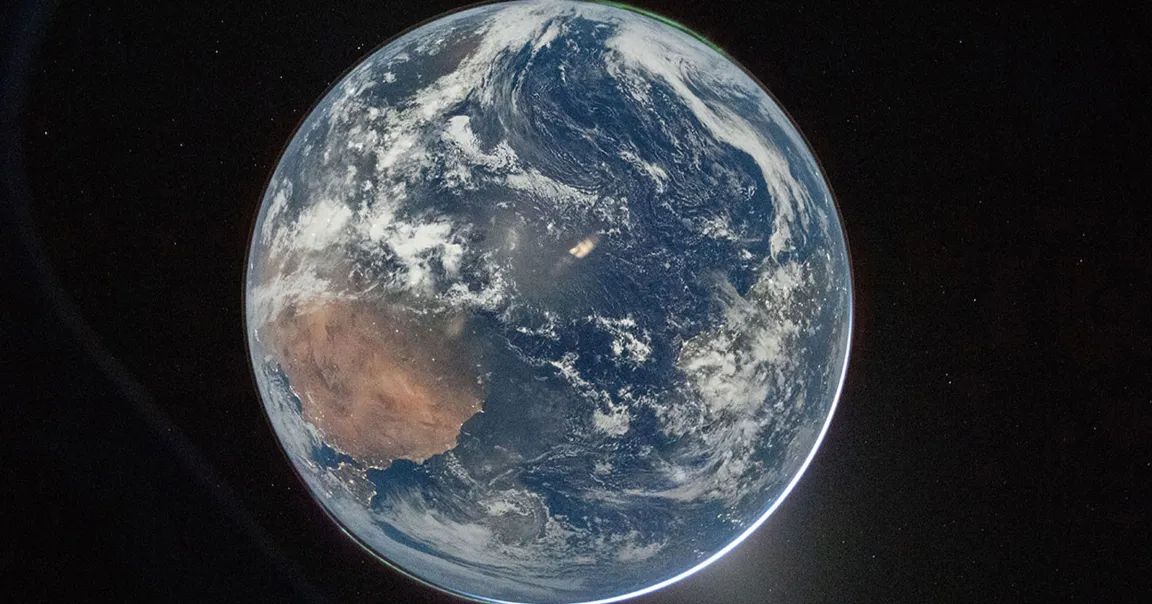
After their Orion spacecraft fired its thrusters to take the crew of NASA’s ongoing Artemis 2 mission away from Earth on April 2, NASA astronaut and commander Reid Wiseman took a moment to snap a breathtaking photo of our world .

The image, titled “Hello, World,” even shows the boundary of Earth’s atmosphere in remarkable detail — including not just one but two auroras visible in the top right and bottom left, they appear as faint green hues.

It’s a stark reminder of the frail layer of gases that allows life to exist on Earth, a feature that may — or may not — make us unique in the universe.
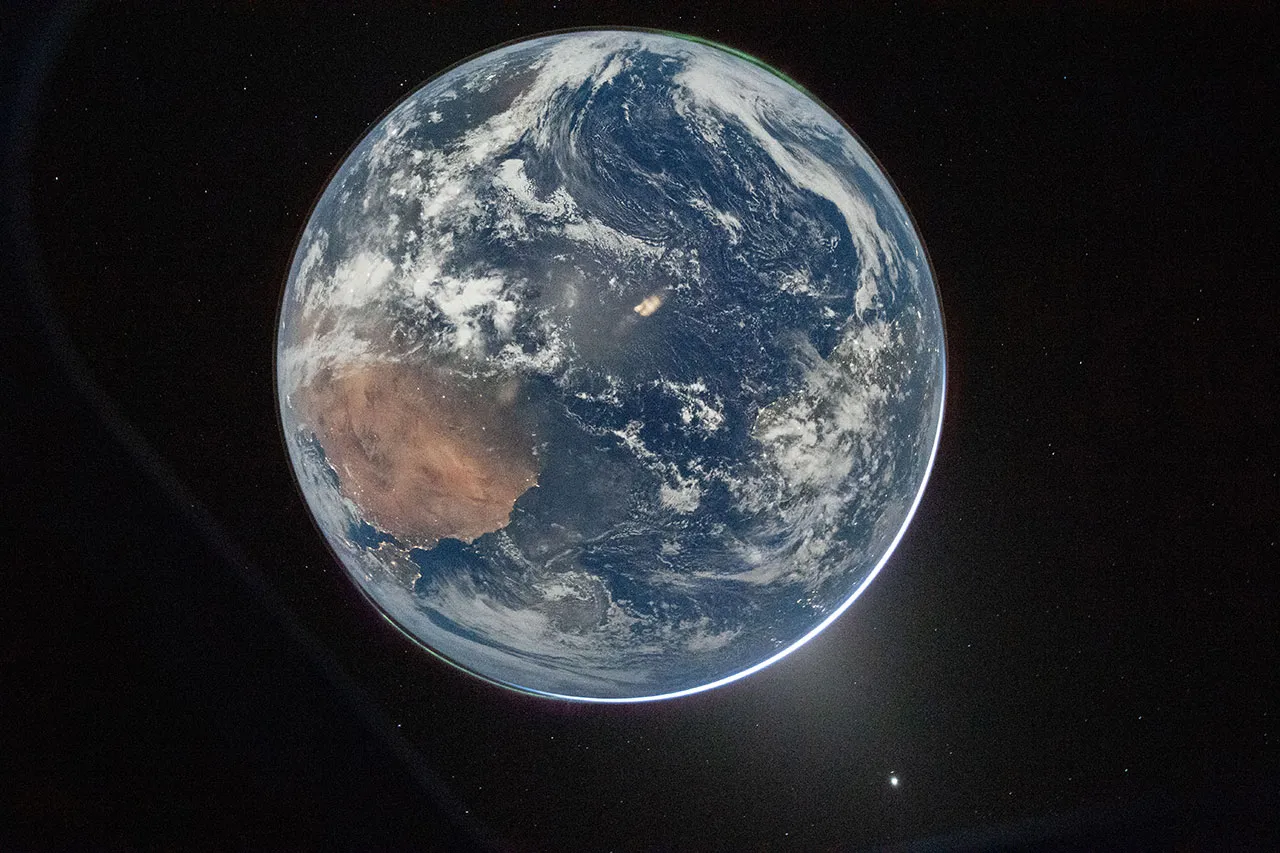
The image, titled "Hello, World," shows the Earth's atmosphere in remarkable detail, including not just one, but two auroras, visible in the top right and bottom left, appearing as faint green hues.

The glow on the bottom right of the image is “zodiacal light,” a faint glow also referred to as “false dawn,” that appears due to rays of light being scattered by interplanetary dust as the Earth eclipses the Sun.

The photo, alongside another stunning image showing the Earth peeking through one of the Orion spacecraft’s windows after completing the translunar injection burn, were the two first images the Artemis 2 astronauts sent back to Earth.

Since then, the team has sent back a treasure chest of astonishing views from their lunar flyby, including dramatic scenes of the lunar surface and the Earth setting and rising behind it.

Considering the amazing photos we’ve already seen, there’s no doubt the memory cards they’ll be bringing back to Earth on Friday evening will contain an even greater collection of out-of-this-world views.

More on Artemis photos: We’re In Utter Disbelief About the Photos the Moon Astronauts Just Sent Back