






Sign up to see the future, today
Can’t-miss innovations from the bleeding edge of science and tech
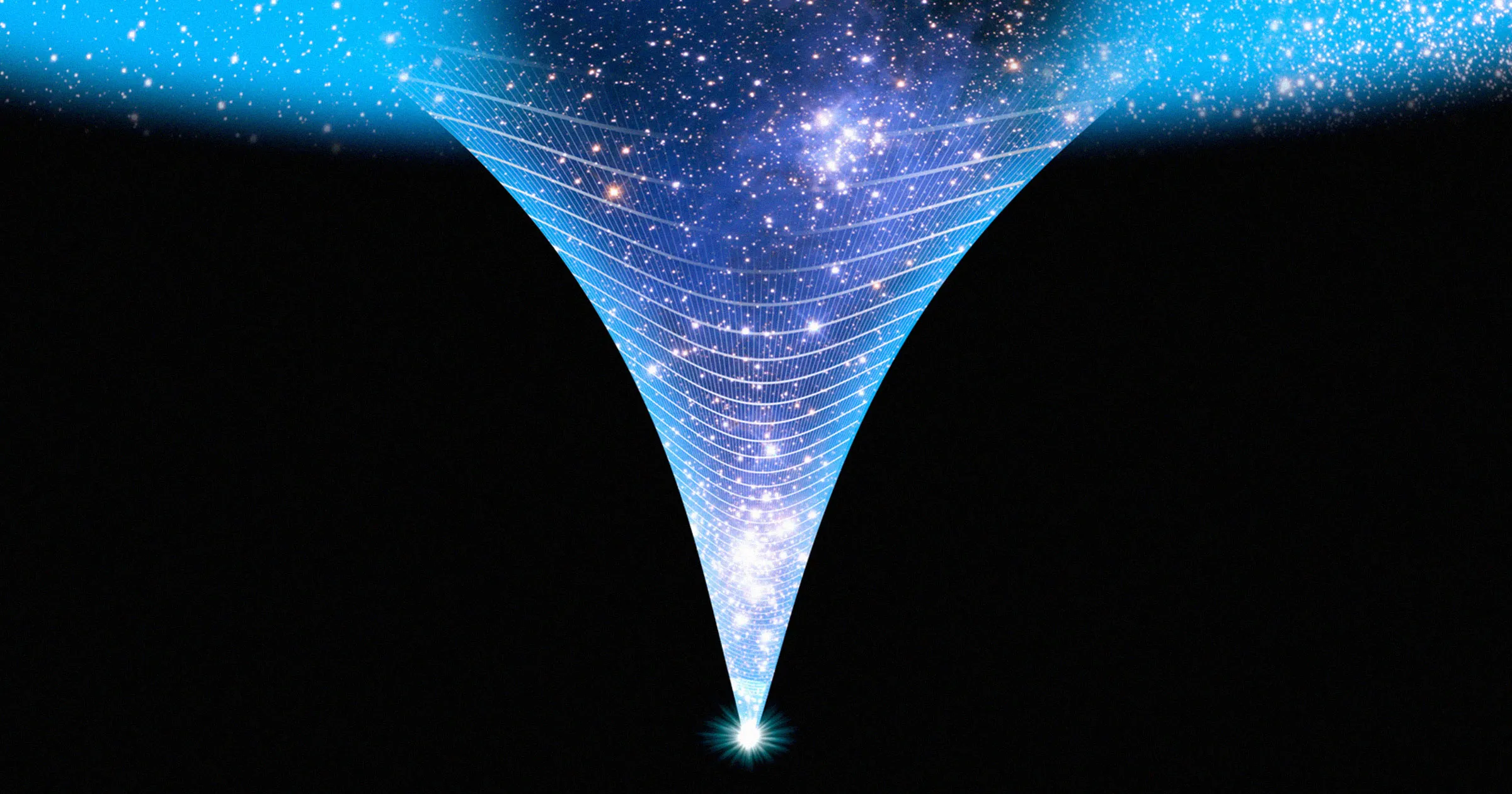
Almost a century ago, famed astronomer Edwin Hubble determined that the universe is expanding at an accelerating rate. The further away galaxies were from Earth, he found, the faster they appeared to be moving away from us.
It was an elegant observation that undergirds much of today’s cosmology. But nailing down the exact relationship between the distance of celestial objects and how fast they recede from us remains one of the most significant challenges in modern astronomy. Specifically, the precise expansion rate of the universe — called the Hubble constant — has turned into a major pain point as attempts to nail it down keep leading to widely differing figures.
One issue is that when scientists calculate what the Hubble constant should be, it doesn’t quite match observations of the actual universe. Even worse, different sensitive devices designed to measure it down keep disagreeing with each other. The problem is so significant that it has its own name: the Hubble tension.
Now, an international team of astronomers say they’ve produced one of the most precise measurements of the Hubble constant to date, which they say brings us a small step closer to addressing this glaring discrepancy — and potentially answering some of the most fundamental questions that remain surrounding the nature of the universe, such as its true age.
As detailed in a paper published in the journal Astronomy & Astrophysics, the team identified a specific value of the Hubble constant of around 73.5 kilometers per second per megaparsec (roughly 3.26 million light-years.) While it may be a step in the right direction, the latest findings also serve to highlight just how much top scientists are struggling to resolve the tension. It’s a morass that raises the possibility that we’re deeply misunderstanding something, or that the universe may be ruled by laws of physics that we still haven’t discovered.
“The prevailing cosmological model predicts that the Hubble constant should be ten percent smaller than we measure directly,” lead author and Space Telescope Science Institute scientist Stefano Casertano told Phys.org. “This is known as the Hubble tension, and the difference is more than five times the combined uncertainty of both models and measurements.”
Previous attempts to arrive at the precise value of the Hubble constant have had varying results. To unify these measurements into a single number, the team “developed a statistical framework to properly combine all of these measurements together, and to identify any possible inconsistencies,” as coauthor and fellow Space Telescope Science Institute scientist Adam Riess told the publication.
“This is the most precise measurement to date, achieving one percent accuracy for the first time,” Casertano added. “We also found that no single measurement or thread is critical to this result; any component can be eliminated entirely, and the value of the Hubble constant remains essentially unchanged.”
While honing in on a more precise value for the Hubble constant is an important step forward, plenty of work remains.
“Confirming the Hubble tension makes it even more important for us to reexamine the foundations of the current cosmological model, and to identify any new phenomena that might modify the evolution of the universe,” Riess told Phys.org.
“This work effectively rules out explanations of the Hubble tension that rely on a single overlooked error in local distance measurements,” the scientists concluded in their paper. “If the tension is real, as the growing body of evidence suggests, it may point to new physics beyond the standard cosmological model.”
More on the Hubble tension: Our Entire Galaxy Appears to Be Embedded in a Colossal Sheet of Dark Matter
此内容由惯性聚合(RSS阅读器)自动聚合整理,仅供阅读参考。 原文来自 — 版权归原作者所有。