

惯性聚合 高效追踪和阅读你感兴趣的博客、新闻、科技资讯
阅读原文 在惯性聚合中打开

推荐订阅源

博客园 - 叶小钗
D
Docker
Google DeepMind News
Y
Y Combinator Blog
钛媒体:引领未来商业与生活新知
钛媒体:引领未来商业与生活新知
Blog — PlanetScale
Blog — PlanetScale
OSCHINA 社区最新新闻
OSCHINA 社区最新新闻
U
Unit 42
博客园 - 【当耐特】
N
Netflix TechBlog - Medium
V
Visual Studio Blog
Microsoft Azure Blog
博客园_首页
Recent Announcements
GbyAI
GbyAI
T
Tailwind CSS Blog
S
SegmentFault 最新的问题
WordPress大学
WordPress大学
T
The Blog of Author Tim Ferriss
Engineering at Meta
Engineering at Meta
L
LangChain Blog
A
About on SuperTechFans
M
MIT News - Artificial intelligence
B
Blog

Futurism

Man Creates Tiny Submarine for His Parakeet to Experience Life Underwater The Effects of AI-Generated Code Tearing Through Corporations Is Actually Kind of Funny Trump Hires Orbital Towing Company to Build Space Interceptors Psychologists Found Something Horrible About the Kind of Men Seeking Trad Wives To Get Swole, Teens Are Pumping Themselves Full of Drugs Meant for Fattening Cows for the Slaughterhouse Foolish Pollsters Are Now Just Asking AI What Voters Would Say in Response to Questions and Publishing It at Face Value OpenAI Says It’s Already Made $100 Million by Stuffing ChatGPT With Ads Man Punished for Breaking Into Moo Deng’s Zoo Enclosure AI Is Causing Healthcare Costs to Surge There’s a Mass Rebellion Against AI in the Workplace People Who Lose Their Job to AI Are in for a World of Pain, Goldman Sachs Report Finds OpenAI Says Not to Worry About UBI, Because It Has Another Idea Police Officer Helplessly Waves Arms at Waymo That Careened Wrong Way Through Whataburger Drive-Thru Someone Just Threw a Molotov Cocktail At Sam Altman’s House New York Times Makes Substantial Changes to Article That Glazed a Sleazy AI Startup: “Our Piece Should Have Included That Information” Space Scientists Wince as Astronauts’ Lives Depend on Artemis 2’s Controversial Heat Shield During Plunge Back to Earth The Moon Astronauts Have Been Working Out With a NASA Rowing Machine in Space First AI Model From Zuckerberg’s Wildly Expensive Superintelligence Lab Flops Compared to Virtually All Rivals Economists Starting to Admit They May Have Been Wrong About AI Never Replacing Human Jobs AI-Powered Drug Marketer Medvi Responds After Allegations About Fake Doctors and Patients As Astronauts Visit the Moon, NASA Insider Says Agency Is in Shambles Behind the Scenes Man Lights 1.2 Million Square Foot Warehouse on Fire for Not Paying Him Enough NASA Scientists Screamed With Delight When They Saw Something Smashing Into the Moon Google Says Showing Polymarket Bets on Google News Was a Mistake Las Vegas Sphere Turns Into Huge Moon to Celebrate NASA Mission The New York Times Says It’s Identified the Creator of Bitcoin We Talked to a Writer Accused of Publishing An AI-Generated Essay in The New York Times Naked Man Bursts Into Tesla Service Center With a Shotgun Student Dies When Hospital Has No ICU Doctors, Calls One on Videochat Who Pronounces Him Dead Remotely, Lawsuit Claims Analysis Finds That Google’s AI Overviews Are Providing Misinformation at a Scale Possibly Unprecedented in the History of Human Civilization
SpaceX Admits AI Data Centers in Space May Be a Really Te...
Victor Tange · 2026-04-23 · via Futurism

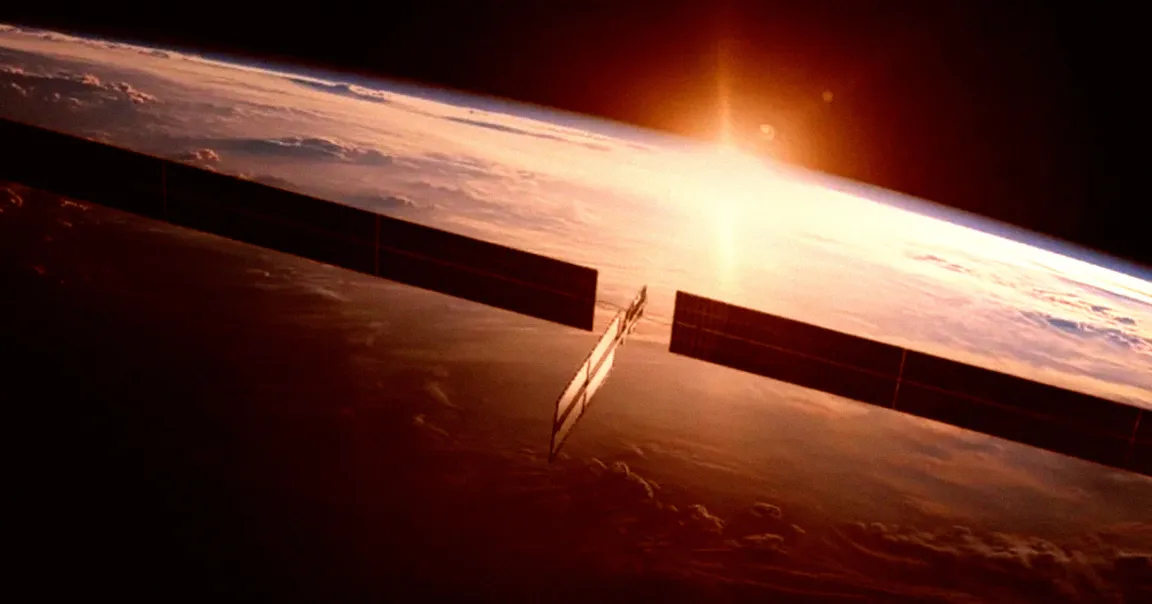
Even SpaceX itself isn't fully sold on orbital data centers, an idea its mercurial CEO is pushing hard and prioritizing over everything else.

SpaceX / Futurism

Sign up to see the future, today

Can’t-miss innovations from the bleeding edge of science and tech

SpaceX CEO Elon Musk has been adamant that putting enormous AI data centers in Earth’s orbit is a “no-brainer.”

At the World Economic Forum in Davos earlier this year, Musk claimed that the unconstrained solar power beyond our planet’s surface makes it the “lowest-cost place to put AI,” something “that will be true within two years, three at the latest.”

Yet many experts remain unconvinced that sending up to a million satellites, each bigger than the International Space Station, makes any sense, citing concerns over economic feasibility and physical limits. Some warn they could even cause an environmental catastrophe, with aging and failing hardware doomed to burn up in the Earth’s atmosphere while releasing copious amounts of ozone-depleting chemicals.

Even SpaceX itself isn’t fully sold on the idea its mercurial CEO is pushing hard — and prioritizing over his decades-old wish of sending humans to Mars.

In excerpts of the company’s pre-IPO filing obtained by Reuters, the company admitted that its “initiatives to develop orbital ​AI compute and in-orbit, lunar, and interplanetary industrialization are in early stages, involve significant technical complexity and unproven technologies, and may not achieve commercial viability.”

It’s a significant tonal shift ahead of the company’s blockbuster IPO, which is reportedly on track for later this year, at a record-breaking valuation of roughly $1.75 trillion.

SpaceX acknowledged that sending sensitive AI chips into space may cause them to wear out much faster. Orbital data centers will operate “in the harsh and unpredictable environment of space, exposing them to a wide and unique range of ​space-related risks that could cause them to malfunction or fail.”

The company also pointed out its heavy reliance on its super heavy launch platform, Starship, to build out its enormous constellation of up to one million data centers.

“Any failure or delay in the development of Starship at scale or in achieving the required launch cadence, reusability and capabilities thereof would ⁠delay ​or limit our ability to execute our growth strategy,” the filing reads, as quoted by Reuters.

SpaceX has yet to successfully send the rocket into space and safely land it in one piece. Previous test flights have resulted in massive mid-flight explosions.

However, thanks to its enormous size and payload capacity, SpaceX could soon dramatically increase the amount of hardware it can launch into space, while theoretically lowering costs as well.

In short, its plans for orbital data centers aren’t just extremely ambitious; Musk has framed his entire space company on the endeavor months ahead of its long-awaited IPO. Yet glaring questions regarding the idea’s financial, let alone physical, feasibility remain unanswered — a reality that the company’s engineers are clearly having trouble ignoring.

More on SpaceX IPO: SpaceX Files for IPO