

惯性聚合 高效追踪和阅读你感兴趣的博客、新闻、科技资讯
阅读原文 在惯性聚合中打开

推荐订阅源

MongoDB | Blog
MongoDB | Blog
大猫的无限游戏
大猫的无限游戏
H
Help Net Security
V
Visual Studio Blog
G
Google Developers Blog
Blog — PlanetScale
Blog — PlanetScale
Last Week in AI
Last Week in AI
C
Check Point Blog
D
Docker
M
MIT News - Artificial intelligence
P
Proofpoint News Feed
博客园 - 叶小钗
博客园 - 聂微东
The Cloudflare Blog
云风的 BLOG
云风的 BLOG
Martin Fowler
Martin Fowler
OSCHINA 社区最新新闻
OSCHINA 社区最新新闻
酷 壳 – CoolShell
酷 壳 – CoolShell
MyScale Blog
MyScale Blog
WordPress大学
WordPress大学
Engineering at Meta
Engineering at Meta
腾讯CDC
S
SegmentFault 最新的问题
博客园 - 【当耐特】

Futurism

Man Creates Tiny Submarine for His Parakeet to Experience Life Underwater The Effects of AI-Generated Code Tearing Through Corporations Is Actually Kind of Funny Trump Hires Orbital Towing Company to Build Space Interceptors Psychologists Found Something Horrible About the Kind of Men Seeking Trad Wives To Get Swole, Teens Are Pumping Themselves Full of Drugs Meant for Fattening Cows for the Slaughterhouse Foolish Pollsters Are Now Just Asking AI What Voters Would Say in Response to Questions and Publishing It at Face Value OpenAI Says It’s Already Made $100 Million by Stuffing ChatGPT With Ads DOGE Made Drastic Cuts to a Global Vaccine Assistance Program. Now There’s a Deadly Measles Outbreak in Bangladesh Man Punished for Breaking Into Moo Deng’s Zoo Enclosure AI Is Causing Healthcare Costs to Surge There’s a Mass Rebellion Against AI in the Workplace People Who Lose Their Job to AI Are in for a World of Pain, Goldman Sachs Report Finds OpenAI Says Not to Worry About UBI, Because It Has Another Idea Police Officer Helplessly Waves Arms at Waymo That Careened Wrong Way Through Whataburger Drive-Thru Someone Just Threw a Molotov Cocktail At Sam Altman’s House New York Times Makes Substantial Changes to Article That Glazed a Sleazy AI Startup: “Our Piece Should Have Included That Information” Space Scientists Wince as Astronauts’ Lives Depend on Artemis 2’s Controversial Heat Shield During Plunge Back to Earth The Moon Astronauts Have Been Working Out With a NASA Rowing Machine in Space First AI Model From Zuckerberg’s Wildly Expensive Superintelligence Lab Flops Compared to Virtually All Rivals Economists Starting to Admit They May Have Been Wrong About AI Never Replacing Human Jobs AI-Powered Drug Marketer Medvi Responds After Allegations About Fake Doctors and Patients As Astronauts Visit the Moon, NASA Insider Says Agency Is in Shambles Behind the Scenes Man Lights 1.2 Million Square Foot Warehouse on Fire for Not Paying Him Enough NASA Scientists Screamed With Delight When They Saw Something Smashing Into the Moon Google Says Showing Polymarket Bets on Google News Was a Mistake Las Vegas Sphere Turns Into Huge Moon to Celebrate NASA Mission The New York Times Says It’s Identified the Creator of Bitcoin We Talked to a Writer Accused of Publishing An AI-Generated Essay in The New York Times Naked Man Bursts Into Tesla Service Center With a Shotgun Student Dies When Hospital Has No ICU Doctors, Calls One on Videochat Who Pronounces Him Dead Remotely, Lawsuit Claims
We Can’t Even Imagine the Eating Disorders This New Meta ...
2026-04-05 · via Futurism

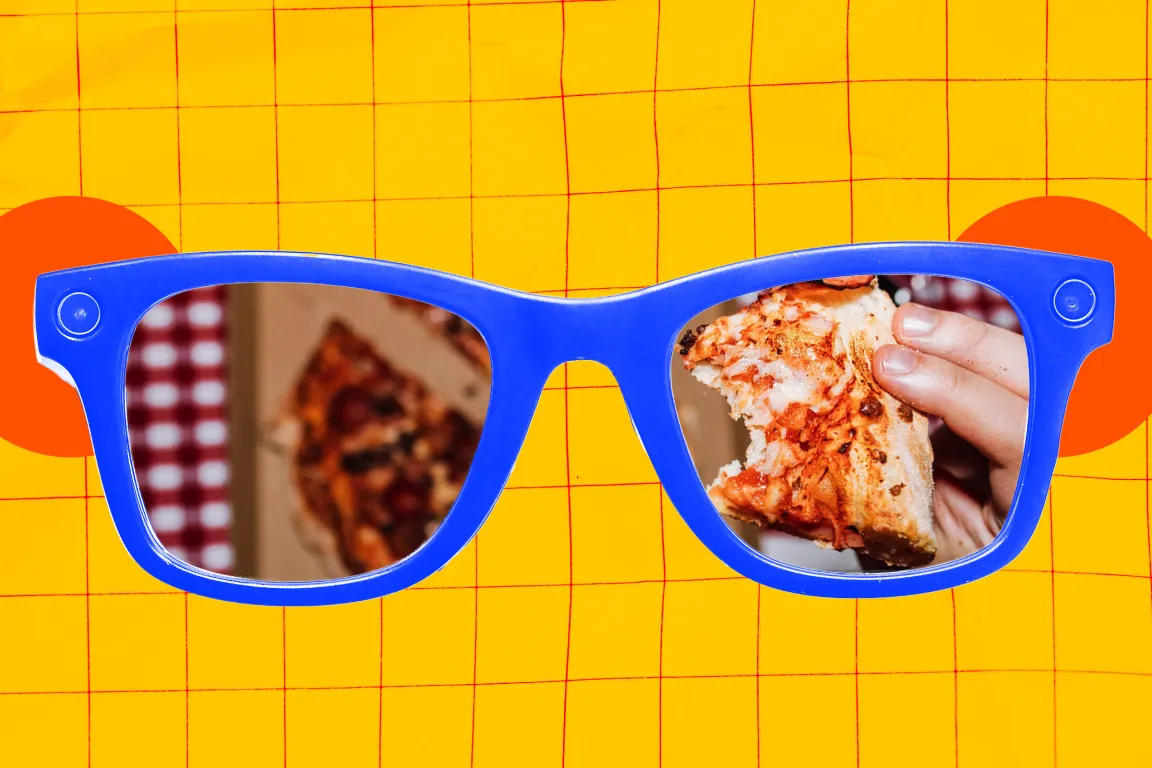
Smart glasses with reflective lenses showing a close-up of a hand holding a partially eaten slice of pizza. The background is bright yellow with a red grid pattern and two orange circles behind the sunglasses.

Illustration by Tag Hartman-Simkins / Futurism. Source: Joan Cros / NurPhoto via Getty Images

Sign up to see the future, today

Can’t-miss innovations from the bleeding edge of science and tech

Privacy nightmares. Pervert glasses. These are some of the not-so-flattering ways detractors describe Meta’s Ray-Ban AI glasses.

Now, we’re nominating another hellish descriptor into that list: dysmorphia accelerator.

On Friday, Meta announced a host of new features for the smart spectacles that include the ability to track and give advice on everything a wearer eats — which sounds poised to lead a bunch of people into horrendous eating disorders.

In an upcoming update, Meta says users will soon be able to use a voice command or a quick photo to log the food in front of them, and the Meta AI will automatically “extract key nutritional details” and add them to the wearer’s Meta AI app.

You can ask the AI questions like “What should I eat to increase my energy?” the announcement states, and it will give an answer informed by the user’s food log and personal goals.

“Over time, your food log powers increasingly personalized insights that get more useful, helping you make healthier, more informed choices,” the announcement reads.

The most eyebrow-raising detail comes when Meta says that, down the line, it’ll deploy an even more ambitious functionality: the AI automatically logging your food without you even having to ask. This will be possible because the Ray-Bans will “understand what you’re eating,” giving wearers “even richer, more personalized nutrition insights without having to remember to log every meal.”

Putting aside all questions of privacy — presumably the glasses will have to be constantly recording to automatically log your food, even in public spaces like restaurants — this just sounds like a bad idea. The reason calorie and nutrition tracking is a chore is because it takes a combination of research, guesswork, and measurements. How are AI glasses supposed to accomplish all that, providing even remotely accurate predictions when it both has to infer details like what the food it’s looking at is, what it contains, and portion sizes?

It’s also plain to see how the AI could give bad advice or be used to reinforce someone’s existing neuroses around food. The heaps of reports of so-called AI psychosis are testament to that. (We submit this story we reported on a father who, following the Meta AI glasses advice, ended up searching the desert for aliens.)

What if the question is along the lines of, “will skipping this meal make me skinny?” or “am I too heavy?” — or what about the opposite: someone trying to bulk force-feeding themselves into a heart attack off of an AI’s advice? We’ve already seen instances of chatbots like ChatGPT giving teens advice on how to go on starvation diets, so none of those possibilities seem far-fetched.

The feature is set to debut this summer, and will only be available to 18 years and older in the US. That might indicate that Meta, seemingly, is aware of the risks.

More on AI: Meta Workers Say They’re Seeing Disturbing Things Through Users’ Smart Glasses