
惯性聚合 高效追踪和阅读你感兴趣的博客、新闻、科技资讯
阅读原文 在惯性聚合中打开

推荐订阅源

Last Week in AI
Last Week in AI
有赞技术团队
有赞技术团队
钛媒体:引领未来商业与生活新知
钛媒体:引领未来商业与生活新知
人人都是产品经理
人人都是产品经理
博客园 - 司徒正美
博客园 - 聂微东
OSCHINA 社区最新新闻
OSCHINA 社区最新新闻
博客园 - 叶小钗
罗磊的独立博客
IT之家
IT之家
博客园 - 三生石上(FineUI控件)
V
Visual Studio Blog
T
Tailwind CSS Blog
大猫的无限游戏
大猫的无限游戏
Hugging Face - Blog
Hugging Face - Blog
H
Hackread – Cybersecurity News, Data Breaches, AI and More
N
Netflix TechBlog - Medium
MyScale Blog
MyScale Blog
J
Java Code Geeks
L
LangChain Blog
S
SegmentFault 最新的问题
奇客Solidot–传递最新科技情报
奇客Solidot–传递最新科技情报
Apple Machine Learning Research
G
Google Developers Blog

Futurism

Man Creates Tiny Submarine for His Parakeet to Experience Life Underwater The Effects of AI-Generated Code Tearing Through Corporations Is Actually Kind of Funny Trump Hires Orbital Towing Company to Build Space Interceptors Psychologists Found Something Horrible About the Kind of Men Seeking Trad Wives To Get Swole, Teens Are Pumping Themselves Full of Drugs Meant for Fattening Cows for the Slaughterhouse Foolish Pollsters Are Now Just Asking AI What Voters Would Say in Response to Questions and Publishing It at Face Value OpenAI Says It’s Already Made $100 Million by Stuffing ChatGPT With Ads DOGE Made Drastic Cuts to a Global Vaccine Assistance Program. Now There’s a Deadly Measles Outbreak in Bangladesh Man Punished for Breaking Into Moo Deng’s Zoo Enclosure AI Is Causing Healthcare Costs to Surge There’s a Mass Rebellion Against AI in the Workplace People Who Lose Their Job to AI Are in for a World of Pain, Goldman Sachs Report Finds OpenAI Says Not to Worry About UBI, Because It Has Another Idea Police Officer Helplessly Waves Arms at Waymo That Careened Wrong Way Through Whataburger Drive-Thru Someone Just Threw a Molotov Cocktail At Sam Altman’s House New York Times Makes Substantial Changes to Article That Glazed a Sleazy AI Startup: “Our Piece Should Have Included That Information” Space Scientists Wince as Astronauts’ Lives Depend on Artemis 2’s Controversial Heat Shield During Plunge Back to Earth The Moon Astronauts Have Been Working Out With a NASA Rowing Machine in Space First AI Model From Zuckerberg’s Wildly Expensive Superintelligence Lab Flops Compared to Virtually All Rivals Economists Starting to Admit They May Have Been Wrong About AI Never Replacing Human Jobs AI-Powered Drug Marketer Medvi Responds After Allegations About Fake Doctors and Patients As Astronauts Visit the Moon, NASA Insider Says Agency Is in Shambles Behind the Scenes Man Lights 1.2 Million Square Foot Warehouse on Fire for Not Paying Him Enough NASA Scientists Screamed With Delight When They Saw Something Smashing Into the Moon Google Says Showing Polymarket Bets on Google News Was a Mistake Las Vegas Sphere Turns Into Huge Moon to Celebrate NASA Mission The New York Times Says It’s Identified the Creator of Bitcoin We Talked to a Writer Accused of Publishing An AI-Generated Essay in The New York Times Naked Man Bursts Into Tesla Service Center With a Shotgun Student Dies When Hospital Has No ICU Doctors, Calls One on Videochat Who Pronounces Him Dead Remotely, Lawsuit Claims
America’s Largest City Hospital System Ready to Start Rep...
2026-04-04 · via Futurism

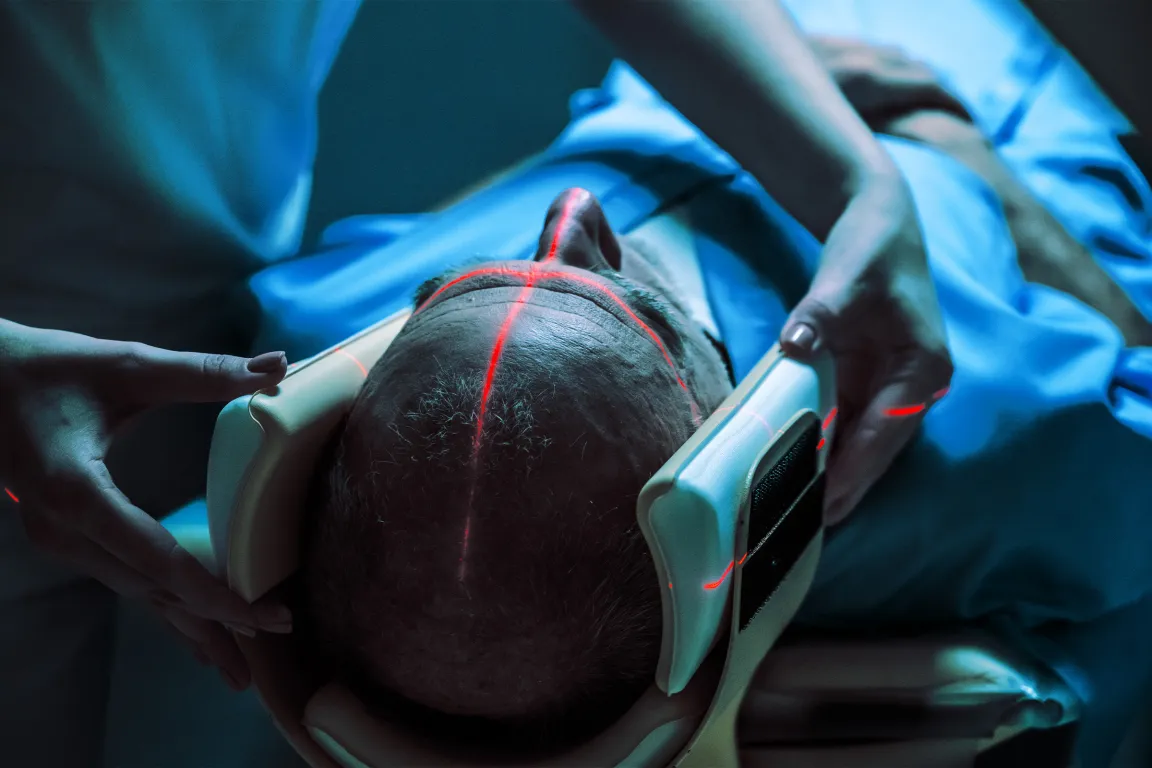
A person lying down with their head secured in a medical device, featuring red laser lines projected across their scalp, likely for precise imaging or treatment. The individual is covered with a blue medical drape, and a healthcare professional is adjusting the device around the person's head. The setting appears clinical, with a focus on the head and laser alignment.

Getty / Futurism

Sign up to see the future, today

Can’t-miss innovations from the bleeding edge of science and tech

Just weeks after the largest nurses strike in New York City history, the CEO of NYC Health and Hospitals has a bold vision for a future where AI, not human radiologists, examines and diagnoses X-rays.

At a panel held by Crain’s New York Business, Mitchell Katz, president and CEO of New York’s 11-hospital public benefit corporation, made overt gestures of his desire to replace highly trained radiology experts with visual language AI models, Radiology Business reported.

“We could replace a great deal of radiologists with AI at this moment, if we are ready to do the regulatory challenge,” Katz said at the panel.

One example he gave, according to Radiology, would affect women’s healthcare in particular, by automating breast cancer screening with AI tools. By sidelining radiologists until an AI system flags a reading as abnormal, Katz declared, hospitals could achieve “major savings.”

Mohammed Suhail, a radiologist at North Coast Imaging in San Diego, told Radiology that Katz’s comments are “undeniable proof that confidently uninformed hospital administrators are a danger to patients,” and are “easily duped by AI companies that are nowhere near capable of providing patient care.”

“Any attempt to implement AI-only reads would immediately result in patient harm and death, and only someone with zero understanding of radiology would say something so naive,” Suhail continued. “But in some sense, they’re correct: hospitals are happy to cut costs even if it means patient harm, as long as it’s legal.”

Indeed, a growing body of research suggests that AI in the X-ray room is a disaster waiting to happen.

In a yet-to-be-peer-reviewed study, Stanford researchers found that AI chest X-ray tools built on frontier AI models can ace medical benchmark tests without ever seeing actual images of X-rays. Rather than admit that the images are missing, the highest scoring AI systems would engage in what amounts to a cheap parlor trick: constructing an elaborate explanation for findings on X-rays it never had access to in the first place.

This situation goes a step above mere AI hallucinations into what the researchers call an AI “mirage.” Unlike the generative AI errors we’ve come to expect, the AI mirage is incredibly rational from start to finish. The issue is that these mirages aren’t based on anything, meaning usual hallucination safeguards aren’t enough to deter them.

“In this epistemic mimicry, the model simulates the entire perceptual process that would have led to the answer,” the Stanford scientists wrote. “This helps explain why reasoning traces, on their own, cannot certify visual reasoning: the trace may be fluent, coherent, and apparently image-based while being anchored to no image at all.”

On top of reinforcing previous research suggesting visual language AI models are functionally blind, this study has major implications for any hospital turning to AI to trim its radiology unit — not to mention any patient unlucky enough to be on the receiving end of a medical imaging mirage.

More on AI in healthcare: ChatGPT Health Is Staggeringly Bad at Recognizing Life-Threatening Medical Emergencies