


Sign up to see the future, today
Can’t-miss innovations from the bleeding edge of science and tech
Will humankind colonize other star systems, spreading life to distant worlds? Or more locally, and realistically: will we ever establish settlements on Mars or the Moon? Before we even consider stuff like huge generation ships, we have to look at our biology. Can our fragile forms reproduce in space, allowing our off-world outposts to sustain themselves?
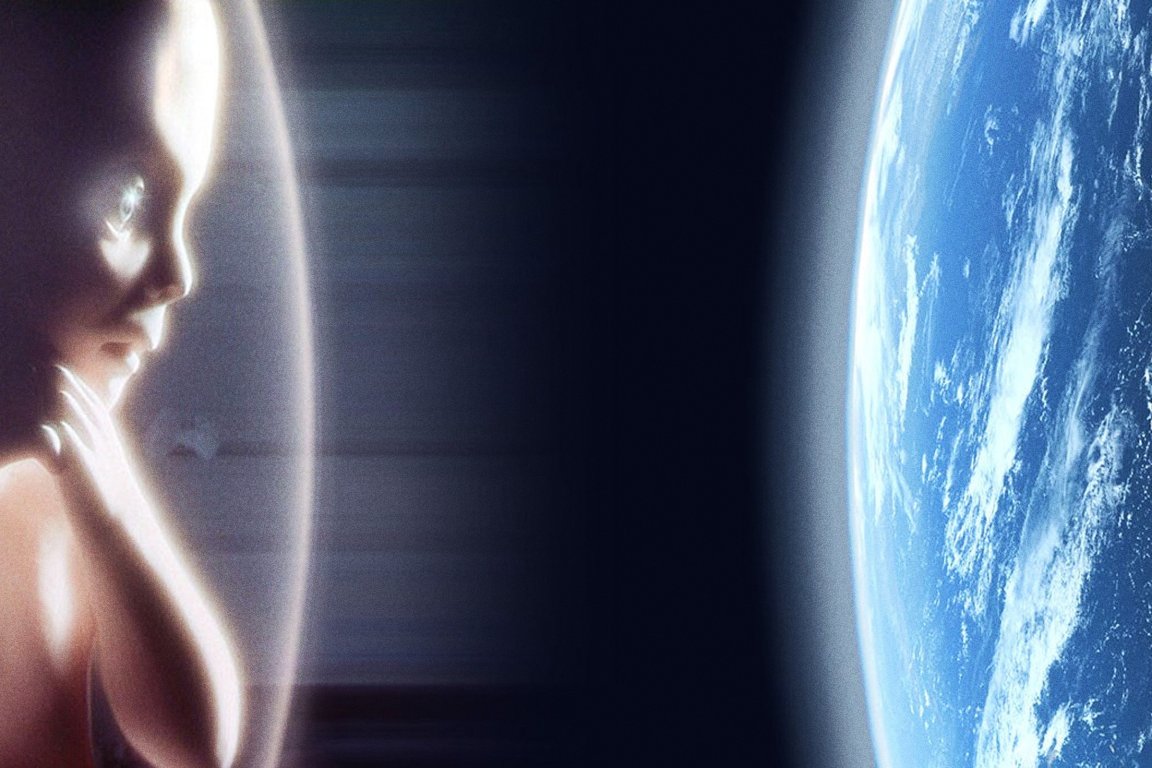
That’s what Chinese scientists hope to find out. This month, China sent a batch of synthetic human embryos to its Tiangong space station, in a first-of-its-kind experiment to explore how a critical early stage of human development is affected by a microgravity environment.
The samples are made of human stem cells and closely resemble real embryos, but aren’t capable of developing into an actual fetus.
“This is not a real human embryo and does not have the ability to develop into an individual. However, it can serve as a model for studying early human development,” project leader Yu Leqian, a researcher at the Chinese Academy of Sciences’ Institute of Zoology, said in a statement.
Space is a harsh environment for our bodies, even in the protective confines of a spacecraft. On top of the effects of microgravity, we have to worry about the effects of space radiation and powerful cosmic rays — phenomena we generally don’t have to worry about on Earth, thanks to the protection of our hearty atmosphere.
Some previous experiments using animals have been encouraging, however. In 2016, Chinese scientists successfully grew mouse embryos in space, demonstrating that they could reach the blastocyst stage of development, the point when embryos are ready to implant in the uterus, or attach themselves to the uterine wall, before developing into a fetus. And in 2023, Japanese scientists replicated that feat, finding that the embryos grown in microgravity had around a 24 percent chance of reaching the blastocyst stage, which was roughly half the chance of embryos on Earth.
Mice embryos are one thing, though, and human embryos another — and these latest samples are synthetic, underscoring the gradual progress.
After being delivered as part of the Tianzhou-10 resupply mission on May 11, the synthetic embryos were housed in the station’s experimental module. They comprise two sample groups representing different stages of development. One set are embryos cultured on uterine cells, mimicking the implantation stage in the uterus. The other set are embryos suspended in a microfluidic chip, mimicking the point when cells begin laying the groundwork to form tissues and organs, according to Live Science.
“The experiment is going very well,” Yu said in the statement. “A pre-set automated system changes the culture medium for the samples every day.”
The experiment was designed to last five days before the embryos were frozen. But it won’t be until they’re sent back to Earth for analysis, and compared with a control group that was kept planetside, that we’ll know the results.
If the samples don’t fare well, it’s not a nail in the coffin for space reproduction just yet. The Japanese study, for example, showed that embryos in an artificial gravity environment had about a five percent better chance of blastocyst development than the microgravity samples.
“[We might] use certain technologies to mitigate the impact,” Yu told South China Morning Post. “This is our first attempt to answer [the questions]: Can humans survive and reproduce in space? I hope the answer is yes.”
More on space: Sun Suddenly Blasts Powerful Radio Transmission for 19 Continuous Days