
惯性聚合 高效追踪和阅读你感兴趣的博客、新闻、科技资讯
阅读原文 在惯性聚合中打开

推荐订阅源

F
Fortinet All Blogs
有赞技术团队
有赞技术团队
量子位
N
Netflix TechBlog - Medium
博客园 - 叶小钗
博客园 - 三生石上(FineUI控件)
Google DeepMind News
aimingoo的专栏
aimingoo的专栏
GbyAI
GbyAI
钛媒体:引领未来商业与生活新知
钛媒体:引领未来商业与生活新知
Blog — PlanetScale
Blog — PlanetScale
奇客Solidot–传递最新科技情报
奇客Solidot–传递最新科技情报
月光博客
月光博客
Martin Fowler
Martin Fowler
Y
Y Combinator Blog
宝玉的分享
宝玉的分享
博客园 - 司徒正美
云风的 BLOG
云风的 BLOG
V
Visual Studio Blog
V
V2EX
IT之家
IT之家
L
LangChain Blog
大猫的无限游戏
大猫的无限游戏
freeCodeCamp Programming Tutorials: Python, JavaScript, Git & More

Futurism

Man Creates Tiny Submarine for His Parakeet to Experience Life Underwater The Effects of AI-Generated Code Tearing Through Corporations Is Actually Kind of Funny Trump Hires Orbital Towing Company to Build Space Interceptors Psychologists Found Something Horrible About the Kind of Men Seeking Trad Wives To Get Swole, Teens Are Pumping Themselves Full of Drugs Meant for Fattening Cows for the Slaughterhouse Foolish Pollsters Are Now Just Asking AI What Voters Would Say in Response to Questions and Publishing It at Face Value OpenAI Says It’s Already Made $100 Million by Stuffing ChatGPT With Ads Man Punished for Breaking Into Moo Deng’s Zoo Enclosure AI Is Causing Healthcare Costs to Surge There’s a Mass Rebellion Against AI in the Workplace People Who Lose Their Job to AI Are in for a World of Pain, Goldman Sachs Report Finds OpenAI Says Not to Worry About UBI, Because It Has Another Idea Police Officer Helplessly Waves Arms at Waymo That Careened Wrong Way Through Whataburger Drive-Thru Someone Just Threw a Molotov Cocktail At Sam Altman’s House New York Times Makes Substantial Changes to Article That Glazed a Sleazy AI Startup: “Our Piece Should Have Included That Information” Space Scientists Wince as Astronauts’ Lives Depend on Artemis 2’s Controversial Heat Shield During Plunge Back to Earth The Moon Astronauts Have Been Working Out With a NASA Rowing Machine in Space First AI Model From Zuckerberg’s Wildly Expensive Superintelligence Lab Flops Compared to Virtually All Rivals Economists Starting to Admit They May Have Been Wrong About AI Never Replacing Human Jobs AI-Powered Drug Marketer Medvi Responds After Allegations About Fake Doctors and Patients As Astronauts Visit the Moon, NASA Insider Says Agency Is in Shambles Behind the Scenes Man Lights 1.2 Million Square Foot Warehouse on Fire for Not Paying Him Enough NASA Scientists Screamed With Delight When They Saw Something Smashing Into the Moon Google Says Showing Polymarket Bets on Google News Was a Mistake Las Vegas Sphere Turns Into Huge Moon to Celebrate NASA Mission The New York Times Says It’s Identified the Creator of Bitcoin We Talked to a Writer Accused of Publishing An AI-Generated Essay in The New York Times Naked Man Bursts Into Tesla Service Center With a Shotgun Student Dies When Hospital Has No ICU Doctors, Calls One on Videochat Who Pronounces Him Dead Remotely, Lawsuit Claims Analysis Finds That Google’s AI Overviews Are Providing Misinformation at a Scale Possibly Unprecedented in the History of Human Civilization
Deodorant Strictly Forbidden at Intel’s AI Chip Facility
Victor Tangermann · 2026-06-11 · via Futurism

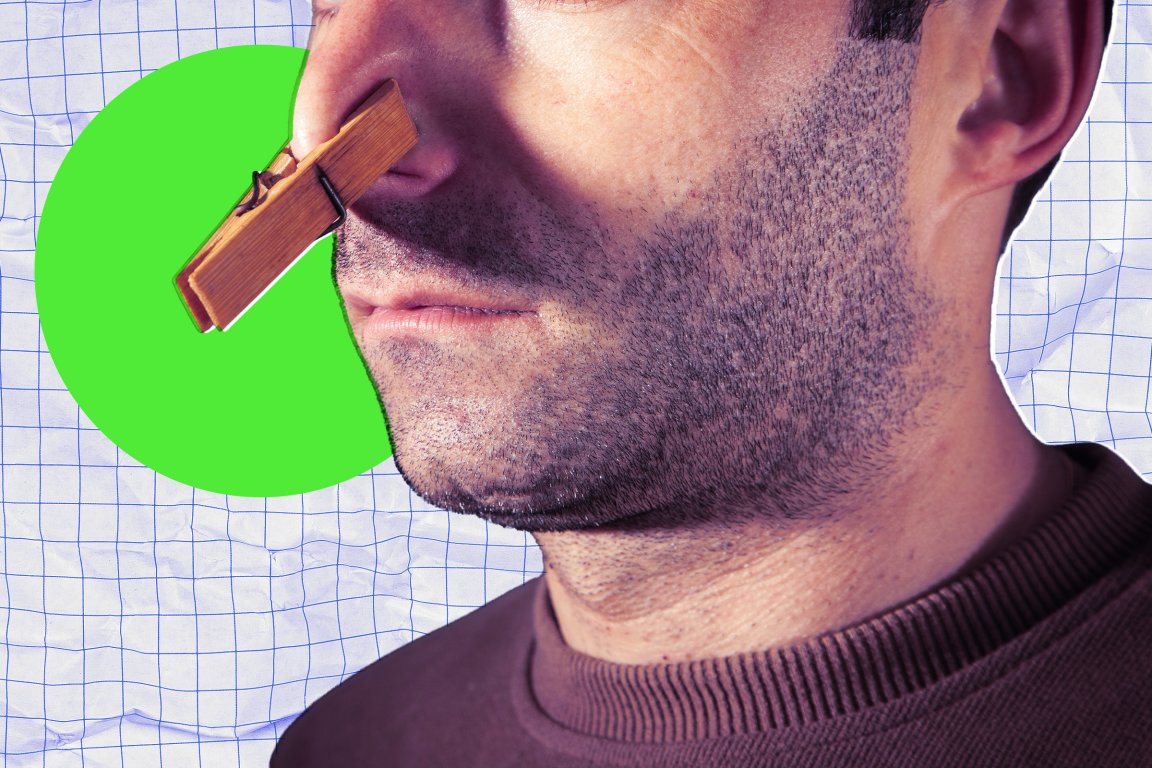
Photo illustration featuring a man with a clothespin comically clasped to his nose to prevent him from smelling.

Illustration by Tag Hartman-Simkins / Futurism. Source: Shutterstock

Sign up to see the future, today

Can’t-miss innovations from the bleeding edge of science and tech

The inside of a facility where AI chips are made is extraordinarily sensitive. Fabrication plants are filled with equipment so exquisitely delicate that even the tiniest contaminants can result in precious chips being ruined.

As Business Insider‘s Olivia Nemec found out firsthand, the list of things she wasn’t able to wear or use ahead of taking a peek inside Intel’s chip factory in Oregon was incredibly extensive — including makeup, hairspray, bluetooth gadgets, velcro, and much more. Even deodorant was a no go, leading us to wonder about the odors at the facility after a long shift.

Demand for the chipmaker’s semiconductors has skyrocketed lately, driven by the rush to construct AI data centers, so the financial of any error can be immense. These chips are being constructed on a scale of mere atoms, while a single human hair can be a million atoms in width. Aerosolized particles can range from a few nanometers to several tens of micrometers, which could make a quick squirt of deodorant or hairspray a catastrophic event.

“I felt like a giant moving through a world built for things far smaller and more delicate than me,” Nemec wrote.

Destroying one single silicon wafer, an extremely flat slice of semiconductor material that serves as the foundation for microchips, could cost up to half a million dollars, Intel’s vice president of manufacturing development Chris Auth told Nemec.

“Each little tiny speck can cause a defect, which would destroy the chip,” Auth said while Nemec and her team were inside a gear-cleaning room. Everything, including all camera equipment, had to be sterilized with wipes.

After the cleaning room came the gowning room, where employees have to put on white overalls designed to stop any skin particles from being shed while inside the factory. Even regular paper can shed particles that could ruin a chip, Nemec noted.

It shouldn’t come as much of a surprise, therefore, that most of the workers inside Intel’s facility are robots of various kinds, from conveyor belts to robotic arms.

Humans, on the other hand, are almost like an invasive species, with air filters lining the floors changing out all of the factory’s air in just a single minute to make sure those bags of flesh and blood don’t release too many contaminating particles.

“We live in a world that runs on chips,” Nemec concluded. “To make them, however, we have to create an entire environment designed to protect them from us.”

More on AI chips: Meta So Desperate for Compute That It’s Building “Data Centers” That Are Just Tents Filled With AI Chips