




惯性聚合 高效追踪和阅读你感兴趣的博客、新闻、科技资讯
阅读原文 在惯性聚合中打开

推荐订阅源

WordPress大学
WordPress大学
博客园 - 司徒正美
I
InfoQ
宝玉的分享
宝玉的分享
G
Google Developers Blog
J
Java Code Geeks
Martin Fowler
Martin Fowler
The GitHub Blog
The GitHub Blog
H
Hackread – Cybersecurity News, Data Breaches, AI and More
罗磊的独立博客
腾讯CDC
F
Fortinet All Blogs
A
About on SuperTechFans
freeCodeCamp Programming Tutorials: Python, JavaScript, Git & More
Recent Announcements
Last Week in AI
Last Week in AI
B
Blog RSS Feed
博客园 - 聂微东
D
DataBreaches.Net
Hugging Face - Blog
Hugging Face - Blog
The Cloudflare Blog
L
LangChain Blog
Microsoft Azure Blog
aimingoo的专栏
aimingoo的专栏

Futurism

Man Creates Tiny Submarine for His Parakeet to Experience Life Underwater The Effects of AI-Generated Code Tearing Through Corporations Is Actually Kind of Funny Trump Hires Orbital Towing Company to Build Space Interceptors Psychologists Found Something Horrible About the Kind of Men Seeking Trad Wives To Get Swole, Teens Are Pumping Themselves Full of Drugs Meant for Fattening Cows for the Slaughterhouse Foolish Pollsters Are Now Just Asking AI What Voters Would Say in Response to Questions and Publishing It at Face Value OpenAI Says It’s Already Made $100 Million by Stuffing ChatGPT With Ads DOGE Made Drastic Cuts to a Global Vaccine Assistance Program. Now There’s a Deadly Measles Outbreak in Bangladesh Man Punished for Breaking Into Moo Deng’s Zoo Enclosure AI Is Causing Healthcare Costs to Surge There’s a Mass Rebellion Against AI in the Workplace People Who Lose Their Job to AI Are in for a World of Pain, Goldman Sachs Report Finds OpenAI Says Not to Worry About UBI, Because It Has Another Idea Police Officer Helplessly Waves Arms at Waymo That Careened Wrong Way Through Whataburger Drive-Thru Someone Just Threw a Molotov Cocktail At Sam Altman’s House New York Times Makes Substantial Changes to Article That Glazed a Sleazy AI Startup: “Our Piece Should Have Included That Information” Space Scientists Wince as Astronauts’ Lives Depend on Artemis 2’s Controversial Heat Shield During Plunge Back to Earth The Moon Astronauts Have Been Working Out With a NASA Rowing Machine in Space First AI Model From Zuckerberg’s Wildly Expensive Superintelligence Lab Flops Compared to Virtually All Rivals Economists Starting to Admit They May Have Been Wrong About AI Never Replacing Human Jobs AI-Powered Drug Marketer Medvi Responds After Allegations About Fake Doctors and Patients As Astronauts Visit the Moon, NASA Insider Says Agency Is in Shambles Behind the Scenes Man Lights 1.2 Million Square Foot Warehouse on Fire for Not Paying Him Enough NASA Scientists Screamed With Delight When They Saw Something Smashing Into the Moon Google Says Showing Polymarket Bets on Google News Was a Mistake Las Vegas Sphere Turns Into Huge Moon to Celebrate NASA Mission The New York Times Says It’s Identified the Creator of Bitcoin We Talked to a Writer Accused of Publishing An AI-Generated Essay in The New York Times Naked Man Bursts Into Tesla Service Center With a Shotgun Student Dies When Hospital Has No ICU Doctors, Calls One on Videochat Who Pronounces Him Dead Remotely, Lawsuit Claims
We’re In Utter Disbelief About the Photos the Moon Astron...
2026-04-07 · via Futurism

Here are some of the most spectacular snapshots NASA recently received from the crew of its Artemis 2 mission.

NASA

Sign up to see the future, today

Can’t-miss innovations from the bleeding edge of science and tech

On Monday, the four crew members of NASA’s Artemis 2 mission made history, officially breaking the record for the farthest any human has ever traveled from Earth, at an astonishing 252,752 miles from home.

At the time, the crew’s capsule was swinging around the Moon before starting its multi-day return journey, offering the astronauts some truly astonishing views. The team spent many hours using both professional-grade photography equipment — as well as their iPhones — to capture the exceedingly rare moment, from a dazzling “Earthset” to a total solar eclipse that lasted nearly an entire hour.

The team was extensively coached on how to take these pictures and what to look out for as they gazed at the rugged surface of the Moon through Orion’s windows. It was a highly organized “seven-hour lunar observation period,” as NASA notes, with the crew dividing into pairs. Two crew members observed for 55 to 85 minutes at a time, “while the other pair exercises or works on other tasks.”

Here are some of the most spectacular snapshots NASA recently received from the historic flyby.

Earthset

One particularly impressive image shows the Earth, half plunged into nighttime, peeking out from behind the cratered lunar surface. It’s essentially the equivalent of a sunset as seen from Earth, except that it’s the entire Earth setting below the horizon of the Moon, hence NASA’s use of the word “Earthset.”
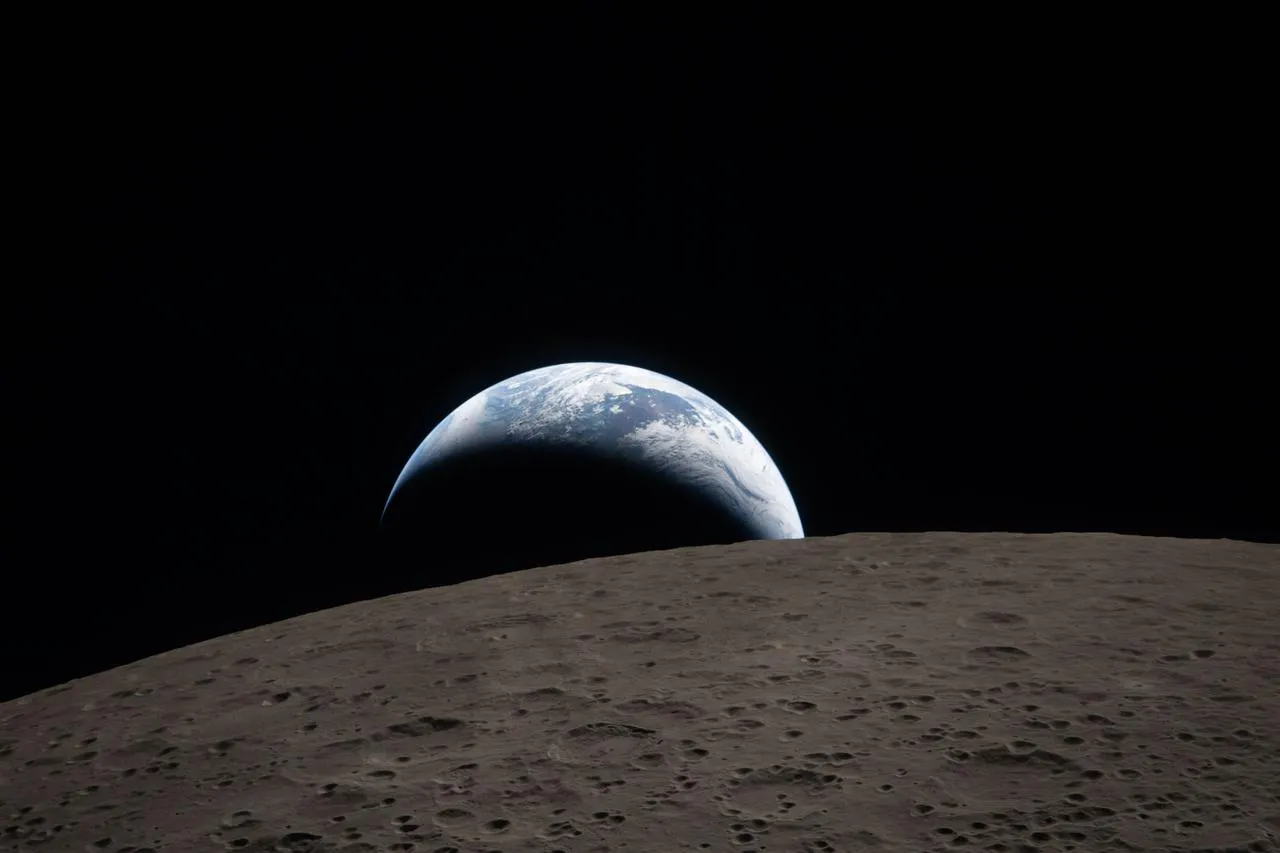
Earthset captured through the Orion spacecraft window at 6:41 p.m. EDT, April 6, 2026, during the Artemis II crew’s flyby of the Moon.

Total Solar Eclipse

Another photo captures the total solar eclipse the crew was beholden to for a stunning 54 minutes as the Moon fully eclipsed the Sun from their perspective. The image shows the Sun’s corona in the form of a “halo around the dark lunar disk,” as NASA explains.
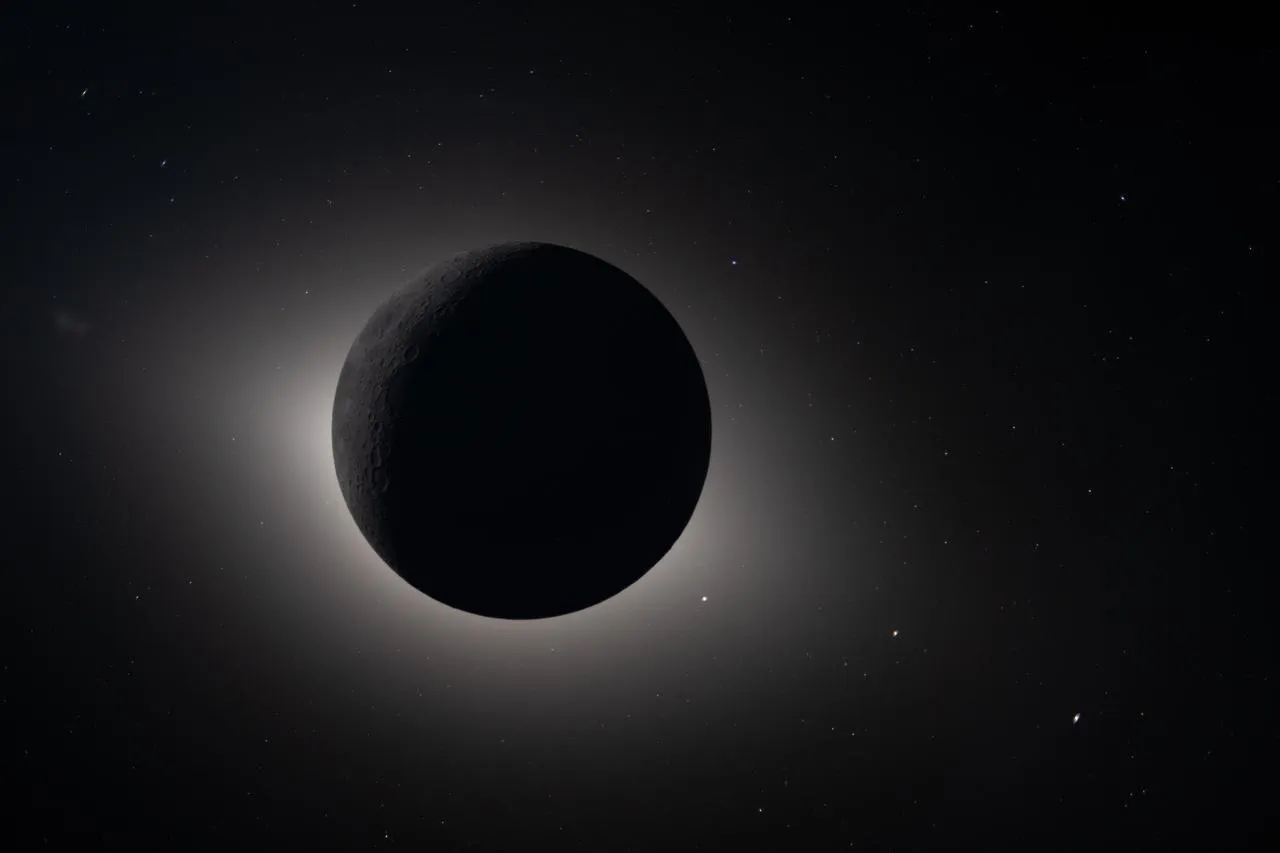
The total solar eclipse the crew of NASA's Artemis 2 mission was beholden to for a stunning 54 minutes as the Moon fully eclipsed the Sun from their perspective.

Eclipse Selfie

The prolonged eclipse forced the crew to don eclipse glasses, much like the ones we wear during the (much shorter) total solar eclipses on Earth, as seen in an iPhone 17 Pro selfie seemingly taken by NASA astronaut and mission commander Reid Wiseman.
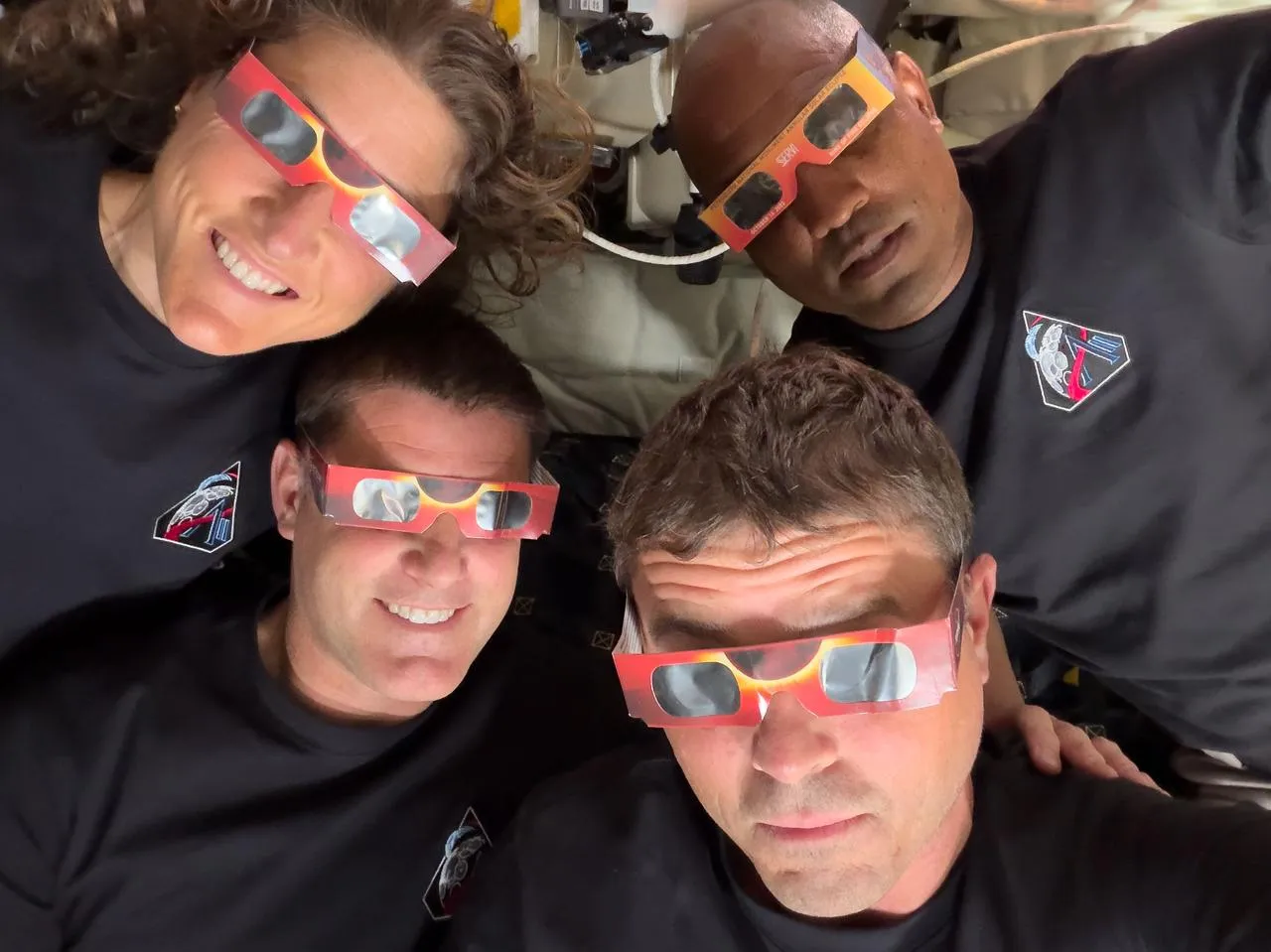
The prolonged eclipse forced the crew to don eclipse glasses, much like the ones we wear during total solar eclipses on Earth, as seen in an iPhone 17 Pro selfie.

South Pole

The crew were also treated to an extremely close view of the eastern edge of the Moon’s South Pole-Aitken basin, a region of particular interest as NASA is eyeing it as a place to land during its first crewed mission to the lunar surface. The Aitken basin is the largest impact crater on the far side of the Moon, measuring around 1,600 miles in diameter.
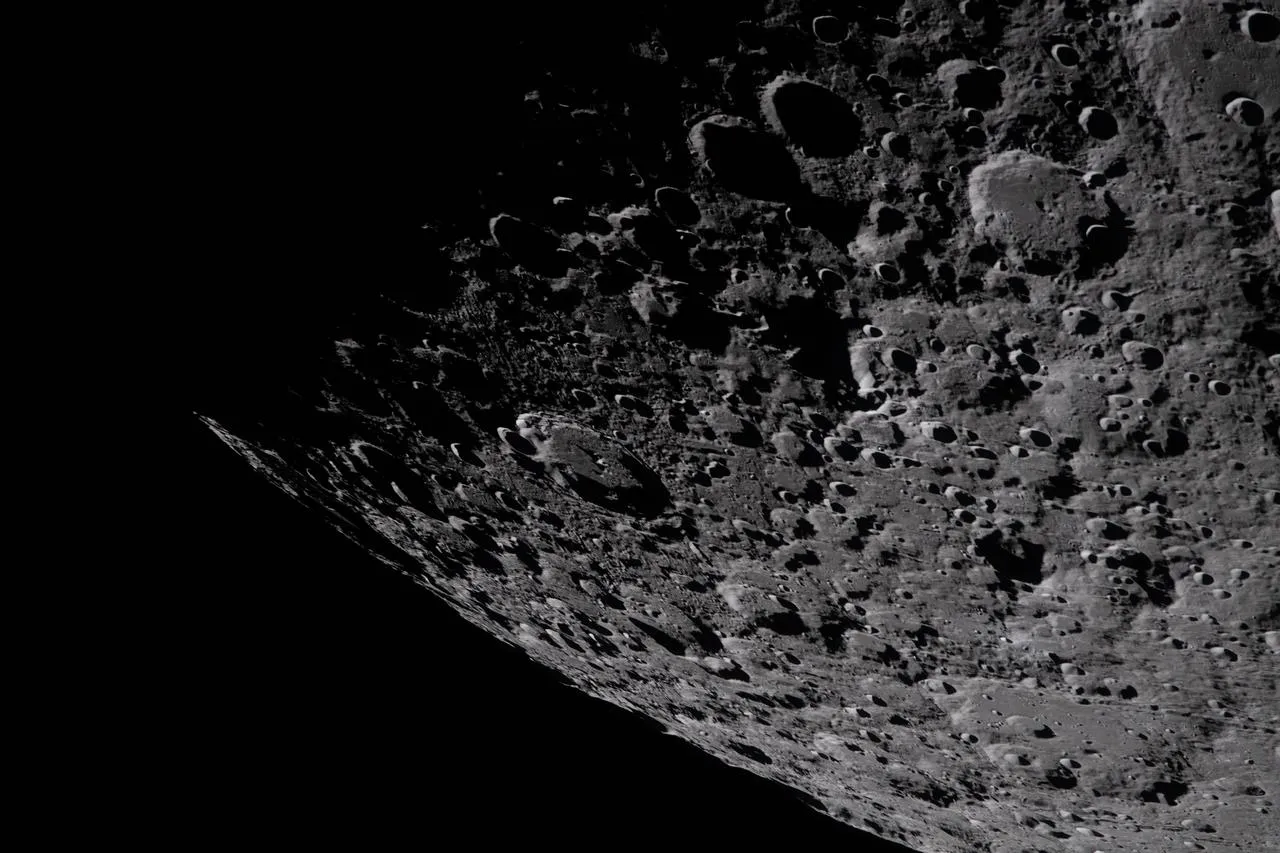
An extremely close view of the Moon's south pole, a region of particular interest as NASA is eyeing it as a place to land during its first crewed mission to the lunar surface.

Orientale Basin

The crew also got a perfect look at the Orientale Basin, a “black patch of ancient lava in the center that punched through the Moon’s crust in an eruption billions of years ago,” per NASA. It measures roughly 600 miles across and lies in the transition between the Moon’s far and near sides.
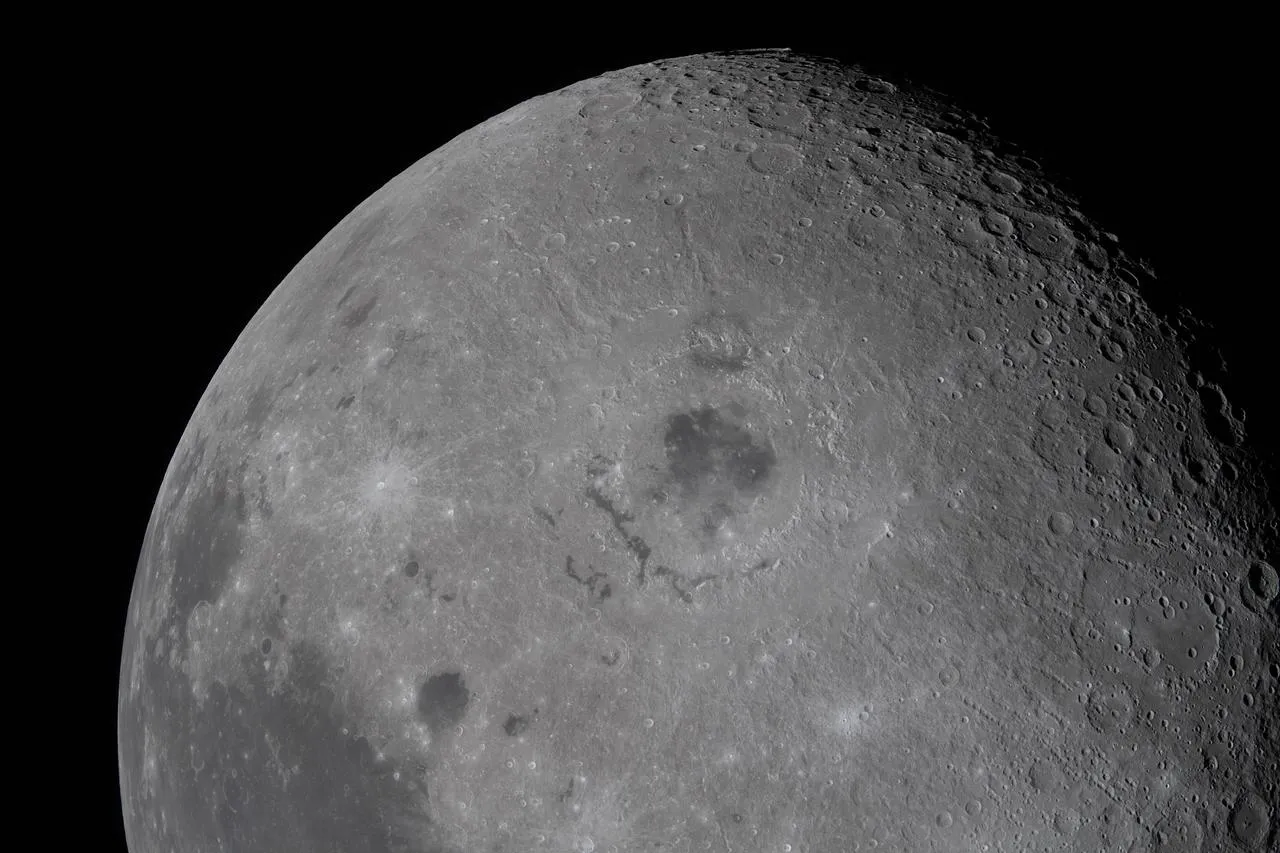
The crew got a perfect look at the Orientale basin, a "black patch of ancient lava in the center that punched through the Moon’s crust in an eruption billions of years ago," per NASA.

Earthrise

At 7:22 pm Eastern time, the crew saw the Earth emerging once more from behind the Moon, an otherworldly “Earthrise” that few will ever get to experience in their lifetimes.
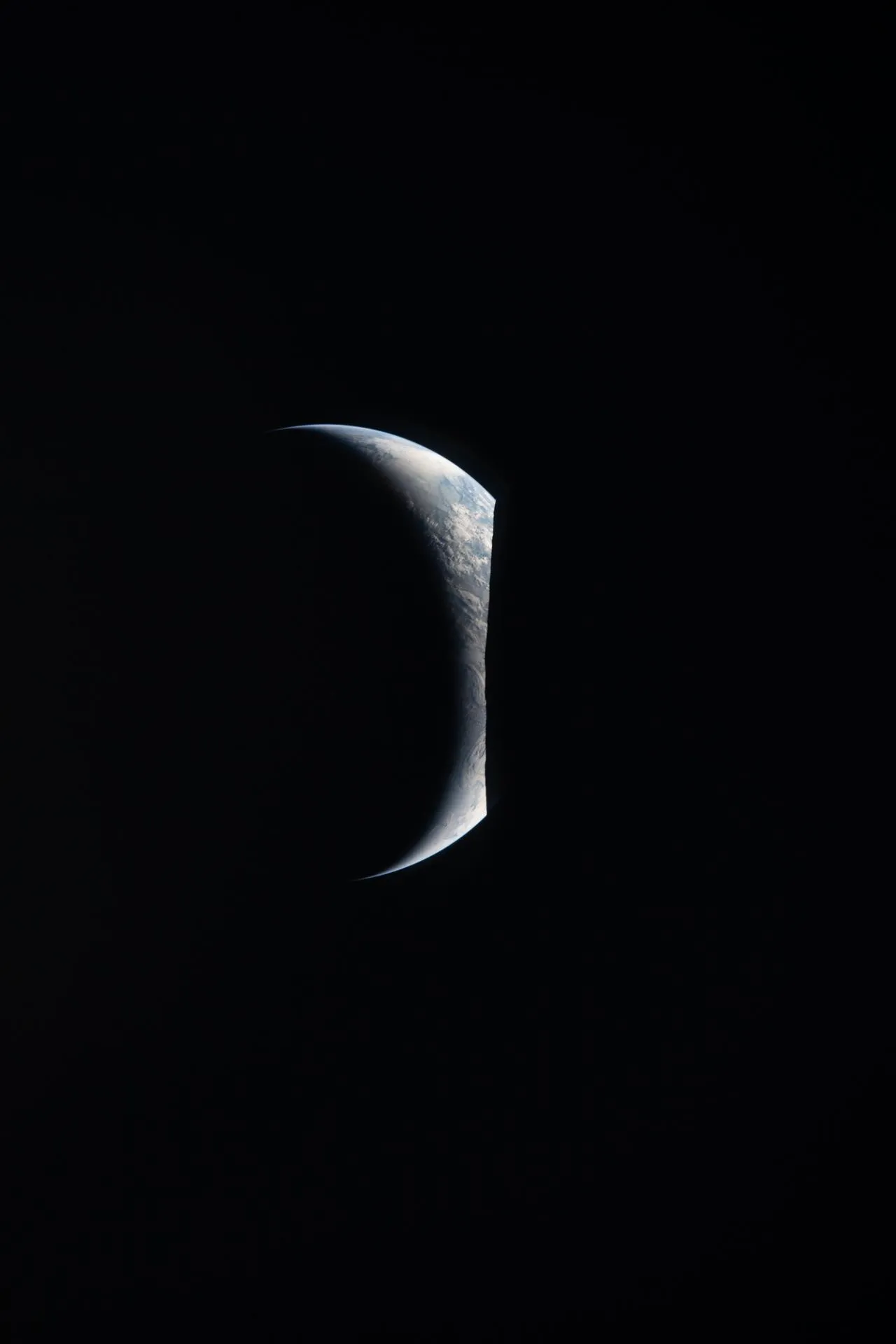
At 7:22 pm Eastern time, the crew saw the Earth emanating once more from behind the lunar surface, an otherworldly "Earthrise" that few will ever get to experience in their lifetimes.

Total Eclipse Redux

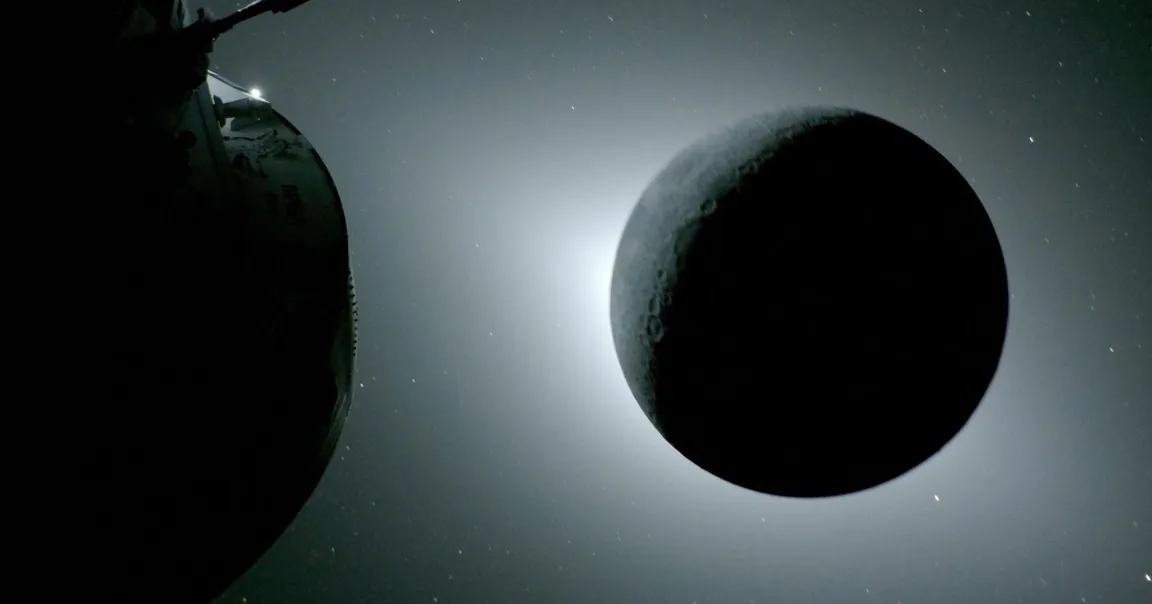
The Orion capsule’s exterior camera, which is attached to the spacecraft’s solar array wings, snapped an equally impressive shot of the total solar eclipse, as seen in this eerie photo.

“The bright spot visible just below the Moon’s bottom right edge is Saturn,” NASA notes.
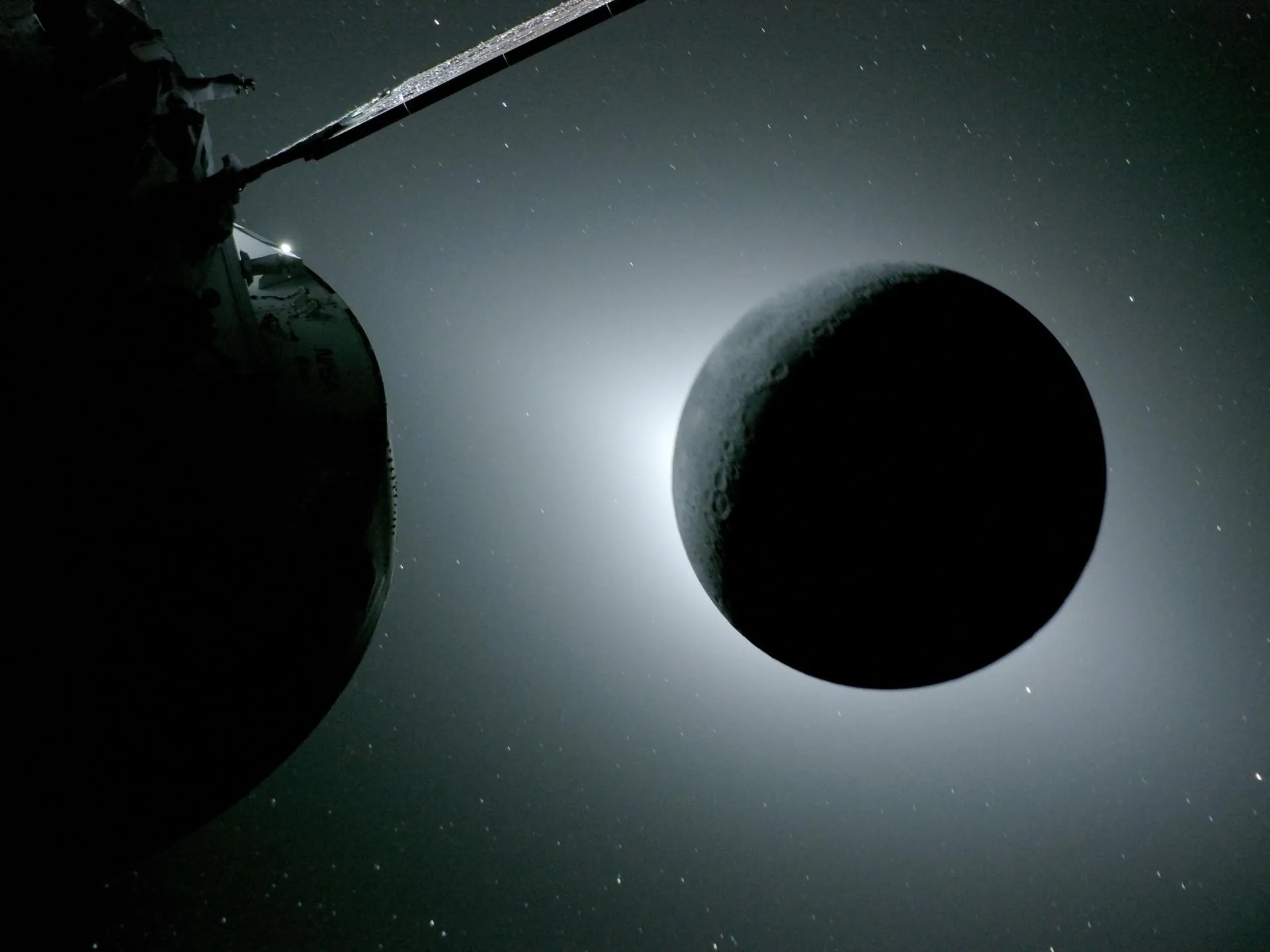
The Orion capsule's exterior camera, which is attached to the spacecraft's solar array wings, snapped an equally impressive shot of the total solar eclipse, as seen in this eerie photo.

Return Journey

The team is expected to reenter the Earth’s atmosphere on Friday evening, a harrowing maneuver that will involve it crashing into our planet’s protective layer at a speed of 25,000 mph, while Orion’s heat shield reaches temperatures over 3,000 degrees Fahrenheit.

If all goes well, the crew will splash down in the Pacific Ocean, concluding one of the best and rarest photo opp journeys in human history.

More on the mission: The Moon Astronauts Just Broke the Record for the Farthest Any Human Has Ever Traveled From Earth