

惯性聚合 高效追踪和阅读你感兴趣的博客、新闻、科技资讯
阅读原文 在惯性聚合中打开

推荐订阅源

V
Visual Studio Blog
Recent Announcements
雷峰网
雷峰网
The GitHub Blog
The GitHub Blog
罗磊的独立博客
月光博客
月光博客
J
Java Code Geeks
A
About on SuperTechFans
Microsoft Security Blog
D
Docker
OSCHINA 社区最新新闻
OSCHINA 社区最新新闻
F
Fortinet All Blogs
U
Unit 42
C
Check Point Blog
Martin Fowler
Martin Fowler
有赞技术团队
有赞技术团队
博客园 - 叶小钗
Cyber Security Advisories - MS-ISAC
酷 壳 – CoolShell
酷 壳 – CoolShell
Blog — PlanetScale
Blog — PlanetScale
大猫的无限游戏
大猫的无限游戏
让小产品的独立变现更简单 - ezindie.com
阮一峰的网络日志
阮一峰的网络日志
MyScale Blog
MyScale Blog

Futurism

Man Creates Tiny Submarine for His Parakeet to Experience Life Underwater The Effects of AI-Generated Code Tearing Through Corporations Is Actually Kind of Funny Trump Hires Orbital Towing Company to Build Space Interceptors Psychologists Found Something Horrible About the Kind of Men Seeking Trad Wives To Get Swole, Teens Are Pumping Themselves Full of Drugs Meant for Fattening Cows for the Slaughterhouse Foolish Pollsters Are Now Just Asking AI What Voters Would Say in Response to Questions and Publishing It at Face Value OpenAI Says It’s Already Made $100 Million by Stuffing ChatGPT With Ads Man Punished for Breaking Into Moo Deng’s Zoo Enclosure AI Is Causing Healthcare Costs to Surge There’s a Mass Rebellion Against AI in the Workplace People Who Lose Their Job to AI Are in for a World of Pain, Goldman Sachs Report Finds OpenAI Says Not to Worry About UBI, Because It Has Another Idea Police Officer Helplessly Waves Arms at Waymo That Careened Wrong Way Through Whataburger Drive-Thru Someone Just Threw a Molotov Cocktail At Sam Altman’s House New York Times Makes Substantial Changes to Article That Glazed a Sleazy AI Startup: “Our Piece Should Have Included That Information” Space Scientists Wince as Astronauts’ Lives Depend on Artemis 2’s Controversial Heat Shield During Plunge Back to Earth The Moon Astronauts Have Been Working Out With a NASA Rowing Machine in Space First AI Model From Zuckerberg’s Wildly Expensive Superintelligence Lab Flops Compared to Virtually All Rivals Economists Starting to Admit They May Have Been Wrong About AI Never Replacing Human Jobs AI-Powered Drug Marketer Medvi Responds After Allegations About Fake Doctors and Patients As Astronauts Visit the Moon, NASA Insider Says Agency Is in Shambles Behind the Scenes Man Lights 1.2 Million Square Foot Warehouse on Fire for Not Paying Him Enough NASA Scientists Screamed With Delight When They Saw Something Smashing Into the Moon Google Says Showing Polymarket Bets on Google News Was a Mistake Las Vegas Sphere Turns Into Huge Moon to Celebrate NASA Mission The New York Times Says It’s Identified the Creator of Bitcoin We Talked to a Writer Accused of Publishing An AI-Generated Essay in The New York Times Naked Man Bursts Into Tesla Service Center With a Shotgun Student Dies When Hospital Has No ICU Doctors, Calls One on Videochat Who Pronounces Him Dead Remotely, Lawsuit Claims Analysis Finds That Google’s AI Overviews Are Providing Misinformation at a Scale Possibly Unprecedented in the History of Human Civilization
Gene Therapy Causes Patient to Grow Alarming Tumor
Krystle Vermes · 2026-05-17 · via Futurism

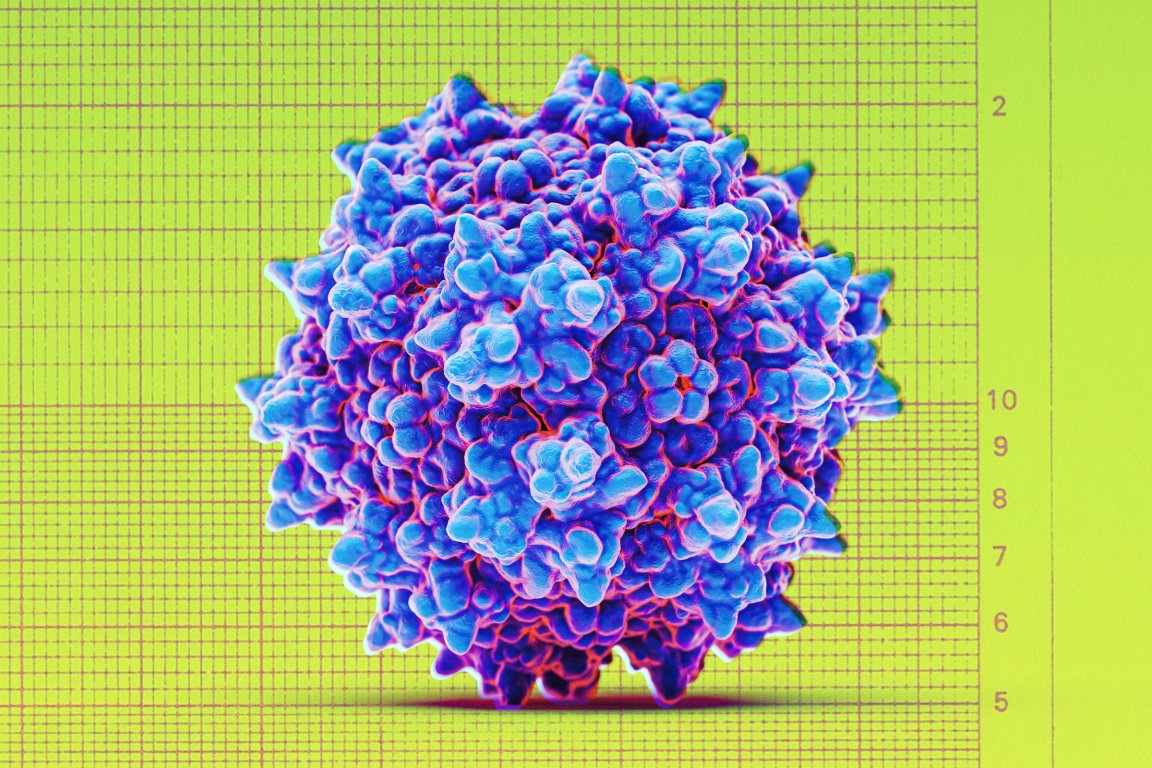
A highly magnified, detailed 3D rendering of a virus particle with a spiky, irregular surface. The virus is colored in shades of blue and purple with red highlights, set against a yellow-green background featuring a grid and numerical scale for size reference.

Getty / Futurism

Sign up to see the future, today

Can’t-miss innovations from the bleeding edge of science and tech

Gene therapy — attempting to help a patient by modifying a gene expression in their body, basically — has shown immense promise for treating a growing range of severe illnesses and disabilities, from Huntington’s Disease to congenital deafness.

But using a gene-hacked virus to tinker with the genetic code of a living human, which has only started in earnest over the past decade or so, is certain to be risky. Now, the first instance of how the practice can backfire is coming to light.

In a new study published in The New England Journal of Medicine, researchers concluded that a young Hurler syndrome patient who received an adeno-associated virus (AAV) — used to deliver a therapeutic gene to the patient’s DNA — later developed a tumor due to the therapy.

The patient’s illness, Hurler syndrome, stemmed from a mutation that thwarted an enzyme in his body, impacting brain development. A bone marrow transplant was unable to resolve the issue, which ultimately led to the gene therapy. After receiving the treatment, the boy’s brain began to develop appropriately for his age, but by age five, doctors spotted a walnut-sized tumor in his brain. The AAV, researchers came to believe, spurred the development of the tumor after it mutated an unintended gene.

Luckily, the story has a happy ending. The tumor was successfully removed, and the development of the patient’s cognitive abilities remains on track.

But it’s hard not to worry about this newly discovered risk. Researchers involved with the case believe that this outcome is a rarity, Science noted, but it’ll surely weigh on other patients — and their loved ones — who undertake similar treatments in the future.

More on gene hacking: Scientists Are Using AI for Improved Gene Hacking