

惯性聚合 高效追踪和阅读你感兴趣的博客、新闻、科技资讯
阅读原文 在惯性聚合中打开

推荐订阅源

U
Unit 42
A
About on SuperTechFans
J
Java Code Geeks
H
Hackread – Cybersecurity News, Data Breaches, AI and More
Stack Overflow Blog
Stack Overflow Blog
Recent Announcements
GbyAI
GbyAI
F
Fortinet All Blogs
Blog — PlanetScale
Blog — PlanetScale
MongoDB | Blog
MongoDB | Blog
MyScale Blog
MyScale Blog
aimingoo的专栏
aimingoo的专栏
H
Help Net Security
月光博客
月光博客
博客园 - Franky
钛媒体:引领未来商业与生活新知
钛媒体:引领未来商业与生活新知
Apple Machine Learning Research
The Cloudflare Blog
WordPress大学
WordPress大学
S
SegmentFault 最新的问题
T
Tailwind CSS Blog
Jina AI
Jina AI
有赞技术团队
有赞技术团队
博客园_首页

Futurism

Man Creates Tiny Submarine for His Parakeet to Experience Life Underwater The Effects of AI-Generated Code Tearing Through Corporations Is Actually Kind of Funny Trump Hires Orbital Towing Company to Build Space Interceptors Psychologists Found Something Horrible About the Kind of Men Seeking Trad Wives To Get Swole, Teens Are Pumping Themselves Full of Drugs Meant for Fattening Cows for the Slaughterhouse Foolish Pollsters Are Now Just Asking AI What Voters Would Say in Response to Questions and Publishing It at Face Value OpenAI Says It’s Already Made $100 Million by Stuffing ChatGPT With Ads Man Punished for Breaking Into Moo Deng’s Zoo Enclosure AI Is Causing Healthcare Costs to Surge There’s a Mass Rebellion Against AI in the Workplace People Who Lose Their Job to AI Are in for a World of Pain, Goldman Sachs Report Finds OpenAI Says Not to Worry About UBI, Because It Has Another Idea Police Officer Helplessly Waves Arms at Waymo That Careened Wrong Way Through Whataburger Drive-Thru Someone Just Threw a Molotov Cocktail At Sam Altman’s House New York Times Makes Substantial Changes to Article That Glazed a Sleazy AI Startup: “Our Piece Should Have Included That Information” Space Scientists Wince as Astronauts’ Lives Depend on Artemis 2’s Controversial Heat Shield During Plunge Back to Earth The Moon Astronauts Have Been Working Out With a NASA Rowing Machine in Space First AI Model From Zuckerberg’s Wildly Expensive Superintelligence Lab Flops Compared to Virtually All Rivals Economists Starting to Admit They May Have Been Wrong About AI Never Replacing Human Jobs AI-Powered Drug Marketer Medvi Responds After Allegations About Fake Doctors and Patients As Astronauts Visit the Moon, NASA Insider Says Agency Is in Shambles Behind the Scenes Man Lights 1.2 Million Square Foot Warehouse on Fire for Not Paying Him Enough NASA Scientists Screamed With Delight When They Saw Something Smashing Into the Moon Google Says Showing Polymarket Bets on Google News Was a Mistake Las Vegas Sphere Turns Into Huge Moon to Celebrate NASA Mission The New York Times Says It’s Identified the Creator of Bitcoin We Talked to a Writer Accused of Publishing An AI-Generated Essay in The New York Times Naked Man Bursts Into Tesla Service Center With a Shotgun Student Dies When Hospital Has No ICU Doctors, Calls One on Videochat Who Pronounces Him Dead Remotely, Lawsuit Claims Analysis Finds That Google’s AI Overviews Are Providing Misinformation at a Scale Possibly Unprecedented in the History of Human Civilization
Scientists Say New Method Turns Coffee Grounds Into High-...
Joe Wilkins · 2026-06-24 · via Futurism

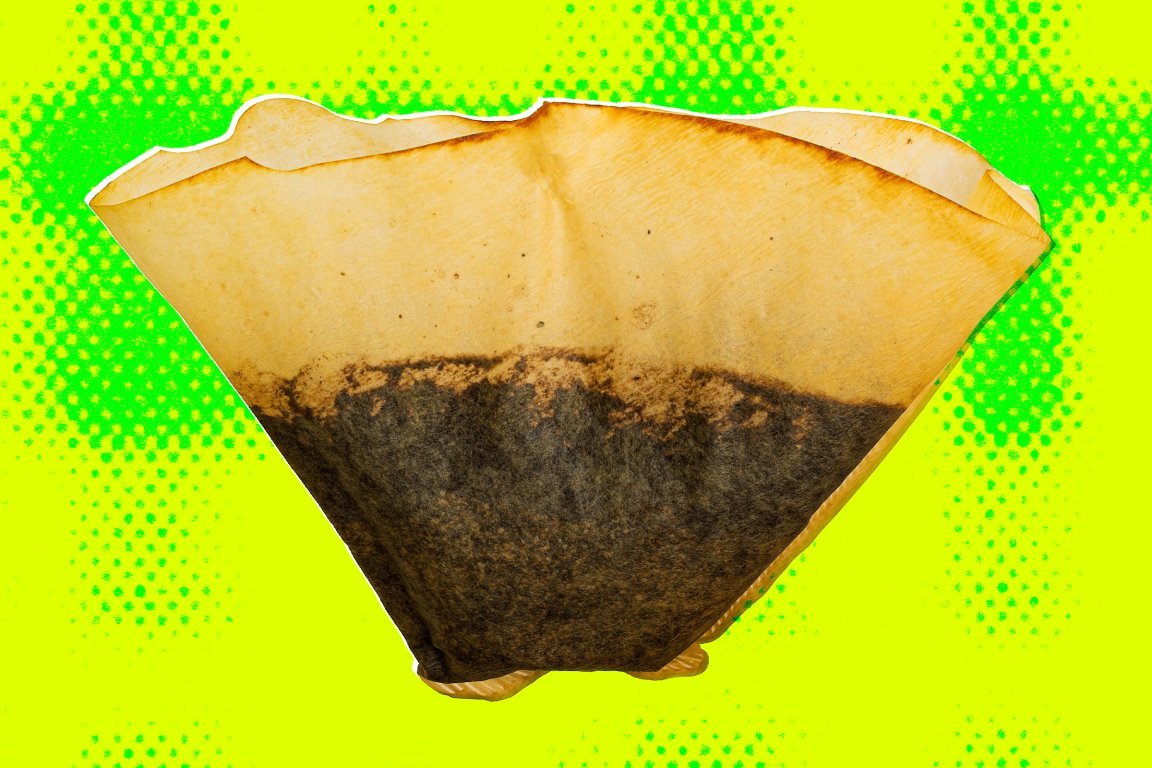
A colorful photo illustration featuring a used filter full of coffee grounds.

Illustration by Tag Hartman-Simkins / Futurism. Source: Shutterstock

Sign up to see the future, today

Can’t-miss innovations from the bleeding edge of science and tech

How long does it take to convert soggy coffee grounds into a highly efficient fuel source? About as long as it takes to brew a fresh pot of java, researchers say.

According to a press release from South Korea’s National Research Council of Science and Technology, a team of researchers at the Korea Institute of Geoscience and Mineral Resources (KIGAM) have developed a method to convert spent coffee waste into high-quality charcoal, known as biochar.

While that’s a feat in and of itself, the kicker is the method’s blistering speed: it takes just 90 seconds from start to finish, with no drawn-out drying process or oil separation required. According to the release, the new technique solves a major issue in extracting the latent energy potential of spent coffee beans.

Though we generate anywhere from 8 to 10 million tons of high-energy coffee waste a year, the vast majority of that ends up occupying space in landfills. While other coffee recycling techniques do exist, the high moisture content of spent beans has made energy extraction a massive chore, preventing the kind of efforts that could give bean juice a second life at scale.

To get around this, the KIGAM team developed a technique known as Flame Plasma Pyrolysis (FPP), in which coffee waste is put under immense pressure using plasma as hot as 1,652 degrees Fahrenheit. Basically, the method superheats the moisture trapped within the beans to kick off hundreds of microscopic explosions, leading to the creation of tiny, porous structures, and reducing the total biomass by as much as 83.3 percent.

By the end of the process, the researchers were left with a substance “comparable to that of anthracite coal.” According to the researchers, the resulting biochar makes for great fuel, and also has applications as carbon material in industrial and environmental settings.

On top of cutting down the processing time to just minutes — previous methods took hours — they say the FPP process cuts down on pollutants like smoke and tar during heating.

“This technology presents a new paradigm in which waste is no longer viewed as a disposal problem but as a valuable energy resource,” the study’s lead author, Taejun Park, said in the press release. “We plan to expand the technology to various types of high-moisture organic waste and further optimize the process for industrial-scale commercialization.”

More on renewable energy: Solar Just Produced More Electricity Than Coal for the First Time in the History of the United States