




惯性聚合 高效追踪和阅读你感兴趣的博客、新闻、科技资讯
阅读原文 在惯性聚合中打开

推荐订阅源

J
Java Code Geeks
Martin Fowler
Martin Fowler
MongoDB | Blog
MongoDB | Blog
博客园 - Franky
Cyber Security Advisories - MS-ISAC
Microsoft Security Blog
H
Hackread – Cybersecurity News, Data Breaches, AI and More
博客园_首页
腾讯CDC
D
Docker
The Cloudflare Blog
量子位
爱范儿
爱范儿
L
LangChain Blog
博客园 - 三生石上(FineUI控件)
博客园 - 司徒正美
aimingoo的专栏
aimingoo的专栏
Blog — PlanetScale
Blog — PlanetScale
Jina AI
Jina AI
Apple Machine Learning Research
Hugging Face - Blog
Hugging Face - Blog
博客园 - 聂微东
Vercel News
Vercel News
MyScale Blog
MyScale Blog

Futurism

Man Creates Tiny Submarine for His Parakeet to Experience Life Underwater The Effects of AI-Generated Code Tearing Through Corporations Is Actually Kind of Funny Trump Hires Orbital Towing Company to Build Space Interceptors Psychologists Found Something Horrible About the Kind of Men Seeking Trad Wives To Get Swole, Teens Are Pumping Themselves Full of Drugs Meant for Fattening Cows for the Slaughterhouse Foolish Pollsters Are Now Just Asking AI What Voters Would Say in Response to Questions and Publishing It at Face Value OpenAI Says It’s Already Made $100 Million by Stuffing ChatGPT With Ads Man Punished for Breaking Into Moo Deng’s Zoo Enclosure AI Is Causing Healthcare Costs to Surge There’s a Mass Rebellion Against AI in the Workplace People Who Lose Their Job to AI Are in for a World of Pain, Goldman Sachs Report Finds OpenAI Says Not to Worry About UBI, Because It Has Another Idea Police Officer Helplessly Waves Arms at Waymo That Careened Wrong Way Through Whataburger Drive-Thru Someone Just Threw a Molotov Cocktail At Sam Altman’s House New York Times Makes Substantial Changes to Article That Glazed a Sleazy AI Startup: “Our Piece Should Have Included That Information” Space Scientists Wince as Astronauts’ Lives Depend on Artemis 2’s Controversial Heat Shield During Plunge Back to Earth The Moon Astronauts Have Been Working Out With a NASA Rowing Machine in Space First AI Model From Zuckerberg’s Wildly Expensive Superintelligence Lab Flops Compared to Virtually All Rivals Economists Starting to Admit They May Have Been Wrong About AI Never Replacing Human Jobs AI-Powered Drug Marketer Medvi Responds After Allegations About Fake Doctors and Patients As Astronauts Visit the Moon, NASA Insider Says Agency Is in Shambles Behind the Scenes Man Lights 1.2 Million Square Foot Warehouse on Fire for Not Paying Him Enough NASA Scientists Screamed With Delight When They Saw Something Smashing Into the Moon Google Says Showing Polymarket Bets on Google News Was a Mistake Las Vegas Sphere Turns Into Huge Moon to Celebrate NASA Mission The New York Times Says It’s Identified the Creator of Bitcoin We Talked to a Writer Accused of Publishing An AI-Generated Essay in The New York Times Naked Man Bursts Into Tesla Service Center With a Shotgun Student Dies When Hospital Has No ICU Doctors, Calls One on Videochat Who Pronounces Him Dead Remotely, Lawsuit Claims Analysis Finds That Google’s AI Overviews Are Providing Misinformation at a Scale Possibly Unprecedented in the History of Human Civilization
Visitor Approaches From the Edge of the Solar System
Victor Tangermann · 2026-05-10 · via Futurism

Comet C/2025 R3 PANSTARRS, which was only discovered last year, has been visible to stargazers in the northern hemisphere for weeks now.

Getty Images

Sign up to see the future, today

Can’t-miss innovations from the bleeding edge of science and tech

For thousands of years, astronomers have watched Halley’s Comet come and go, becoming visible to the naked eye every 72 to 80 years. That makes it a short-period comet, whose highly elliptical orbit takes it beyond Neptune before making its decades-long return. (The last time we caught a glimpse of the comet was in 1986, while its next appearance is slated for mid-2061.)

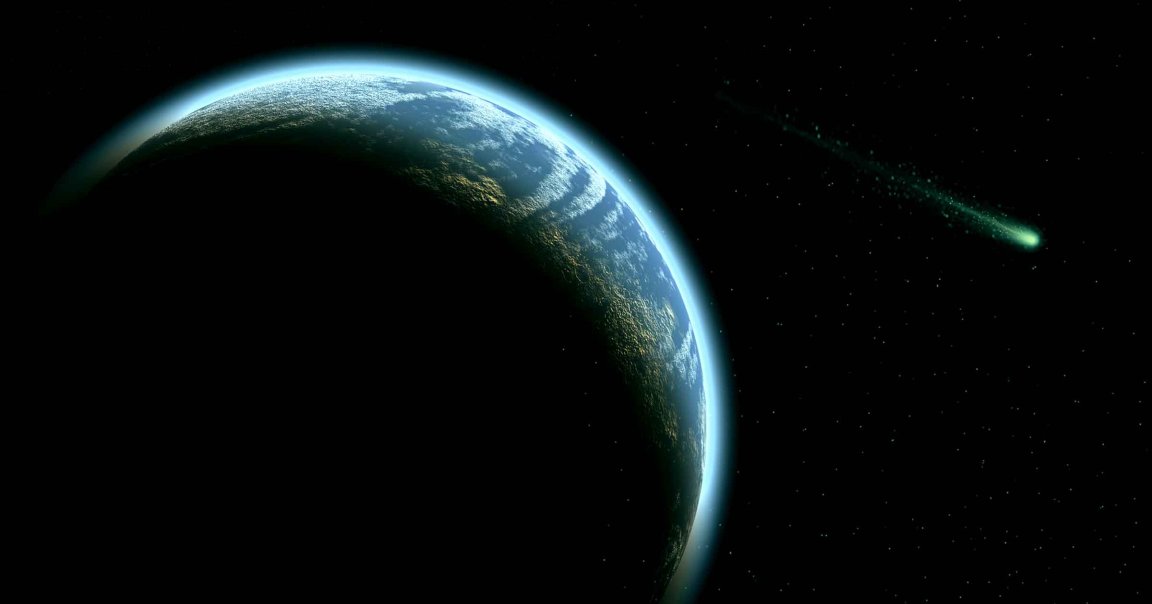
Other comets take far longer to orbit the Sun. As the New York Times reports, comet C/2025 R3 PANSTARRS, which was only discovered last year, has been visible to stargazers in the northern hemisphere for weeks now. However, once it’s on its way out, it’s not expected to return for another 170,000 years.

It’s origin is of particular interest to astronomers, who believe it came from the Oort Cloud, a giant spherical shell that blankets the solar system, representing the outermost edge of our star’s gravitational influence. Researchers believe it’s chock full of icy and rocky objects like C/2025 R3 PANSTARRS.

Long-period comets are an exceedingly rare sight — and an exciting opportunity to get a precious glimpse of the furthest reaches of the solar system.

“Whenever we spot them, it’s the first time we’ve seen them, and it’s also the only time that we will see them in our lifetimes,” Te Whatu Stardome in New Zealand resident astronomer Josh Aoraki told the NYT.

Whether future civilizations will be able to see the visitor again isn’t guaranteed. As the Perth Observatory’s Matt Woods points out in a recent guide, gravitational interactions with the solar system’s planets can eject comets form our star system altogether.

Given its suspected origins, studying a “dirty snowball” comet like C/2025 R3 PANSTARRS could provide us with tantalizing clues about the earliest days of the solar system. Current theories suggest that tiny chunks of leftover planet-making material dating back billions of years, called planetesimals, were driven away from the Sun when the planets formed. While some left the system entirely, others were trapped between a region where galactic influences balanced out with the Sun’s gravity, a region that’s now known as the Oort cloud.

The movement of these objects may have even played a role in delivering the necessary building blocks that allowed life on Earth to form, according to Woods.

In other words, there are plenty of reasons to get out the telescope before C/2025 R3 PANSTARRS is too distant to be visible to amateur astronomers.

“So while C/2025 R3 PANSTARRS might appear as little more than a faint, fuzzy patch through binoculars, it represents something far more significant,” Woods wrote. “It is a relic from the birth of the Solar System, a frozen archive of cosmic history, and for a brief moment, it’s visible from right here on Earth.”

“Not bad for something you can spot just after sunset,” he added.

More on comets: Please Resist the Urge to Drink the Melted Sludge From 3I/ATLAS