
惯性聚合 高效追踪和阅读你感兴趣的博客、新闻、科技资讯
阅读原文 在惯性聚合中打开

推荐订阅源

H
Help Net Security
月光博客
月光博客
IT之家
IT之家
B
Blog RSS Feed
T
Tailwind CSS Blog
The GitHub Blog
The GitHub Blog
博客园 - 三生石上(FineUI控件)
MyScale Blog
MyScale Blog
J
Java Code Geeks
Stack Overflow Blog
Stack Overflow Blog
奇客Solidot–传递最新科技情报
奇客Solidot–传递最新科技情报
Cyber Security Advisories - MS-ISAC
博客园 - Franky
博客园 - 叶小钗
阮一峰的网络日志
阮一峰的网络日志
freeCodeCamp Programming Tutorials: Python, JavaScript, Git & More
U
Unit 42
博客园_首页
B
Blog
V
V2EX
腾讯CDC
Vercel News
Vercel News
量子位
Microsoft Security Blog

Futurism

Man Creates Tiny Submarine for His Parakeet to Experience Life Underwater The Effects of AI-Generated Code Tearing Through Corporations Is Actually Kind of Funny Trump Hires Orbital Towing Company to Build Space Interceptors Psychologists Found Something Horrible About the Kind of Men Seeking Trad Wives To Get Swole, Teens Are Pumping Themselves Full of Drugs Meant for Fattening Cows for the Slaughterhouse Foolish Pollsters Are Now Just Asking AI What Voters Would Say in Response to Questions and Publishing It at Face Value OpenAI Says It’s Already Made $100 Million by Stuffing ChatGPT With Ads Man Punished for Breaking Into Moo Deng’s Zoo Enclosure AI Is Causing Healthcare Costs to Surge There’s a Mass Rebellion Against AI in the Workplace People Who Lose Their Job to AI Are in for a World of Pain, Goldman Sachs Report Finds OpenAI Says Not to Worry About UBI, Because It Has Another Idea Police Officer Helplessly Waves Arms at Waymo That Careened Wrong Way Through Whataburger Drive-Thru Someone Just Threw a Molotov Cocktail At Sam Altman’s House New York Times Makes Substantial Changes to Article That Glazed a Sleazy AI Startup: “Our Piece Should Have Included That Information” Space Scientists Wince as Astronauts’ Lives Depend on Artemis 2’s Controversial Heat Shield During Plunge Back to Earth The Moon Astronauts Have Been Working Out With a NASA Rowing Machine in Space First AI Model From Zuckerberg’s Wildly Expensive Superintelligence Lab Flops Compared to Virtually All Rivals Economists Starting to Admit They May Have Been Wrong About AI Never Replacing Human Jobs AI-Powered Drug Marketer Medvi Responds After Allegations About Fake Doctors and Patients As Astronauts Visit the Moon, NASA Insider Says Agency Is in Shambles Behind the Scenes Man Lights 1.2 Million Square Foot Warehouse on Fire for Not Paying Him Enough NASA Scientists Screamed With Delight When They Saw Something Smashing Into the Moon Google Says Showing Polymarket Bets on Google News Was a Mistake Las Vegas Sphere Turns Into Huge Moon to Celebrate NASA Mission The New York Times Says It’s Identified the Creator of Bitcoin We Talked to a Writer Accused of Publishing An AI-Generated Essay in The New York Times Naked Man Bursts Into Tesla Service Center With a Shotgun Student Dies When Hospital Has No ICU Doctors, Calls One on Videochat Who Pronounces Him Dead Remotely, Lawsuit Claims Analysis Finds That Google’s AI Overviews Are Providing Misinformation at a Scale Possibly Unprecedented in the History of Human Civilization
Scientists Detect Strange Rumbling Deep Beneath Antarctica
Victor Tangermann · 2026-06-16 · via Futurism

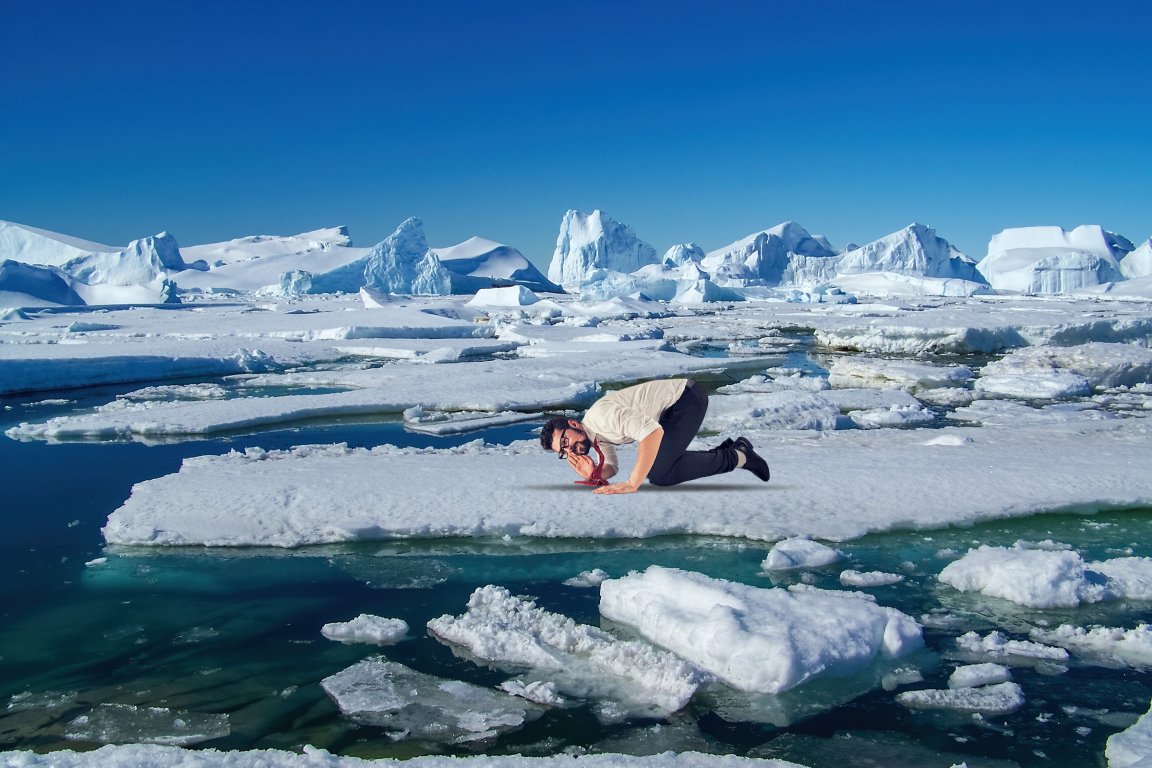
A comic photo illustration featuring a man on his hands and knees with his ear to the ground in an icy Antarctica landscape.

Illustration by Tag Hartman-Simkins / Futurism. Source: Shutterstock

Sign up to see the future, today

Can’t-miss innovations from the bleeding edge of science and tech

Something is stirring deep beneath the thick sheet of ice blanketing Antarctica.

With the help of deep learning algorithms, scientists have discovered hundreds of previously unknown small earthquakes under the David Glacier, an enormous shelf that stretches almost 700 mile, as detailed in a new paper published in the journal Science.

The team analyzed two existing datasets that range from 2001 to 2004 and 2012 to 2015. The quakes themselves weren’t very strong, clocking in at magnitudes between 1.6 and 3.5. However, they occurred at depths of over 43 miles, well below where the Earth’s crust transitions into the mantle. The findings left the researchers with a conundrum: the origins of these “intraplate intermediate-depth earthquakes” (IDEs) are “difficult to reconcile with traditional plate tectonics,” according to the paper.

The researchers argue a “complex interplay between Earth systems” could be to blame, suggesting Antarctica is far more seismically active than previously thought.

The research could also force us to rethink how plate tectonics work. For one, the quakes took place in the center of these plates, not where they meet, which are the subduction zones well known for seismic activity.

The scientists determined that bending stresses caused by the relatively warm lithosphere — the rigid outermost shell of the Earth — pushing up from under West Antarctica, as well as the relatively cold and much thinner lithosphere under East Antarctica, could explain the hundreds of peculiar earthquakes.

“The earthquakes occur where the cold, rigid crust and upper mantle beneath East Antarctica meets warmer, softer rock beneath West Antarctica, and this contrast creates an abrupt change in tectonic strength,” University of Alabama geologist and first author Long Ho told Live Science.

Ho and his colleagues were surprised by the sheer number of earthquakes in the region, suggesting other areas could see similar activity as well. To figure out where else these intraplate IDEs could take place, Ho and his colleagues propose using artificial intelligence.

“Advanced seismic detection capabilities, such as those used here, could reveal that intraplate IDEs are more common globally than currently recognized,” the paper reads.

It’s a surprising development, because Antarctica was “considered to largely lack earthquakes,” as Penn State glaciologist Richard Alley, who was not involved in the research, told Live Science.

“Now, we know that the apparent lack of earthquakes was really a lack of [tools] to listen to earthquakes,” he added.

These aren’t the only strange rumblings to intrigue scientists lately. Earlier this year, researchers discovered the existence of “continental mantle earthquakes” 55 miles below sea level, roughly the same depth as the ones below Antarctica. However, the geological processes behind them appear to be quite different.

More on Antarctica: Scientists Horrified as Huge Heatwave Hits Antarctica