


惯性聚合 高效追踪和阅读你感兴趣的博客、新闻、科技资讯
阅读原文 在惯性聚合中打开

推荐订阅源

J
Java Code Geeks
量子位
腾讯CDC
A
About on SuperTechFans
小众软件
小众软件
Microsoft Azure Blog
T
Tailwind CSS Blog
V
V2EX
B
Blog RSS Feed
H
Hackread – Cybersecurity News, Data Breaches, AI and More
GbyAI
GbyAI
Recent Announcements
Microsoft Security Blog
博客园 - 叶小钗
罗磊的独立博客
宝玉的分享
宝玉的分享
WordPress大学
WordPress大学
大猫的无限游戏
大猫的无限游戏
IT之家
IT之家
V
Visual Studio Blog
D
DataBreaches.Net
博客园 - 三生石上(FineUI控件)
月光博客
月光博客
有赞技术团队
有赞技术团队

Futurism

Man Creates Tiny Submarine for His Parakeet to Experience Life Underwater The Effects of AI-Generated Code Tearing Through Corporations Is Actually Kind of Funny Trump Hires Orbital Towing Company to Build Space Interceptors Psychologists Found Something Horrible About the Kind of Men Seeking Trad Wives To Get Swole, Teens Are Pumping Themselves Full of Drugs Meant for Fattening Cows for the Slaughterhouse Foolish Pollsters Are Now Just Asking AI What Voters Would Say in Response to Questions and Publishing It at Face Value OpenAI Says It’s Already Made $100 Million by Stuffing ChatGPT With Ads Man Punished for Breaking Into Moo Deng’s Zoo Enclosure AI Is Causing Healthcare Costs to Surge There’s a Mass Rebellion Against AI in the Workplace People Who Lose Their Job to AI Are in for a World of Pain, Goldman Sachs Report Finds OpenAI Says Not to Worry About UBI, Because It Has Another Idea Police Officer Helplessly Waves Arms at Waymo That Careened Wrong Way Through Whataburger Drive-Thru Someone Just Threw a Molotov Cocktail At Sam Altman’s House New York Times Makes Substantial Changes to Article That Glazed a Sleazy AI Startup: “Our Piece Should Have Included That Information” Space Scientists Wince as Astronauts’ Lives Depend on Artemis 2’s Controversial Heat Shield During Plunge Back to Earth The Moon Astronauts Have Been Working Out With a NASA Rowing Machine in Space First AI Model From Zuckerberg’s Wildly Expensive Superintelligence Lab Flops Compared to Virtually All Rivals Economists Starting to Admit They May Have Been Wrong About AI Never Replacing Human Jobs AI-Powered Drug Marketer Medvi Responds After Allegations About Fake Doctors and Patients As Astronauts Visit the Moon, NASA Insider Says Agency Is in Shambles Behind the Scenes Man Lights 1.2 Million Square Foot Warehouse on Fire for Not Paying Him Enough NASA Scientists Screamed With Delight When They Saw Something Smashing Into the Moon Google Says Showing Polymarket Bets on Google News Was a Mistake Las Vegas Sphere Turns Into Huge Moon to Celebrate NASA Mission The New York Times Says It’s Identified the Creator of Bitcoin We Talked to a Writer Accused of Publishing An AI-Generated Essay in The New York Times Naked Man Bursts Into Tesla Service Center With a Shotgun Student Dies When Hospital Has No ICU Doctors, Calls One on Videochat Who Pronounces Him Dead Remotely, Lawsuit Claims Analysis Finds That Google’s AI Overviews Are Providing Misinformation at a Scale Possibly Unprecedented in the History of Human Civilization
AI Will Consume as Much Water as a Billion People By 2030...
Frank Landymore · 2026-06-06 · via Futurism

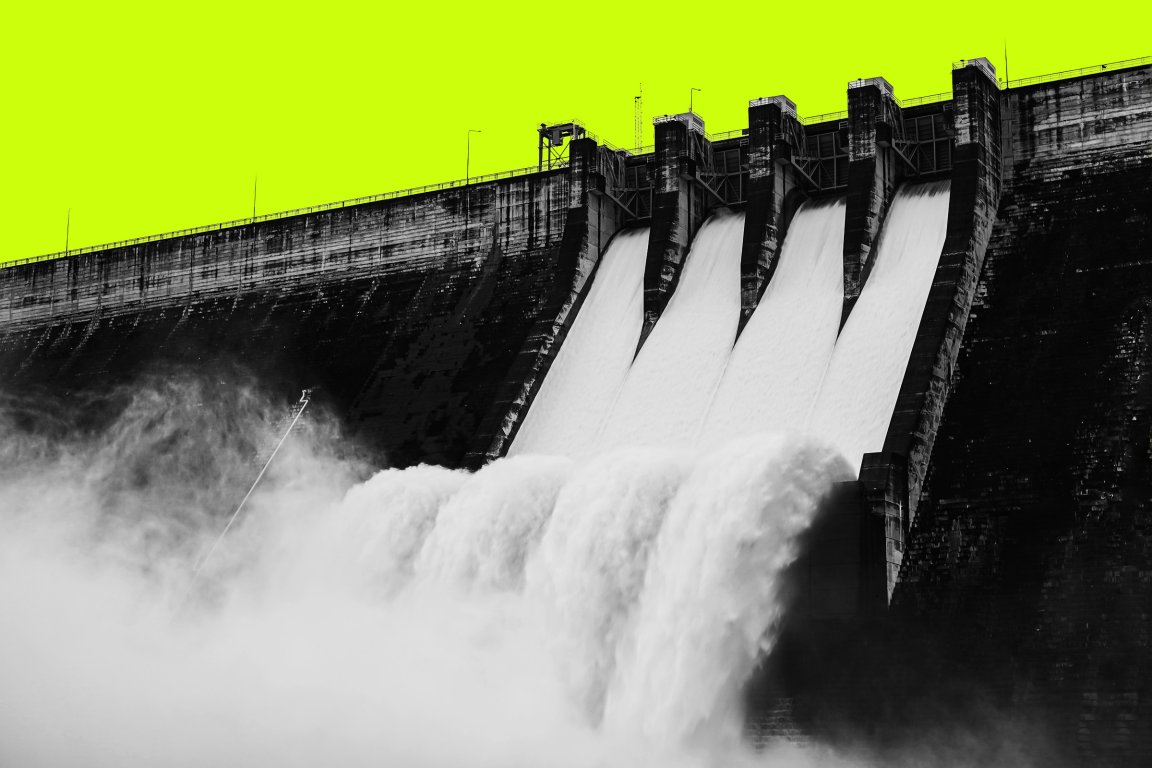
Photo illustration featuring massive dam releasing a deluge of water.

Illustration by Tag Hartman-Simkins / Futurism. Source: Shutterstock

Sign up to see the future, today

Can’t-miss innovations from the bleeding edge of science and tech

AI data centers will consume as much water as the water needs of 1.3 billion people by 2030, according to a new report from the United Nations University Institute for Water, Environment and Health.

The report, released this week, found that the environmental cost of AI is being “systematically mismeasured” because current assessments focus on the carbon emissions from training large language models while overlooking the tech’s broader water and land footprint. The water footprint comes from cooling and powering the data centers, and the land footprint comes from the energy infrastructure and supply chains that go into building and running them.

In reality, the report stresses, these initial training costs are dwarfed by inference costs, meaning the cost of running the models to answer prompts, which make up 80 to 90 percent of total AI energy use. Training OpenAI’s GPT-4 model consumed up to 70 gigawatt-hours of electricity, for example. But running ChatGPT, it’s estimated, uses a monstrous 383 GWh from answering billions of prompts per day.

Factoring in inference costs, data centers powering AI will use 945 terawatt-hours of electricity by 2030, the report found, which is triple the combined electricity use of Pakistan, Bangladesh, and Nigeria — which, altogether, are home to over 650 million people.

That brings us to the water footprint. By that same year, AI’s thirst will see it consume 9.3 trillion liters water — which is equal the basic annual water needs of all 1.3 billion people in Sub-Saharan Africa.

Addressing AI’s environmental impact won’t be as straightforward as transitioning to greener sources of power, the report warns. Ditching coal in favor of bioenergy could slash carbon emissions associated with electricity costs by 70 percent, but cause the water footprint to surge by 30 times, and the land footprint by 100 times.

“What surprised us most is how often the choices that look greenest from a carbon perspective end up worse for water or for land,” report lead author Miriam Aczel, an UNU-INWEH researcher, said in a statement about the findings.

“If we keep judging AI sustainability by carbon alone, we might think that renewables make AI infrastructure clean but that is solving one problem while creating other problems, often in places that didn’t ask for it,” she added.

And the hits just keep coming: paradoxically, making AI more energy efficient may actually increase its environmental footprint. 

“A lot of people think that the environmental footprint of AI reduces, as technology improves and processes become more efficient. But that is only a partial picture of the overall problem,” coauthor Kaveh Madani, director of UNU-INWEH, said in the statement. “More efficient and affordable AI and energy mean more consumption of AI, making the overall footprint far bigger than what we save through efficiency gains.”

More on AI: Neighbors Horrified by Data Center Twice the Size of Manhattan