




惯性聚合 高效追踪和阅读你感兴趣的博客、新闻、科技资讯
阅读原文 在惯性聚合中打开

推荐订阅源

J
Java Code Geeks
Martin Fowler
Martin Fowler
MongoDB | Blog
MongoDB | Blog
博客园 - Franky
Cyber Security Advisories - MS-ISAC
Microsoft Security Blog
H
Hackread – Cybersecurity News, Data Breaches, AI and More
博客园_首页
腾讯CDC
D
Docker
The Cloudflare Blog
量子位
爱范儿
爱范儿
L
LangChain Blog
博客园 - 三生石上(FineUI控件)
博客园 - 司徒正美
aimingoo的专栏
aimingoo的专栏
Blog — PlanetScale
Blog — PlanetScale
Jina AI
Jina AI
Apple Machine Learning Research
Hugging Face - Blog
Hugging Face - Blog
博客园 - 聂微东
Vercel News
Vercel News
MyScale Blog
MyScale Blog

Futurism

Man Creates Tiny Submarine for His Parakeet to Experience Life Underwater The Effects of AI-Generated Code Tearing Through Corporations Is Actually Kind of Funny Trump Hires Orbital Towing Company to Build Space Interceptors Psychologists Found Something Horrible About the Kind of Men Seeking Trad Wives To Get Swole, Teens Are Pumping Themselves Full of Drugs Meant for Fattening Cows for the Slaughterhouse Foolish Pollsters Are Now Just Asking AI What Voters Would Say in Response to Questions and Publishing It at Face Value OpenAI Says It’s Already Made $100 Million by Stuffing ChatGPT With Ads DOGE Made Drastic Cuts to a Global Vaccine Assistance Program. Now There’s a Deadly Measles Outbreak in Bangladesh Man Punished for Breaking Into Moo Deng’s Zoo Enclosure AI Is Causing Healthcare Costs to Surge There’s a Mass Rebellion Against AI in the Workplace People Who Lose Their Job to AI Are in for a World of Pain, Goldman Sachs Report Finds OpenAI Says Not to Worry About UBI, Because It Has Another Idea Police Officer Helplessly Waves Arms at Waymo That Careened Wrong Way Through Whataburger Drive-Thru Someone Just Threw a Molotov Cocktail At Sam Altman’s House New York Times Makes Substantial Changes to Article That Glazed a Sleazy AI Startup: “Our Piece Should Have Included That Information” Space Scientists Wince as Astronauts’ Lives Depend on Artemis 2’s Controversial Heat Shield During Plunge Back to Earth The Moon Astronauts Have Been Working Out With a NASA Rowing Machine in Space First AI Model From Zuckerberg’s Wildly Expensive Superintelligence Lab Flops Compared to Virtually All Rivals Economists Starting to Admit They May Have Been Wrong About AI Never Replacing Human Jobs AI-Powered Drug Marketer Medvi Responds After Allegations About Fake Doctors and Patients As Astronauts Visit the Moon, NASA Insider Says Agency Is in Shambles Behind the Scenes Man Lights 1.2 Million Square Foot Warehouse on Fire for Not Paying Him Enough NASA Scientists Screamed With Delight When They Saw Something Smashing Into the Moon Google Says Showing Polymarket Bets on Google News Was a Mistake Las Vegas Sphere Turns Into Huge Moon to Celebrate NASA Mission The New York Times Says It’s Identified the Creator of Bitcoin We Talked to a Writer Accused of Publishing An AI-Generated Essay in The New York Times Naked Man Bursts Into Tesla Service Center With a Shotgun Student Dies When Hospital Has No ICU Doctors, Calls One on Videochat Who Pronounces Him Dead Remotely, Lawsuit Claims
Chinese Scientists Bioengineering Plants With Firefly Gen...
2026-04-04 · via Futurism

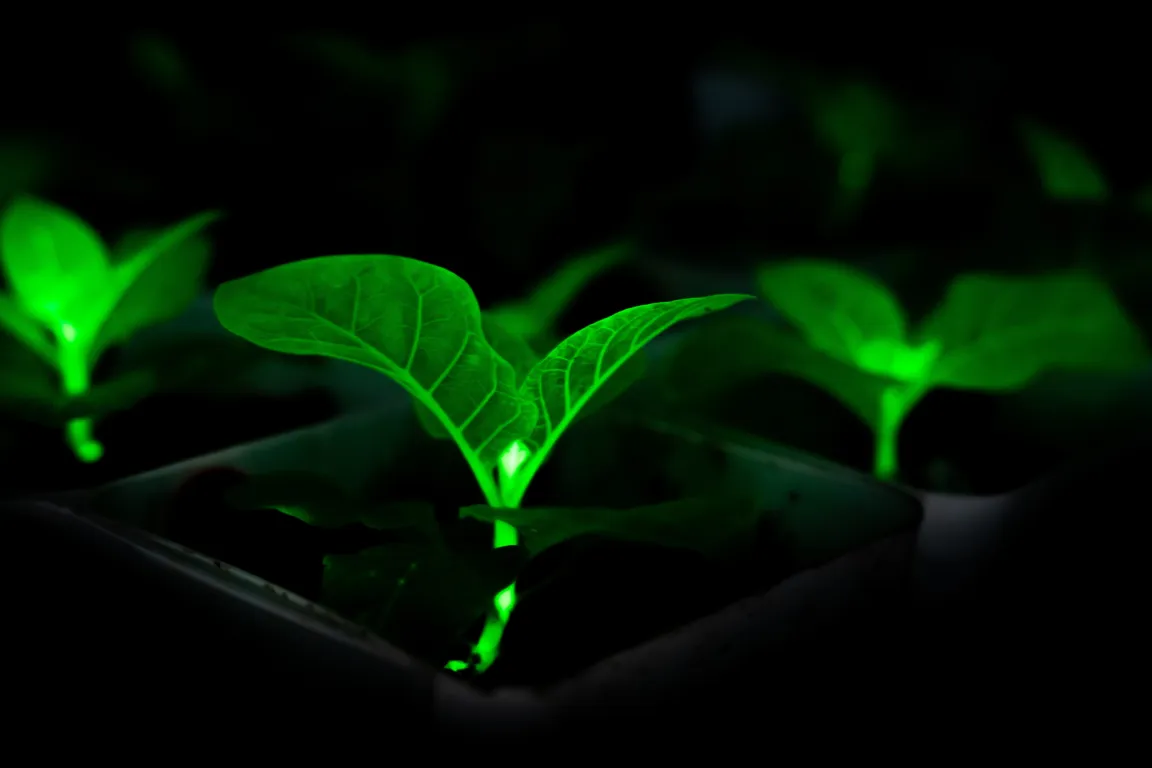
Green seedlings glowing brightly against a dark background, highlighting their vibrant leaves and delicate stems.

Magicpen Bio / Handout via Xinhua / Getty Images

Sign up to see the future, today

Can’t-miss innovations from the bleeding edge of science and tech

A shortcut to sprucing up any dreary urban locale is by throwing in some beautiful greenery. Now, Chinese scientists have unveiled new genetically engineered plants that can glow in the dark, which they say could be a compelling draw for tourism and even help light cities at night.

The bioluminescent flora were created by splicing genes from fireflies and glowing fungi into the plant cells, allowing them to emit a soft glow. Using these techniques, the scientists have modified over twenty species to glow in the dark, including orchids, sunflowers, and chrysanthemums, Euronews reports.

Li Renhan, founder of the biotechnology company Magicpen Bio which developed the plants, envisioned a spectacle comparable to an exotic alien planet.

“We’re dedicated to bringing this technology to cultural tourism and the nighttime economy,” Li told Euronews. “Imagine a valley filled with glowing plants in the dark, it would be like bringing the ‘Avatar’ world to Earth,” he added, referring to the popular sci-fi franchise.

The sheer number of species is impressive. Hype around glow-in-the-dark plants exploded around the release of the “Firefly Petunia” in 2024, a household plant sold by Light Bio. Much like the Chinese scientists’ invention, it was also made by injecting genes from bioluminescent mushrooms, glowing far brighter than previous efforts at gene-hacking glow in the dark plants. 

That was with a single species. Now, with over twenty of them, one could potentially populate an entire park or garden with magical-seeming verdure. They won’t replace streetlights, but will in at least certain darker sections of a city offer something different to their soul-crushingly municipal glare. Maybe a park and other public spaces could even remain accessible after dark without spending money to keep lights on.

“Beyond tourism, we could also use them in urban parks without the need for electricity,” Li told Euronews.  “These plants don’t need electricity. They only need water and fertilizer. They save energy, reduce emissions, and can light up cities at night.”

Last year, another team of Chinese researchers unveiled their own glow-in-the-dark succulents created by using very different means. Instead of gene-editing the plants, the team from South China Agricultural University injected metal nanoparticles into their leaves, including strontium and aluminum. The metals were “charged” by sunlight during the day, and then let off an afterglow during the night. By controlling the mixture of metals, the researchers could determine the color the plants glowed in.

If this spate of innovations in are anything to go by, we’re living in a golden — or glowing? — age of boutique, bioluminescent foliage.

More on biology: The Moon Astronauts Brought Along USB Stick-Sized Living Samples of Their Own Tissue