
惯性聚合 高效追踪和阅读你感兴趣的博客、新闻、科技资讯
阅读原文 在惯性聚合中打开

推荐订阅源

大猫的无限游戏
大猫的无限游戏
阮一峰的网络日志
阮一峰的网络日志
让小产品的独立变现更简单 - ezindie.com
WordPress大学
WordPress大学
博客园 - 叶小钗
Hugging Face - Blog
Hugging Face - Blog
博客园 - 司徒正美
Last Week in AI
Last Week in AI
罗磊的独立博客
量子位
Jina AI
Jina AI
T
Tailwind CSS Blog
Apple Machine Learning Research
IT之家
IT之家
美团技术团队
雷峰网
雷峰网
爱范儿
爱范儿
S
SegmentFault 最新的问题
小众软件
小众软件
月光博客
月光博客
酷 壳 – CoolShell
酷 壳 – CoolShell
人人都是产品经理
人人都是产品经理
The Cloudflare Blog
奇客Solidot–传递最新科技情报
奇客Solidot–传递最新科技情报

Futurism

Man Creates Tiny Submarine for His Parakeet to Experience Life Underwater The Effects of AI-Generated Code Tearing Through Corporations Is Actually Kind of Funny Trump Hires Orbital Towing Company to Build Space Interceptors Psychologists Found Something Horrible About the Kind of Men Seeking Trad Wives To Get Swole, Teens Are Pumping Themselves Full of Drugs Meant for Fattening Cows for the Slaughterhouse Foolish Pollsters Are Now Just Asking AI What Voters Would Say in Response to Questions and Publishing It at Face Value OpenAI Says It’s Already Made $100 Million by Stuffing ChatGPT With Ads Man Punished for Breaking Into Moo Deng’s Zoo Enclosure AI Is Causing Healthcare Costs to Surge There’s a Mass Rebellion Against AI in the Workplace People Who Lose Their Job to AI Are in for a World of Pain, Goldman Sachs Report Finds OpenAI Says Not to Worry About UBI, Because It Has Another Idea Police Officer Helplessly Waves Arms at Waymo That Careened Wrong Way Through Whataburger Drive-Thru Someone Just Threw a Molotov Cocktail At Sam Altman’s House New York Times Makes Substantial Changes to Article That Glazed a Sleazy AI Startup: “Our Piece Should Have Included That Information” Space Scientists Wince as Astronauts’ Lives Depend on Artemis 2’s Controversial Heat Shield During Plunge Back to Earth The Moon Astronauts Have Been Working Out With a NASA Rowing Machine in Space First AI Model From Zuckerberg’s Wildly Expensive Superintelligence Lab Flops Compared to Virtually All Rivals Economists Starting to Admit They May Have Been Wrong About AI Never Replacing Human Jobs AI-Powered Drug Marketer Medvi Responds After Allegations About Fake Doctors and Patients As Astronauts Visit the Moon, NASA Insider Says Agency Is in Shambles Behind the Scenes Man Lights 1.2 Million Square Foot Warehouse on Fire for Not Paying Him Enough NASA Scientists Screamed With Delight When They Saw Something Smashing Into the Moon Google Says Showing Polymarket Bets on Google News Was a Mistake Las Vegas Sphere Turns Into Huge Moon to Celebrate NASA Mission The New York Times Says It’s Identified the Creator of Bitcoin We Talked to a Writer Accused of Publishing An AI-Generated Essay in The New York Times Naked Man Bursts Into Tesla Service Center With a Shotgun Student Dies When Hospital Has No ICU Doctors, Calls One on Videochat Who Pronounces Him Dead Remotely, Lawsuit Claims Analysis Finds That Google’s AI Overviews Are Providing Misinformation at a Scale Possibly Unprecedented in the History of Human Civilization
Scientist Suggests That 3I/ATLAS May Have Seeded Life as ...
Victor Tangermann · 2026-05-27 · via Futurism

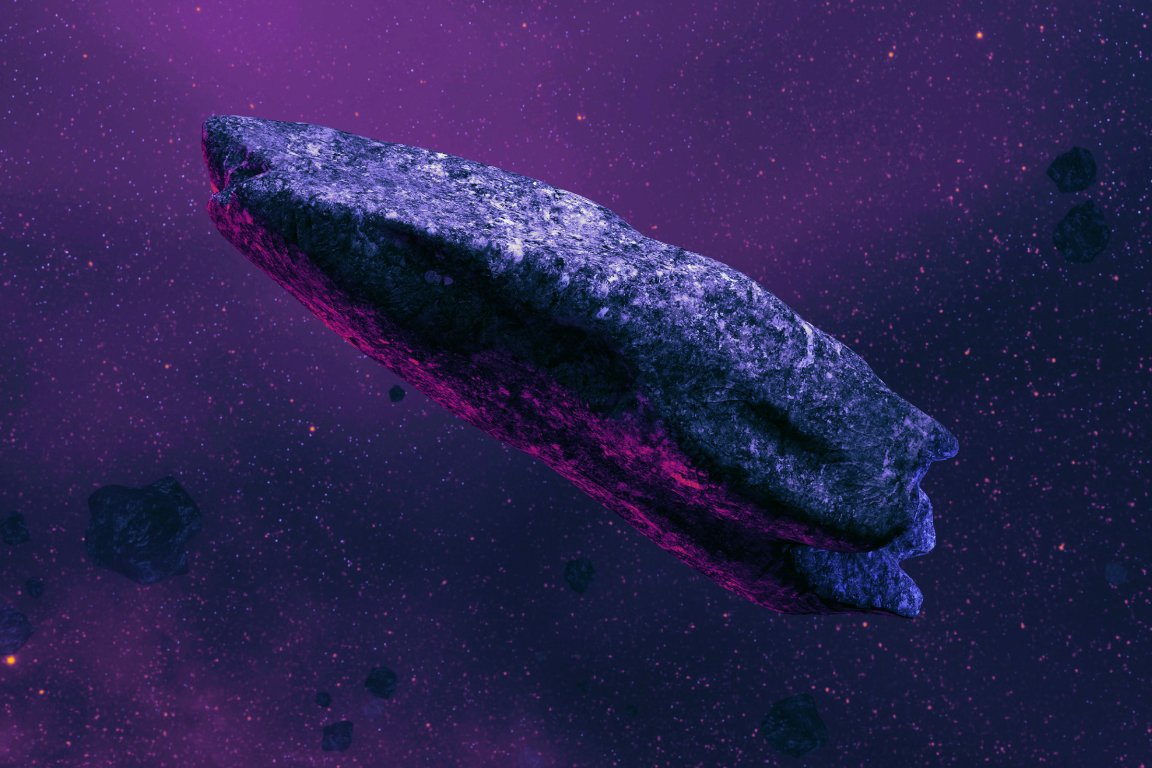
An illustration of 3I ATLAS, an interstellar comet that has passed through our Solar System

Shutterstock / Futurism

Sign up to see the future, today

Can’t-miss innovations from the bleeding edge of science and tech

A small group of scientists have long suggested that the seeds of life may have been distributed across the vast distances of space via cosmic dust, asteroids, or comets — a theory known as panspermia.

Some, including late astronomer and planetary scientist Carl Sagan, have gone as far as to raise the possibility that those seeds may have been deliberately spread to distant planets by intelligent civilizations.

It’s an intriguing albeit far-fetched hypothesis that most recently caught the interest of Harvard astronomer Avi Loeb. Following months of observations of mysterious interstellar object 3I/ATLAS, which came surprisingly close to a number of solar system planets during its brief visit last year, Loeb proposed that it could’ve been shedding the building blocks of life during its journey — or even have been designed to seed planets like our own intentionally.

In a recent blog post, Loeb suggested that extrasolar life could’ve survived the journey by being embedded inside the comet’s ice reservoirs, before being released near other planets in the solar system, likening it to a “dandelion flower shedding its seeds to be carried by wind towards a fertile ground.”

“In addition to natural origins, there is the possibility of directed panspermia, whereby an interstellar gardener seeded 3I/ATLAS on a fertilization mission targeting the habitable planets in the Solar System,” he wrote. “This would explain the rare alignment between the trajectory of 3I/ATLAS and the orbital plane of the habitable planets around the Sun, as well as the sunward jet with large fragments that plowed through the solar radiation and wind.”

Loeb previously painstakingly built a case around his widely disputed hypothesis that 3I/ATLAS may have been an alien spacecraft that was sent to visit us. His latest blog post suggests that the wealth of observational data strongly suggesting it was a comet made up of ice and rock has yet to fully weaken his resolve when it comes to the possibility that aliens are behind the interstellar visitor.

That’s not to say his new idea is a slam dunk. Panspermia itself remains a hotly debated subject among scientists, with many arguing that building blocks of life may have always been present on Earth. How such a process could play out in far more hostile environments in other parts of the solar system is an even bigger question.

Still, it’s a fascinating thought experiment with some vast implications — and should inspire us to actively seek answers by intercepting objects like 3I/ATLAS, Loeb argues.

“By directing a probe on a crash course towards the surface of these icebergs, we can diagnose the composition of the material they shed and infer whether it carries extrasolar life,” he wrote in his latest blog. “In case it does, the most pressing question is whether extrasolar life resembles life-as-we-know-it.”

“If so, perhaps life on Earth was seeded by an interstellar gardener,” he added.

More on 3I/ATLAS: Astronomers Discover Major Clue About 3I/ATLAS’ Origins