



惯性聚合 高效追踪和阅读你感兴趣的博客、新闻、科技资讯
阅读原文 在惯性聚合中打开

推荐订阅源

C
Check Point Blog
Y
Y Combinator Blog
GbyAI
GbyAI
Microsoft Azure Blog
Martin Fowler
Martin Fowler
博客园_首页
大猫的无限游戏
大猫的无限游戏
美团技术团队
S
SegmentFault 最新的问题
T
The Blog of Author Tim Ferriss
Cyber Security Advisories - MS-ISAC
MyScale Blog
MyScale Blog
小众软件
小众软件
Vercel News
Vercel News
阮一峰的网络日志
阮一峰的网络日志
N
Netflix TechBlog - Medium
让小产品的独立变现更简单 - ezindie.com
量子位
博客园 - 【当耐特】
J
Java Code Geeks
F
Fortinet All Blogs
宝玉的分享
宝玉的分享
Stack Overflow Blog
Stack Overflow Blog
博客园 - 司徒正美

Futurism

Man Creates Tiny Submarine for His Parakeet to Experience Life Underwater The Effects of AI-Generated Code Tearing Through Corporations Is Actually Kind of Funny Trump Hires Orbital Towing Company to Build Space Interceptors Psychologists Found Something Horrible About the Kind of Men Seeking Trad Wives To Get Swole, Teens Are Pumping Themselves Full of Drugs Meant for Fattening Cows for the Slaughterhouse Foolish Pollsters Are Now Just Asking AI What Voters Would Say in Response to Questions and Publishing It at Face Value OpenAI Says It’s Already Made $100 Million by Stuffing ChatGPT With Ads DOGE Made Drastic Cuts to a Global Vaccine Assistance Program. Now There’s a Deadly Measles Outbreak in Bangladesh Man Punished for Breaking Into Moo Deng’s Zoo Enclosure AI Is Causing Healthcare Costs to Surge There’s a Mass Rebellion Against AI in the Workplace People Who Lose Their Job to AI Are in for a World of Pain, Goldman Sachs Report Finds OpenAI Says Not to Worry About UBI, Because It Has Another Idea Police Officer Helplessly Waves Arms at Waymo That Careened Wrong Way Through Whataburger Drive-Thru Someone Just Threw a Molotov Cocktail At Sam Altman’s House New York Times Makes Substantial Changes to Article That Glazed a Sleazy AI Startup: “Our Piece Should Have Included That Information” Space Scientists Wince as Astronauts’ Lives Depend on Artemis 2’s Controversial Heat Shield During Plunge Back to Earth The Moon Astronauts Have Been Working Out With a NASA Rowing Machine in Space First AI Model From Zuckerberg’s Wildly Expensive Superintelligence Lab Flops Compared to Virtually All Rivals Economists Starting to Admit They May Have Been Wrong About AI Never Replacing Human Jobs AI-Powered Drug Marketer Medvi Responds After Allegations About Fake Doctors and Patients As Astronauts Visit the Moon, NASA Insider Says Agency Is in Shambles Behind the Scenes Man Lights 1.2 Million Square Foot Warehouse on Fire for Not Paying Him Enough NASA Scientists Screamed With Delight When They Saw Something Smashing Into the Moon Google Says Showing Polymarket Bets on Google News Was a Mistake Las Vegas Sphere Turns Into Huge Moon to Celebrate NASA Mission The New York Times Says It’s Identified the Creator of Bitcoin We Talked to a Writer Accused of Publishing An AI-Generated Essay in The New York Times Naked Man Bursts Into Tesla Service Center With a Shotgun Student Dies When Hospital Has No ICU Doctors, Calls One on Videochat Who Pronounces Him Dead Remotely, Lawsuit Claims
Astronomers Found Something Strange In Giant “Forbidden” ...
2026-04-05 · via Futurism

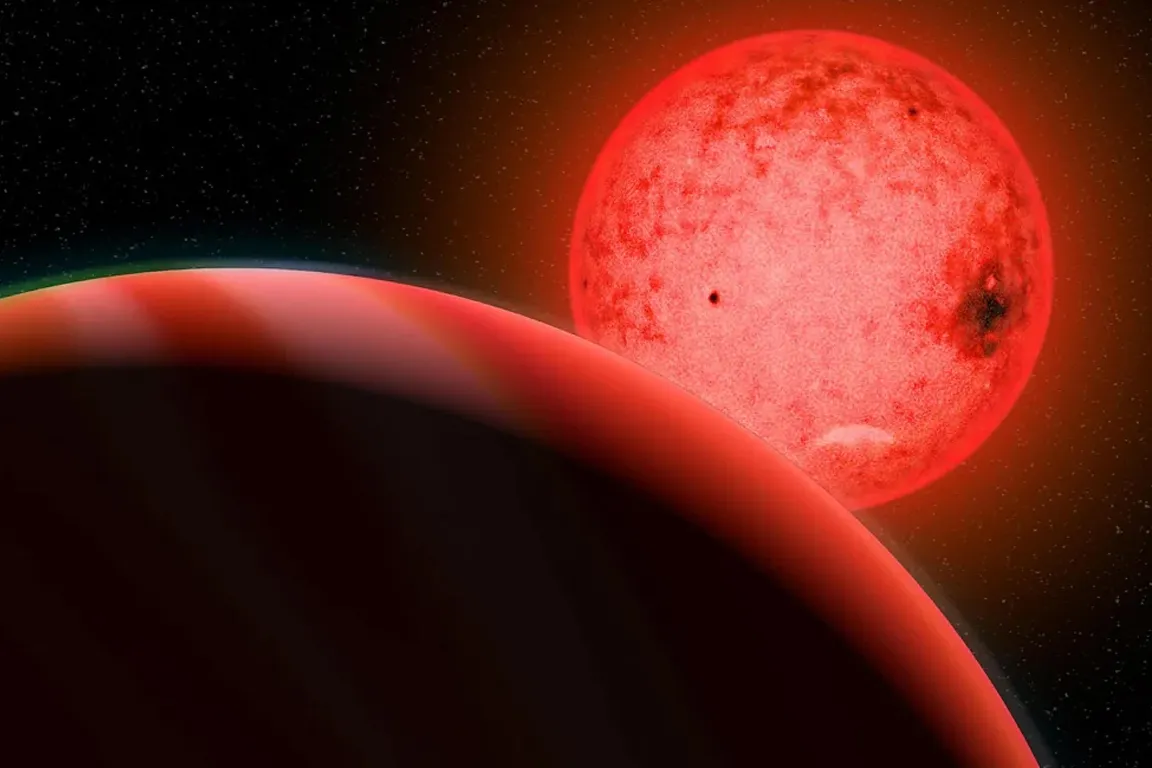
A large red planet with a smooth surface and faint bands is in the foreground, partially shadowed. Behind it is a bright red star with visible sunspots and a glowing aura, set against a backdrop of a star-filled space.

Katherine Cain / Carnegie Institution for Science

Sign up to see the future, today

Can’t-miss innovations from the bleeding edge of science and tech

Three years ago, Carnegie University astronomers examining a small star called a red dwarf found something unexpected: a Jupiter-sized gas giant. 

In a star system like our own, this would be unremarkable. But at nearly a quarter the size of its host star, the exoplanet, TOI 5205b, was — in the literal sense — impossibly large. It blocked seven percent of the star’s light whenever it passed in front of it, forming one of the largest exoplanet transits on record. It was so physics-defying that the astronomers dubbed it “forbidden”; existing gas planet formation models couldn’t explain how a puny red dwarf, which is only forty percent of the mass of the Sun, could be capable of giving birth to it.

Now, the astronomers got a second look with the James Webb Space Telescope to peer into its atmosphere. And their findings, published in a new study in The Astronomical Journal, reveal even more unusual aspects of the oversized world. 

The main curiosity is that its atmosphere has a lower concentration of heavy elements relative to hydrogen than gas giants in our own solar system (Jupiter and Saturn), suggesting something different about its formation.

Compared to its host star, the forbidden world also a lower metallicity, a term that describes the abundance of elements heavier than hydrogen and helium.

“These findings have implications for our understanding of the giant planet formation process that occurs early in a star’s lifespan,” lead author and Carnegie astronomer Anjali Piette said in a statement about the work.

The prevailing theory on planet formation is that they’re conceived in a spinning disk of gas and dust that surrounds a star, which itself forms after the star forms from the collapse of a vast and dense nebula. The disk is the leftover material of its birth, eventually becoming the star’s cosmic companions.

Over time, pockets inside this so-called protoplanetary disk will condense to form rocky planets, or the rocky core that will eventually become an even larger gas giant. Most models suggest that these cores need to be around ten Earth masses to possess the gravity to start rapidly condensing gas around itself. But with a red dwarf like the one TOI 5205b orbits, there shouldn’t have been enough of this material to form the initial core.

The astronomers haven’t found anything to reconcile this discrepancy yet, but the unusually low metallicity is giving them much to chew over. It suggests that the planet’s “heavy elements migrated inward during formation and now its interior and atmosphere are not mixing,” coauthor Shubham Kanodia from Carnegie Science said in the statement. “These results suggest a very carbon-rich, oxygen-poor planet atmosphere.”

More on space: Scientists Spot Two Planets That Collided, Resulting in Carnage That Will Send Prickles Through Your Scalp