


The agentic AI moment has arrived, but delivering on its promise requires more than good models. It also takes fast hardware, secure runtimes, a responsive data layer and models tuned for long-running reasoning. NVIDIA and Microsoft are bringing that full stack to developers across Windows devices, Azure cloud and local deployments.
At Microsoft Build, NVIDIA founder and CEO Jensen Huang joined Microsoft chairman and CEO Satya Nadella’s keynote via livestream from Taipei to discuss the expanded partnership: NVIDIA RTX Spark and DGX Station for Windows, NVIDIA GPU-accelerated Microsoft Fabric, NVIDIA open models on Microsoft Foundry, the NVIDIA OpenShell secure runtime in GitHub Copilot and the next generation of NVIDIA-powered AI factories.
NVIDIA and Microsoft are reimagining Windows PCs for the age of AI agents. With RTX Spark laptops and small desktops, and DGX Station for Windows deskside AI supercomputers, developers can build, tune and run agents natively on Windows.
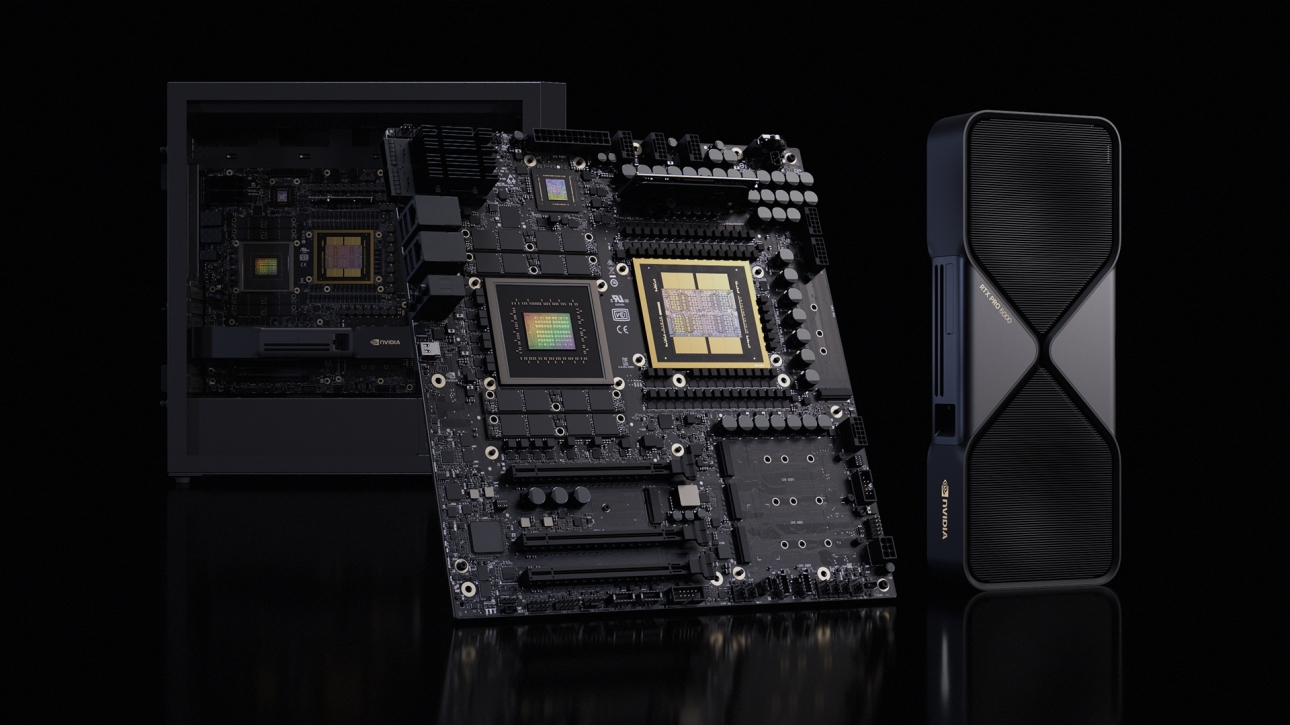
RTX Spark is a new beginning, powering the world’s first Windows PCs purpose-built for personal agents, with 1 petaflop of AI performance, up to 128GB of unified memory, all-day battery life, and full AI and graphics performance unplugged. Bringing over 30 years of NVIDIA innovation, including CUDA, RTX, DLSS and TensorRT, systems arrive this fall from Microsoft Surface, ASUS, Dell, HP, Lenovo and MSI.
DGX Station for Windows is the most powerful deskside AI supercomputer for building and running agents on Windows enterprise applications and workflows. Powered by the NVIDIA GB300 Grace Blackwell Ultra Desktop Superchip with up to 748GB of coherent memory and 20 petaflops of FP4 performance, it runs frontier models of up to 1 trillion parameters for always-on enterprise agents. Systems are expected from ASUS, Dell, GIGABYTE, HP, MSI and Supermicro in Q4. Both products run NVIDIA OpenShell, a secure-by-design runtime for autonomous agents.
Read more in this Microsoft blog: “Introducing a powerful new chapter for Windows PCs, accelerated by NVIDIA RTX Spark”
Agentic AI runs on a system of models. With NVIDIA, Anthropic and OpenAI models — plus Hermes special agents — now on the hosted agents in Foundry Agent Service, enterprises can bring agentic systems to life on Azure with built-in identity and governance. Anthropic’s Claude models now run natively on NVIDIA GB300 Blackwell Ultra systems on Azure, with customer availability in the weeks ahead.
NVIDIA Nemotron 3 Ultra, a new open frontier reasoning model for long-running agents across coding, research and enterprise workflows, is available this month on Foundry managed compute, alongside Nemotron 3.5 ASR for speech recognition and Nemotron 3.5 Content Safety. Developers can compose Nemotron alongside frontier and local models, optimizing cost and quality for each workflow.
NVIDIA’s open model portfolio on Foundry now spans agentic, physical and scientific AI. NVIDIA Cosmos 3, the first fully open omnimodel for physical AI, brings vision reasoning, world simulation and action generation. NVIDIA Earth-2 AI weather models are available through Microsoft Planetary Computer Pro and Foundry for enterprise forecasting and risk analysis.
NVIDIA Agent Toolkit and NVIDIA NemoClaw blueprints give developers an open source platform to build production agents on Foundry. NVIDIA CUDA-X libraries including cuDF, cuOpt, AI-Q and NeMo are now accessible to agents as domain-specific skills.
Learn more in this Build breakout session: “Orchestrate Special Agents with NVIDIA Nemotron Models on Microsoft Foundry.”
Data fuels agentic AI, and fast access to it is critical.
NVIDIA accelerated computing is now built into Microsoft Fabric Data Warehouse, with Microsoft’s internal benchmarking delivering SQL execution up to 6x faster than the CPU-powered baseline and up to 7x faster than three other leading cloud data warehouse providers for high-concurrency workloads.
The enterprise data layer can now keep pace with AI agents that continuously query and reason over data, the result of years of deep engineering collaboration between NVIDIA and Microsoft, from research to production.
Read more in this Microsoft blog: “Microsoft Build 2026: Building agentic apps with Microsoft Fabric and Microsoft Databases”
Physical AI is the next frontier for agents.
Microsoft is integrating NVIDIA’s open source physical AI skills and tools with Azure and its Physical AI Toolchain. Developers get a unified platform, powered by Cosmos 3’s mixture-of-transformers architecture, to simulate, train and deploy autonomous systems, including robots, autonomous vehicles and industrial systems that can perceive, reason, plan and act in the physical world. Cosmos 3 ranks first among open models on key benchmarks for vision reasoning, world generation and action generation.
Agentic AI is moving beyond the cloud.
Microsoft is bringing Foundry Local on Azure Local to the NVIDIA RTX PRO 6000 Blackwell Server Edition platform. Paired with the NVIDIA Nemotron open model family, enterprises can run high-performance AI workloads where their data resides, whether in on-premises, hybrid or sovereign environments, without sacrificing performance or governance.
Foundry Local on Azure Local now supports multinode deployments and the vLLM runtime, scaling inference for manufacturing, energy, sovereign data centers and other latency-sensitive scenarios.
Learn more in these Microsoft blogs: “Build, deploy and govern sovereign AI with Foundry Local on Azure Local” and “Scale On-Prem AI with Foundry Local on Azure Local.”
As agents move from coding assistance to autonomous execution, they need real capability without real credentials.
NVIDIA OpenShell, now integrated into GitHub Copilot, solves this: Each agent runs isolated in its own sandboxed container, and every outbound call is evaluated against policy before it can reach files, networks or credentials. Policies are written as code, versioned in the repository and updatable on the fly. OpenShell is open source under Apache 2.0, model-agnostic and spans on-premises, hybrid and cloud environments.
Learn more in this Build lightning session: “Secure Agent Workflows with GitHub Copilot and NVIDIA OpenShell.”
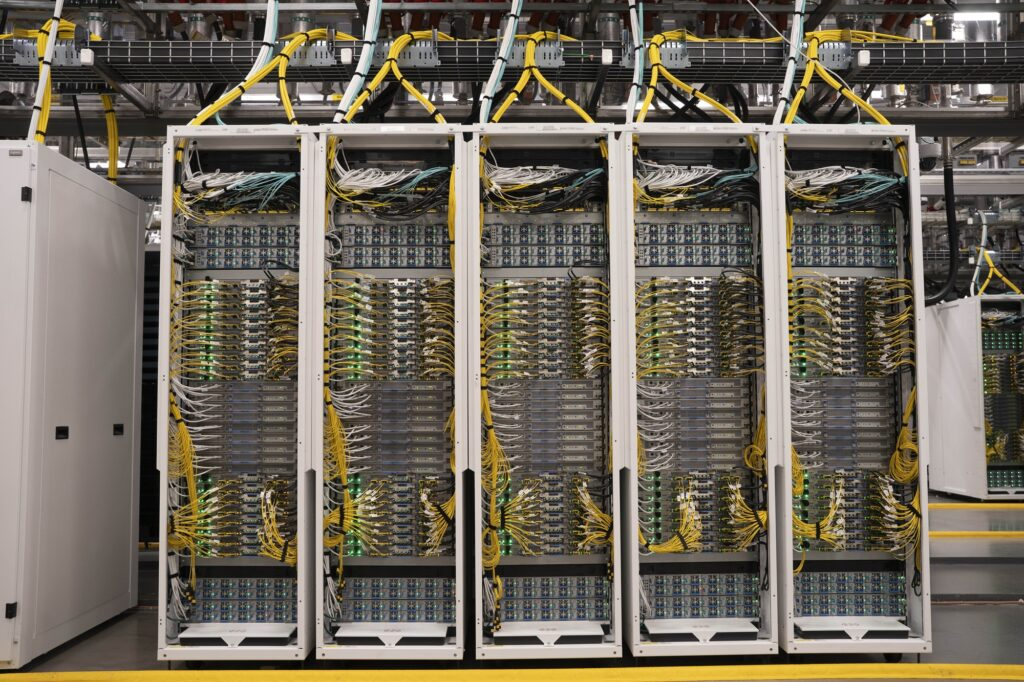
Microsoft’s Fairwater Wisconsin AI factory is now live, ahead of schedule, running hundreds of thousands of NVIDIA Grace Blackwell systems as a single AI factory, and connected with a similar AI factory in Georgia to deliver a scalable and distributed AI system for the most demanding frontier models. Through joint engineering on power, cooling, NVIDIA Spectrum-X Ethernet and the new Multipath Reliable Connection (MRC) transport protocol, Microsoft’s Fairwater AI data center designs are optimizing token economics.
In addition, Microsoft has already validated the NVIDIA Vera Rubin platform, now in full production, for deployment across Azure data centers.
Vera Rubin slots in alongside Blackwell with no retrofits, delivering up to 10x inference throughput per megawatt and reducing cost per agentic token by an order of magnitude. Built-in NVIDIA Confidential Computing protects models and data as agents reason at scale. The NVIDIA Dynamo inference framework extends those gains into software, accelerating model cold starts on AKS and bringing Kubernetes-native distributed inference orchestration via NVIDIA Grove.
Read more in this Microsoft blog: “Scaling multi-node LLM inference with NVIDIA Dynamo-Grove on AKS (Part 4)”
Explore the full lineup of NVIDIA sessions, demos and hands-on labs at Microsoft Build.
此内容由惯性聚合(RSS阅读器)自动聚合整理,仅供阅读参考。 原文来自 — 版权归原作者所有。