
惯性聚合 高效追踪和阅读你感兴趣的博客、新闻、科技资讯
阅读原文 在惯性聚合中打开

推荐订阅源

S
Schneier on Security
The Register - Security
月光博客
月光博客
freeCodeCamp Programming Tutorials: Python, JavaScript, Git & More
OSCHINA 社区最新新闻
OSCHINA 社区最新新闻
The GitHub Blog
The GitHub Blog
博客园 - 司徒正美
罗磊的独立博客
U
Unit 42
S
SegmentFault 最新的问题
Y
Y Combinator Blog
博客园_首页
Hugging Face - Blog
Hugging Face - Blog
J
Java Code Geeks
Schneier on Security
Know Your Adversary
Know Your Adversary
C
Check Point Blog
Cyber Security Advisories - MS-ISAC
Simon Willison's Weblog
V
Vulnerabilities – Threatpost
让小产品的独立变现更简单 - ezindie.com
阮一峰的网络日志
阮一峰的网络日志
The Hacker News
The Hacker News
博客园 - 叶小钗
C
Cybersecurity and Infrastructure Security Agency CISA
Spread Privacy
Spread Privacy
L
LINUX DO - 热门话题
T
The Exploit Database - CXSecurity.com
P
Palo Alto Networks Blog
cs.CL updates on arXiv.org
Latest news
Latest news
L
Lohrmann on Cybersecurity
A
About on SuperTechFans
L
LangChain Blog
Stack Overflow Blog
Stack Overflow Blog
S
Securelist
A
Arctic Wolf
D
Darknet – Hacking Tools, Hacker News & Cyber Security
T
Threatpost
Scott Helme
Scott Helme
博客园 - 聂微东
博客园 - 【当耐特】
T
Tenable Blog
I
Intezer
D
DataBreaches.Net
B
Blog RSS Feed
Security Latest
Security Latest
C
Cisco Blogs
T
Tor Project blog
N
Netflix TechBlog - Medium

NVIDIA Newsroom

Claude Meets Blackwell Ultra: Anthropic’s Models Now Run on NVIDIA GB300 in Azure Firefly Aerospace Operates NVIDIA Jetson in Lunar Orbit for the First Time Open Models, Closed Environments: Palantir Brings Secure AI to US Agencies With NVIDIA Nemotron The Ultimate Summer Sale Pairing: Steam Sale Meets GeForce NOW Discounts NVIDIA and AWS Collaborate to Bring AI to Production at Scale How Businesses Are Building Specialized AI They Can Trust NVIDIA Announces BioNeMo Agent Toolkit — Tools for Agents to Accelerate Scientific Discovery NVIDIA Powers Over 400 of the World’s 500 Fastest Supercomputers NVIDIA Brings Trusted, 24/7 AI Agents to Telecom Operations At ISC, JUPITER Shows What Exascale Science Looks Like From Materials Simulation to Experimental Astronomy, New NVIDIA AI Software Unlocks Scientific Discoveries NVIDIA Vera CPU Opens the Way for Agentic Scientific AI at Los Alamos National Laboratory Eco Wave Power Turns Waves Into Watts With NVIDIA AI Infrastructure and Digital Twins NVIDIA Vera Rubin Delivers World-Class Supercomputers for Science Europe Unveils a Record 35 New NVIDIA AI Supercomputers NVIDIA Announces Halos for Robotics, the Industry’s First Full-Stack Safety System for Physical AI Hotter Than a Hot Tub: The 45°C Breakthrough to Cool AI’s Biggest Machines How FERC’s Large-Load Interconnection Actions Help Address Grid Stress, Improve Affordability At Cannes Lions, NVIDIA Partners Reshape Advertising and Marketing With AI Sync and Stream: GeForce NOW Connects to Members’ Game Libraries Across Devices France Advances Europe’s AI Future With NVIDIA Technologies Hands Free, AIs Forward: NVIDIA XR AI Brings Agents to AR Glasses Coherent Breaks Ground on Expanded Texas Facility, Scaling AI’s Optical Backbone HPE AI Factory With NVIDIA Expands for the Era of Agents Fastest, Largest, Strongest: NVIDIA Blackwell Sweeps MLPerf Training 6.0 NVIDIA Blackwell Leads on First Agentic AI Infrastructure Benchmark NVIDIA Stockholder Meeting Set for June 24; Individuals Can Participate Online Save Big and Play Bigger: GeForce NOW Summer Sale Brings Major Membership Savings For Robotaxis, Safety Must Be Built In, Not Bolted On NVIDIA Accelerates Google DeepMind’s DiffusionGemma for Local AI NVIDIA Confidential Computing to Help Expand Apple’s Private Cloud Compute How the UK Is Turning Sovereign AI Ambition Into Action With NVIDIA Technologies NVIDIA and LG Group Build an AI Factory to Advance Physical AI, Mobility and AI Infrastructure NVIDIA and Doosan Group Collaborate to Advance Physical AI and AI Factory Infrastructure NVIDIA and SK hynix Announce Multiyear Technology Partnership to Advance Memory for AI Factories SK Telecom and NVIDIA Build AI Infrastructure to Power Korea’s AI Innovation NAVER Expands AI Infrastructure With NVIDIA to Serve Surging Global AI Demand NVIDIA, KRAFTON, NC and Reigning ‘League of Legends’ Champions T1 Celebrate RTX Spark at Korea’s PC Bangs Seoul Purpose: How NVIDIA and South Korea Are Building the Future of AI Forecast: Fun Ahead — 18 Games Join in June to Stream on GeForce NOW NVIDIA Research Unlocks Advanced Grasping, Smarter Autonomous Driving and Agent Training at Scale NVIDIA Enables the Next Era Of Physical AI Research With Agent Skills For Autonomous Vehicles, Robotics And Vision AI Industrial Software Leaders Build Secure, Autonomous AI Engineers With NVIDIA NemoClaw NVIDIA Partners With Microsoft on Unified Stack for Agentic AI Deployment, From Windows Devices to Cloud to Local Why Financial Institutions Are Converging on Transaction Foundation Models to Build Their Own Intelligence NVIDIA Jetson Brings Agentic AI to the Physical World NVIDIA AI Cloud Ecosystem Expands Worldwide to Meet Global AI Compute Demand NVIDIA Factory Operations Blueprint Gives Factories a New AI Brain Taiwan’s Industry Titans Turbocharge World’s AI Infrastructure Buildout With NVIDIA NVIDIA and TSMC Bring AI Into Fabs to Advance Semiconductor Design and Manufacturing NVIDIA, Foxconn and Taiwan Medical Centers Bring Agentic and Physical AI to ‘Healthy Taiwan’ NVIDIA Releases Major Collection of Open Source Agent Tools and Skills for Physical AI NVIDIA Announces NVIDIA Isaac GR00T Reference Humanoid Robot for Academic Research NVIDIA DRIVE Hyperion Becomes the Global Platform for a Robotaxi-Ready World NVIDIA Launches Alpamayo 2 Super Open Reasoning Model for Robotaxis How Cosmos 3 Helps Physical AI Think Before It Acts NVIDIA Launches Cosmos 3, the Open Frontier Foundation Model for Physical AI NVIDIA DGX Station for Windows Puts a Trillion-Parameter AI Supercomputer on Every Enterprise Desk NVIDIA Levels Up Local AI Agents Across RTX PCs and DGX Spark NVIDIA and Microsoft Reinvent Windows PCs for the Age of Personal AI Enterprise Software Leaders Build AI Agents With NVIDIA NVIDIA Unveils Vera, the CPU for Agents NVIDIA Vera BlueField-4 STX Brings Agentic AI Storage Processing With In-Silicon Security NVIDIA Vera Rubin Ramps Into Full Production to Power Agentic AI Factories Worldwide NVIDIA DSX Gives Infrastructure Builders the Playbook for AI Factories NVIDIA Research Advances Robotics From Simulation to the Real World The Name’s Gaming … Cloud Gaming: ‘007 First Light’ Launches on GeForce NOW NVIDIA GTC Taipei at COMPUTEX: Live Updates on What’s Next in AI NVIDIA CEO Jensen Huang at Dell Technologies World: ‘Demand Is Going Parabolic, Utterly Parabolic’ Linked and Loaded: Gaijin Single Sign-On Now Available on GeForce NOW NVIDIA and ServiceNow Partner on New Autonomous AI Agents for Enterprises It’s Gonna Be May: 16 Games Hit the Cloud This Month, With More NVIDIA GeForce RTX 5080 Power NVIDIA Launches Nemotron 3 Nano Omni Model, Unifying Vision, Audio and Language for up to 9x More Efficient AI Agents Into the Omniverse: Manufacturing’s Simulation-First Era Has Arrived Tag, You’re It: GeForce NOW Levels Up Game Discovery With Xbox Game Pass and Ubisoft+ Labels Making Sense of the Early Universe From Rainforests to Recycling Plants: 5 Ways NVIDIA AI Is Protecting the Planet NVIDIA and Google Cloud Collaborate to Advance Agentic and Physical AI Autonomous AI at Scale: Adobe Agents Unlock Breakthrough Creative Intelligence With NVIDIA and WPP No Need for Space Gear — Capcom’s ‘PRAGMATA’ Joins GeForce NOW on Launch Day Rethinking AI TCO: Why Cost per Token Is the Only Metric That Matters New Adobe Premiere Color Grading Mode Accelerated on NVIDIA GPUs Strength and Destiny Collide: ‘Samson: A Tyndalston Story’ Arrives in the Cloud National Robotics Week — Latest Physical AI Research, Breakthroughs and Resources From RTX to Spark: NVIDIA Accelerates Gemma 4 for Local Agentic AI Press Start on April: GeForce NOW Brings 10 Games to the Cloud Efficiency at Scale: NVIDIA, Energy Leaders Accelerating Power‑Flexible AI Factories to Fortify the Grid Into the Omniverse: NVIDIA GTC Showcases Virtual Worlds Powering the Physical AI Era Game On: Five New Titles Now Streaming on GeForce NOW The Future of AI Is Open and Proprietary Blowing Off Steam: How Power-Flexible AI Factories Can Stabilize the Global Energy Grid Advancing Open Source AI, NVIDIA Donates Dynamic Resource Allocation Driver for GPUs to Kubernetes Community How Autonomous AI Agents Become Secure by Design With NVIDIA OpenShell NVIDIA's CEO Projects $1 Trillion in AI Chip Sales as New Computing Era Begins Nvidia CEO: We have the most energy efficient architecture in the world An Interview with Nvidia CEO Jensen Huang About Accelerated Computing NVIDIA GTC 2026: Live Updates on What’s Next in AI Smooth Moves: 90 Frames-Per-Second Virtual Reality Arrives on GeForce NOW From Simulation to Production: How to Build Robots With AI More Than Meets the Eye: NVIDIA RTX-Accelerated Computers Now Connect Directly to Apple Vision Pro
NAIRR Science Program Reshapes Scientific Research, Powered by NVIDIA AI Infrastructure
Zoe Kessler · 2026-06-22 · via NVIDIA Newsroom

For the past two years, the U.S. National Science Foundation’s National Artificial Intelligence Research Resource (NAIRR) pilot program has driven innovative research across the U.S. for over 700 projects — spanning protein prediction and infectious disease outbreak management. 

NVIDIA contributed to the NAIRR pilot through a cloud-based resource that gives researchers dedicated access to a minimum of four NVIDIA DGX nodes for at least a month. NVIDIA also provided technical support to onboard and assist the researchers throughout their projects. 

With NVIDIA’s AI infrastructure support and DGX reference architecture providing dedicated resources, researchers have collapsed workflow timelines and uncovered groundbreaking technologies that will reshape and advance industries such as healthcare, agriculture and energy. 

The potential for scientific exploration and discovery across the nation through NAIRR is boundless. Learn more about a few NAIRR projects below. 

Physical Simulations With Polymathic AI’s Well Dataset

Simulation-to-real pipelines are becoming increasingly common across industries as a safer, more cost-efficient deployment method. 

Polymathic AI — a coalition of international scientists from Flatiron Institute, Cambridge University and Lawrence Berkeley National Lab — with the help of NVIDIA GPUs and NVIDIA NVLink interconnect technology, is strengthening physical, fluidlike simulations with its large-scale dataset called the “Well.” The dataset will be used to train the largest and most broadly applicable foundation model for fluidlike behavior to date. 

This foundation model, named Walrus, has been made publicly available along with its data, code and pertained weights. 

Polymathic AI’s approach builds on previous work in physics pretraining environments — addressing current limitations in scale and pretraining diversity. The research group also plans to explore scaling laws to help accelerate the development of more powerful foundation models for scientific applications.

University of Michigan’s Fusion Model for Energy Storage

Energy, a foundation of society, requires designing novel and efficient materials for energy storage and conversion.

Researchers at the University of Michigan, led by Professor Venkat Viswanathan in the Department of Aerospace engineering, are developing a model-fusion framework that brings together domain-specific molecular AI and general-purpose large language models. The goal is to help computational scientists more easily explore chemical space, ask chemistry-specific questions in natural language and identify promising materials for next-generation energy technologies. 

The family of molecular foundation models, MIST (the Molecular Insight SMILES Transformers), is designed for discovery and exploration across chemical space. 

MIST models were pretrained on large unlabeled molecular datasets and use a novel tokenizer, Smirk, to better capture nuclear, electronic, geometric, isotopic and stereochemical information from molecular representations. MIST models have been fine-tuned on more than 400 structure-property relationships and can match or exceed state-of-the-art performance across benchmarks spanning electrochemistry, quantum chemistry, physiology and other domains. 

MIST was developed on a 40-GPU NVIDIA DGX cluster the researchers gained as part of a NAIRR allocation and an additional 200,000 NVIDIA GPU hours on ALCF’s Polaris cluster. The team used NVIDIA’s NGC PyTorch container to support reproducible GPU-accelerated development across the different clusters.
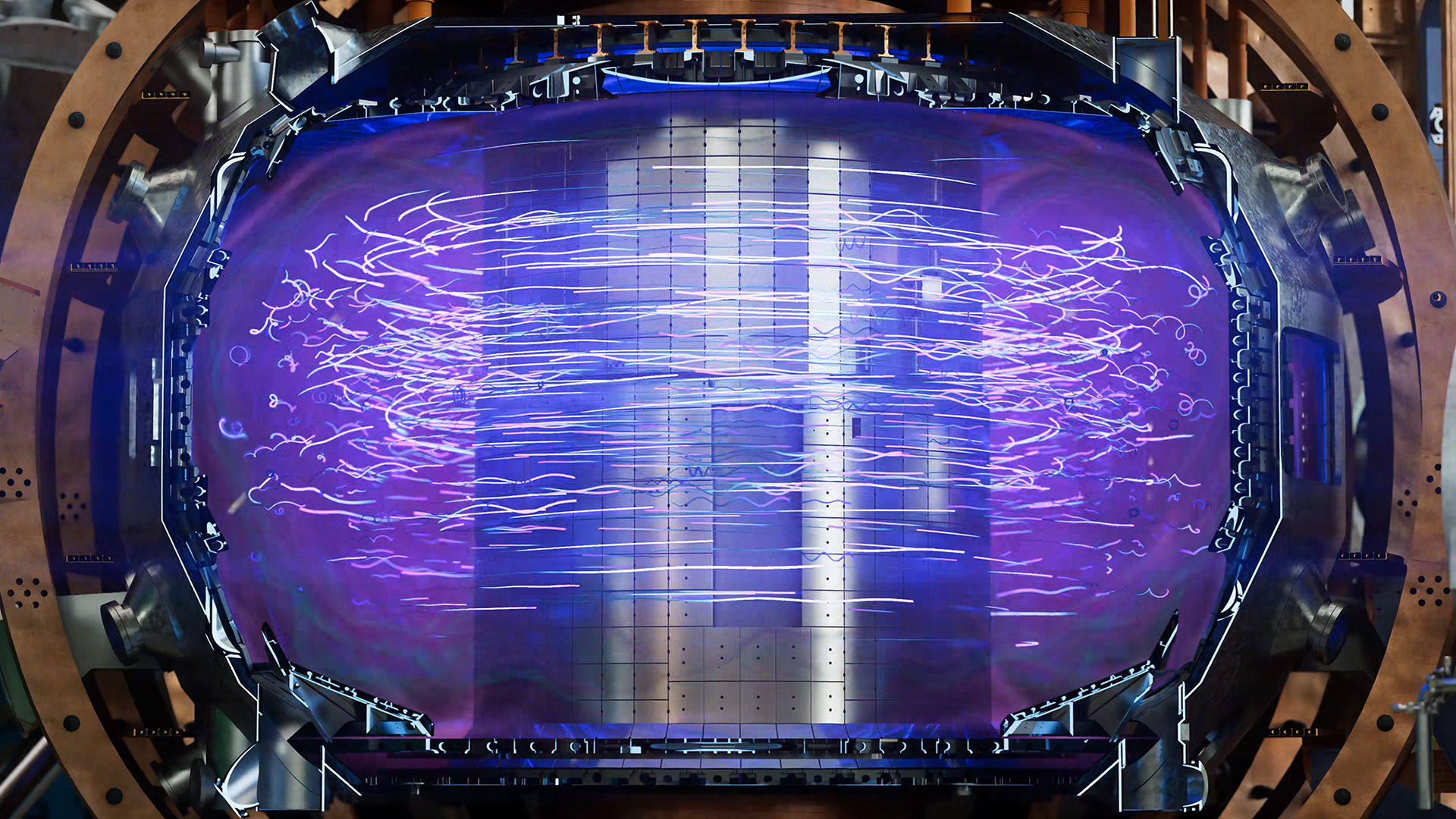
Fusing MIST with general-purpose LLMs makes accurate quantum-chemical calculations more broadly accessible and accelerates the design of energy storage and conversion systems needed to enable widespread electrification of transportation, such as in the heavy-duty and aviation sectors.

Boston University’s BEACON AI Pipeline for Infectious Disease Detection 

Infectious diseases can spread rapidly in communities, causing surges in outbreaks. 

Boston University’s Hariri Institute for Computing and the Center on Emerging Infectious Diseases is working to train and evaluate a LLM using NVIDIA accelerated compute, through an AI pipeline to support an outbreak monitoring program called BEACON — Biothreats Emergence, Analysis and Communications Network.  

This LLM is being trained using a large corpus of documents on infectious diseases and epidemic-prone priority pathogens to support the work of field experts and outbreak analysts working on BEACON.

The model will be capable of analyzing online posts of emerging disease outbreaks on a global scale to extract features for downstream categorization and prioritization. BEACON will process signals from a variety of sources — including global disease-tracking platform HealthMap, news and social media feeds, subject-matter experts and individual communications via community boards or social media — to generate concise outbreak reports.  

These comprehensive outbreak analyses can inform clinical practice guidelines for emerging infectious diseases and identify gaps where further data is needed. 

Internationally deployed doctors, government organizations and academic researchers are already using the BEACON model to quickly identify and treat infectious diseases. 

“When you talk to infectious disease experts about what they used to do before we developed this pipeline, it used to take several hours for them to compose a report,” said Ioannis Paschalidis, director of Boston University’s Hariri Institute. “Now, producing a report gets done in roughly two minutes.” 

NAIRR and NVIDIA Across the Nation 

The latest scientific research doesn’t end there. Many other universities — including Harvard, Stanford, Colorado State University and more — are pioneering scientific breakthroughs with the help of NAIRR and NVIDIA. 

With scientists gaining broader access to AI and accelerated computing, innovation for a safer and healthier nation are more tangible than ever. 

Learn more about the NAIRR pilot program and explore how NVIDIA is driving academic research.