







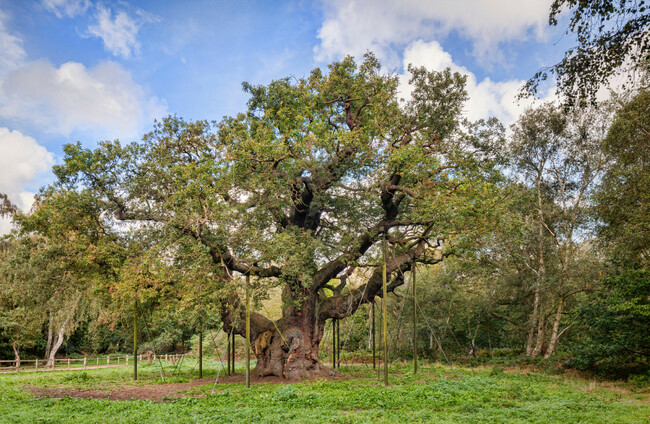
ONE OF ENGLAND’S most famous trees, the Major Oak in Sherwood Forest, has died after standing for more than a millennium, conservationists have confirmed.
The ancient oak, which is located in the English midlands and is believed to be between 1,000 and 1,200 years old, failed to produce any leaves this spring, leading experts to conclude that the tree has reached the end of its life.
The Major Oak is best known for its links to the legend of Robin Hood, with folklore claiming the outlaw and his band of Merry Men used its vast hollow trunk as a hideout while evading the Sheriff of Nottingham.
The tree, which has a circumference of about 11 metres and attracted hundreds of thousands of visitors each year, had been in decline for several years despite extensive conservation efforts.
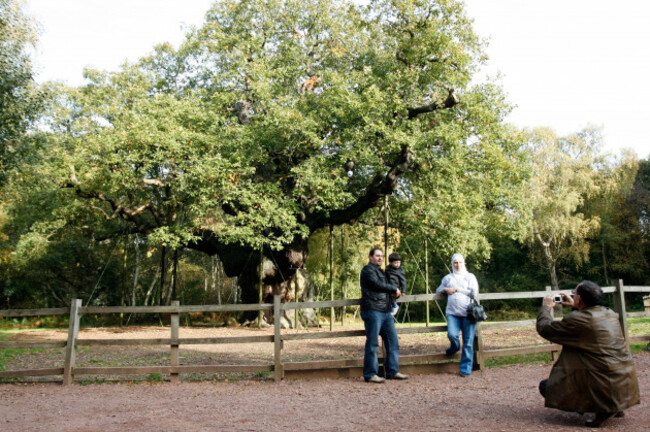
The Royal Society for the Protection of Birds (RSPB), which manages Sherwood Forest, said a combination of factors likely contributed to its demise, including climate change, repeated heatwaves and droughts, centuries of visitor footfall and even some well-intentioned conservation measures dating back more than a century.
Speaking to the BBC, Woodland Trust senior conservation adviser Ed Pyne described the loss as “incredibly tragic”, calling the Major Oak “perhaps the most famous ancient tree in the UK”.
He said the tree could potentially have lived for hundreds more years were it not for pressures including climate change and the compaction of soil caused by generations of visitors.
RSPB Sherwood Forest estates operations manager Chloe Ryder told the broadcaster that staff had done “everything they can” to save the tree.
She said the causes were “complicated” but acknowledged tourism had played a role, as compacted soil made it harder for the roots to access water, oxygen and nutrients.
Experts also told the Guardian that recent summers had been particularly damaging.
Arborist Reg Harris, who monitored the tree’s health for the RSPB, said prolonged drought and record-breaking temperatures in recent years had likely played a significant part in its decline.
“Sadly, it seems probable the lack of summer rainfall over the last five years, coupled with the unprecedented high temperatures, have had a significant hand in it,” Harris said.
The Guardian also reported that conservationists discovered a severely stressed root system beneath the tree, while historical supports installed to hold up its enormous branches may have inadvertently increased the strain on the ageing oak.
Among those paying tribute was Judi Dench, a long-time supporter of ancient tree conservation and an ambassador for the Woodland Trust.
“The Major Oak has provided inspiration for countless stories, poems, paintings and people for more than 1,000 years – all the while itself teeming with life and providing a home to an enormous range of wildlife,” she said.
The Oscar-winning actor added that she had recently planted a sapling descended from the Major Oak in her own garden, alongside a cutting from the famous Sycamore Gap tree.
“I hope everyone who has been inspired by the Major Oak or another ancient tree reaches out to their MP and asks them to improve legal protections for these iconic and vital elements of our national landscape,” Dench said.
Despite its death, the Major Oak will remain standing in Sherwood Forest, where conservationists say it will continue to provide an important habitat for insects, fungi, birds and other wildlife for decades to come.