






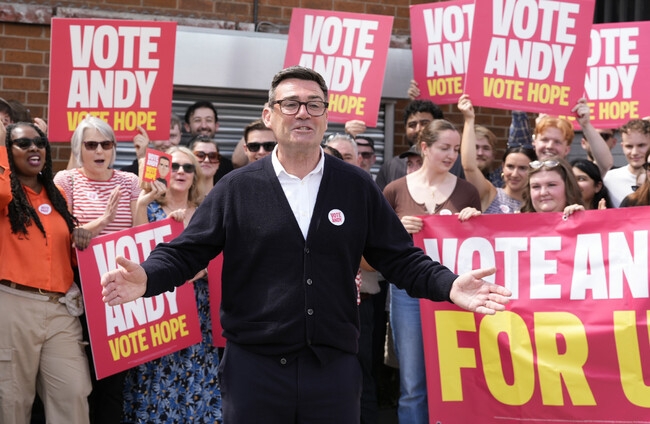
ANDY BURNHAM’S SUCCESS overnight in Makerfield is no ordinary byelection win, as it’s now widely expected he’s going to mount a challenge to replace prime minister Keir Starmer in Downing Street.
The Greater Manchester mayor roared home with almost 25,000 votes to claim a seat in the Westminster parliament, defeating Reform UK’s Robert Kenyon in the process.
Under normal circumstances, Starmer would greet this as a boost for his premiership, but Burnham has his eyes set on No 10.
In an address this morning, Burnham declared that his win marks Labour’s “last chance to change” and avoid Britain going further down the path of “greater division” in its politics.
He believes he’s the man to reverse Labour’s reversals against Nigel Farage’s Reform and Zack Polanski’s Green Party, having recorded a share of the vote – at 55% – that is almost treble the current support of Labour nationally.
But before we get to the ramifications for the UK, who exactly is Andy Burnham, and how did the mayor of Manchester put himself in this position?
Who is Andy Burnham?
The 56 year old was born in 1970 into a working-class family in Aintree, near Liverpool, and grew up in the village of Culcheth, not far from Ashton-in-Makerfield.
Seen as representing the party’s soft left – or what the man himself describes as a “business friendly socialism” – Burnham has been around a long time. He previously became an MP in 2001.
In his time in parliament he held senior cabinet posts under prime ministers Tony Blair and Gordon Brown, and had twice before stood and lost previous bids to be party leader.
Despite being a veteran Labour politician, Burnham has reinvented himself in recent years.
He left parliament to run in the 2017 mayoral race in Greater Manchester in northwest England, where three successive election victories and his staunch defence of the region have earned him the nickname ‘King of the North’.
Nicole Martin, professor in politics at University of Manchester, told The Journal that Burnham’s popularity reached new heights during the pandemic when he was seen as standing up against a lack of funding to ease strict lockdown measures imposed by the Tory government. (You can read more about the standoff from our coverage at the time here)
“There was this famous image of Burnham standing outside Manchester Central Library, appealing to the government in a press conference not to shut Manchester down, but then finding out about extra lockdown measures via someone showing him on his phone,” Martin said.
You had this absolutely distraught image of Burnham and a frustration with central government, and it led to him being called ‘king of the north’ afterwards.
These public clashes with then-prime minister Boris Johnson helped cement Burnham’s image as a voice for the region.
And since then, Burnham’s standing has only grown. When The Journal visited Makerfield this week ahead of the vote, his flagship policy of reassuming council control of the region’s bus network and slashing its fares came up again and again with voters.
This is how Hillsborough shaped Andy’s politics. pic.twitter.com/VoW9Rczyra
— Andy Burnham for Makerfield (@andy4makerfield) June 17, 2026
Burnham has also garnered much support due to his advocacy on the 1989 Hillsborough disaster in which 96 football fans lost their lives.
In 2009, after being heckled by Liverpool fans at a Hillsborough commemoration in Anfield, he delivered a speech to parliament calling for a fresh inquiry into the deaths and the ensuing cover-up by South Yorkshire Police.
Starmer’s unpopularity
He was also helped by another factor, namely Starmer’s unpopularity.
In a head-to-head on who would make the best prime minister, a poll by Ipsos showed Burnham held a 13% lead over Starmer.
Some 25% felt Burnham would make a better leader of the country – more than twice that of the current occupier of No 10 Downing Street.
It led some voters to view Thursday’s vote as a chance to dump Starmer out of office.
One man in his 80s in the local town of Ashton told The Journal that, aside from those bus policies, the main reason he was voting for Burnham was because it could “get Starmer out” of Downing Street.
“That’s what a lot of us are doing,” he said of intentions among his friends and family.
What happens next?
The next few days and weeks will determine if the Makerfield ballot will become one of the most consequential byelections in British political history.
British media has reporting for several weeks now that Burnham is ramping up support internally so that he can acquire the 80 signatures needed to formally trigger a leadership challenge of the party.
If he were to win that contest, he could technically be installed in No 10 as the UK’s new prime minister.
It is not clear when in the coming days Burnham plans to launch a challenge for the Labour leadership, amid some calls for Starmer now to step aside to avoid a bitter fight.
But the current occupant is not showing any sign of giving up the keys just yet.
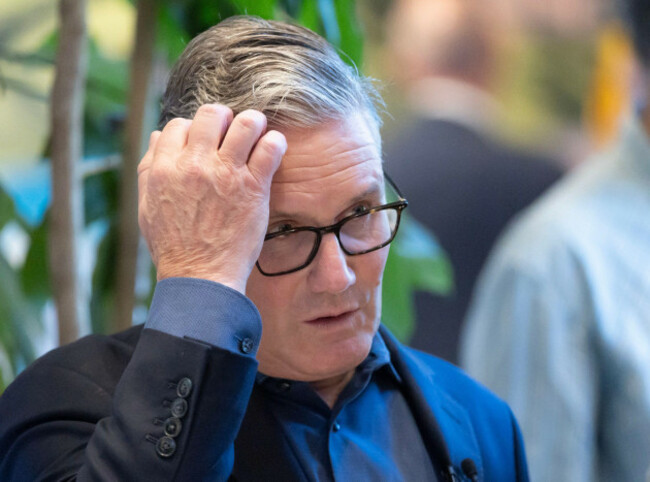
Speaking to reporters in London this morning, Starmer said he will not “walk away” and would stand in any Labour leadership contest.
However, the prime minister is badly wounded at this point. His party lost more than 1,400 seats across England at recent local elections and suffered a historic loss of control of the Welsh parliament.
Starmer has also lost a number of leading figures in his cabinet in recent months, with defence secretary John Healey’s shock resignation last week only piling on the pressure.
Before that, health secretary Wes Streeting resigned so that he could launch his own leadership challenge, and his name is likely to feature in any contest.
With reporting by PA