






SINN FÉIN’S POOR performance in recent byelections has sparked considerable media commentary about the party’s current strategy.
As the lead opposition party marking an unpopular government, it should have been well-placed to pick up both seats, but instead lost out emphatically.
In trying to ambiguously appeal to the left and the right of the electorate simultaneously, the party managed to convince neither and alienate both.
Many media commentators have expressed bafflement about why Sinn Féin is persisting with this approach, given the shortcomings of the strategy to date.
As I worked as Deputy Head of Press for Sinn Féin in the last Dáil term, I’m more familiar than most journalists with what it’s like to be in the room when the party sets and evaluates its strategies. So I’d like to suggest a possible rationale which may exist behind why Sinn Féin is pursuing this strategy at the moment.
In short, while Sinn Féin’s fence-sitting self-inflicts short-term pain, it may reflect a rationale with an eye to longer-term benefits for the party that the media has so far missed.
Why they feel ambiguity is necessary: The numbers question
Sinn Féin’s support soared in 2020 after it successfully managed to capture the support of moderate liberals in addition to the party’s traditional hard-line vote. This saw its anti-establishment, Irish Republican, working-class base being supplemented by socially progressive, middle-class liberals frustrated by the housing crisis.
This was always a loose coalition of supporters and a challenging one to hold together as the Irish political landscape has shifted in the ensuing years.
While those two cohorts agree on the need to end the housing crisis, their views on immigration, LGBT rights and climate action, to name just a few, are much more varied and often antithetical.
Simply put, Sinn Féin fears that if it picks one of these two cohorts, it will alienate the other, resulting in the collapse of a huge chunk of its vote. Therefore, it will intentionally seek to appease both sides for as long as possible.
Picking a side would carry the risk of Sinn Féin being relegated to a smaller party again, as opposed to a major, broad-appealing political party capable of being a big player in the next government.
Sinn Féin wants to keep its options open
The current political dynamic and issues dominating the news cycle are unlikely to be the politics on which the General Election of 2029 will be fought.
At this point in the last parliamentary term, few could have predicted how suddenly immigration would emerge as a mainstream political issue as the clock ticked down to polling day in 2024.
Likewise, in the term before that, politicians didn’t expect midway in the political cycle that the housing crisis would be a decisive dynamic in 2020′s ballot.
It might be that Sinn Féin is willing to allow its identity drift to continue until late 2028/ early 2029, at which point the party will decide whether to position itself as more overtly left or right, depending on the lie of the land then.
Irish political history shows sudden galvanising issues can emerge in the final throes of parliamentary terms, be it water charges/pensions/the housing crisis. Sinn Féin might be hoping that if one emerges in 2028, it can seize on this with gusto to convey a clear identity with which to fight the general election campaign.
By then, the issues in today’s news cycle will be a distant memory for most of the electorate, and while they mightn’t have inspired many voters in the meantime, they won’t have irrevocably alienated them either.
Independent Ireland or the Soc Dems might struggle in the limelight
Independent Ireland and the Social Democrats are newer parties that have so far received less media scrutiny than more established, larger parties. Due to the byelection results, where the Soc Dems picked up a seat in Dublin, and Independent Ireland came close in Galway, they may be put under the microscope for the first time as the media sees them as being viable contenders for the next government.
Sinn Féin experienced intense media scrutiny in the run-up to the 2024 general election and might be hopeful that the same phenomenon halts the march of these smaller parties. The party might be optimistic that Independent Ireland and the Soc Dems could start to crumble under this increased exposure and scrutiny.
Floating voters might also find their enthusiasm for these smaller parties wanes as time goes on, especially if journalists manage to poke holes in these parties’ policies or politicians.
Therefore, Sinn Féin strategists might believe they just need to sit back and give the less experienced parties time to make their own mistakes, which could see voters float back to Sinn Féin.
The downside
Of course, there are huge risks involved, too. Allowing the party’s identity to drift for several more years runs the risk of the party losing a sense of purpose, momentum and moral integrity, which could hamper its relationship with the public in the medium-term. Internally, it could cause considerable tension and test members’ morale.
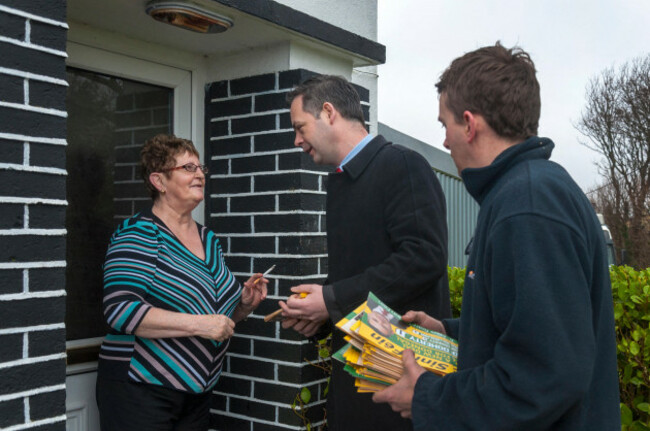
In addition, parties including the Soc Dems and Independent Ireland could seek out opportunities to place maximum pressure on Sinn Féin and try to force it to pick between the two ‘sides’. A recent example of this was a cleverly timed bill by the Soc Dems on liberalising abortion access, which placed Sinn Féin under considerable pressure.
Sinn Féin’s rivals could make a point of bringing legislation or motions to the Dáil every few months to ensure media focus remains firmly on similar wedge issues that will throw the cat among the pigeons and ensure that the divisions among Sinn Féin’s voters are brought to the fore.
The gamble
Ultimately, the party might have decided that a few ambiguous, lacklustre years followed by an intense period of clarity and conviction around the issues voters are passionate about at that juncture represents its best chance for the next general election.
So, while many onlookers are bewildered by Sinn Féin’s approach, currently, given the short-term damage it self-inflicts, a look to the longer view might illuminate some of the party’s rationale for persisting with it.
Siobhán Fenton is a journalist and is former Deputy Head of Press for Sinn Féin. She writes about Irish political strategy on Substack.