



FOR YEARS NOW, public debates have been waged on the topic of Dublin’s safety. These conversations have been muddied by the introduction of misinformation, as well as inaccurate surveys of dubious origin, which have added fuel to the fire of the public’s fear.
Social media has served as a Dublin Portal of sorts, connecting people’s homes to clips of the city’s worst moments. Videos that evoke outrage, disgust and despair are algorithmically propelled to the social media feeds of people who are conveniently insulated from any kind of counter-narrative.
Uneventful scenes don’t go viral, as they don’t evoke the strong emotions that compel people to like or share a video. So, as short-form video has become increasingly popular in the wake of the pandemic, people’s perception of Dublin has been on a steady downward spiral.
An improved city
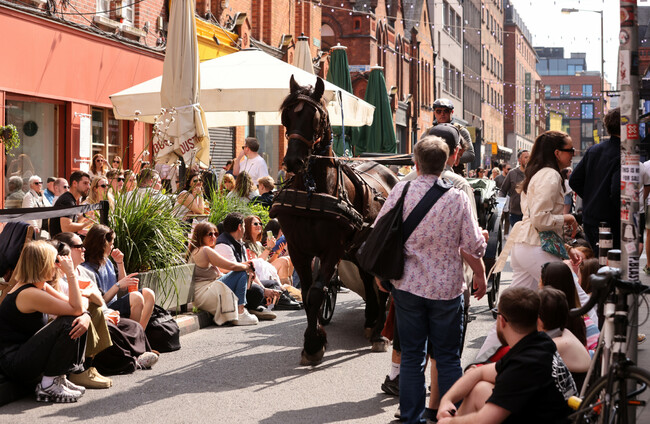
If you take a walk around Dublin, you’ll see that the city has changed quite dramatically in the last three decades. Speciality coffee shops punctuate a cityscape that is framed by newly built bike lanes and freshly pedestrianised streets. Our restaurants have never been better.
People line up at Dublin’s trendy slice shops like they’ve never tried pizza in their lives.
Electric buses creep through the city with eerie quiet, and their passengers aren’t even allowed to smoke on board anymore.
The city is vastly different now than it was in my childhood.
That’s not to say we don’t still have a lot to improve on, but the idea of Dublin as a lawless warzone seems fairly incongruous with the willingness of its inhabitants to dine outdoors and stand around on the street drinking €6.50 pints.
Indeed, the greatest crime that most people will experience firsthand in Dublin is the price of a chicken fillet roll.
From a social perspective, the changes have been even more stark.
In the 1990s, Ireland had the youngest population of people dependent on heroin in all of Europe. By 2020, Ireland had achieved near elimination of adolescent heroin dependence. We cannot overstate what a feat it is to turn a crisis like that around.
Parallel to that, the crimes that gripped the capital in the 1980s and ’90s (bank robberies, car thefts, joyriding, intimidation and protection rackets) have all declined immensely.
Our latest CSO figures on crime in Ireland evidence a decline in many crimes. Homicide decreased 25% in 2025, compared to 2024. In the same period, kidnappings dropped by 21%, while robberies and burglaries were down by 11% and 13%, respectively. From 2022 to 2025, offences were down in 10 of the 15 categories recorded.
If we broaden the lens a little bit and look at how Ireland ranks compared to other nations, it’s difficult to understand why we even indulge the individuals and organisations who are intent on framing the city as Ireland’s own Gotham City.
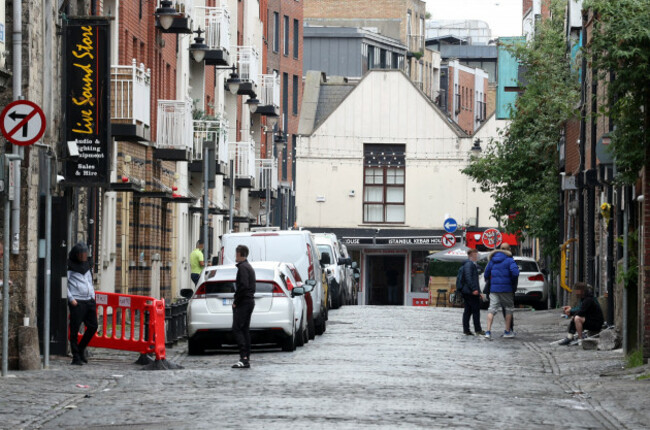 North Lotts Lane is one of a number of laneways which gardaí and Dublin City Council are focusing on to reduce anti-social activity Sam Boal / RollingNews.ie
Sam Boal / RollingNews.ie / RollingNews.ie
North Lotts Lane is one of a number of laneways which gardaí and Dublin City Council are focusing on to reduce anti-social activity Sam Boal / RollingNews.ie
Sam Boal / RollingNews.ie / RollingNews.ie
According to the Global Peace Index, which measures the safety and security of 163 nations and territories, Ireland ranks as the 2nd most peaceful country on the entire planet.
This index takes crime rates and violence into account, along with political stability and relations with neighbouring countries. Again, the apparent threat of Dublin’s streets depicted on our phone screens seems to be at complete odds with reality.
None of this is to suggest that Dublin is a perfect place. For its most vulnerable inhabitants, it is an exceptionally difficult place to live, though these are never the people that we hear from in public debates about the safety of Dublin.
The city’s vulnerable
We don’t hear about the danger of Dublin from the perspective of the country’s 5,000 children in emergency accommodation. The impact this experience will have on children’s development, mental health and overall well-being is something we’re going to have to reckon with for decades to come.
Just as we do not hear from these individuals, we do not hear from those whose entire lives are contained within the precarity of a tent on the canal.
For those who have arrived in Ireland in search of asylum, they’re in a completely unfamiliar environment, often with no grasp of the language and no support system whatsoever. They are exposed to significant danger on a daily basis, far beyond anything we could even fathom on our side of the smartphone screen.
There are countless groups of people who are vulnerable to danger in Dublin: Teenagers groomed into drug gangs, rough sleepers, people grappling with debt and addiction, all of whom will never get to weigh in on this conversation.
Often, the people who we are warned to be most afraid of are those who are in the most danger themselves. It’s perfectly reasonable to be concerned about the growing presence of crack cocaine on Dublin’s streets – particularly as the Health Research Board has recorded an almost 600% increase in the number of people using crack between 2017 and 2023.
The reality is, however, that the surge in crack use is primarily a danger to those who succumb to addiction or find themselves in drug-related debt.
These are the people for whom Dublin is dangerous. Despite that, conversations about Dublin’s safety seem to be exclusively steered by middle-class home-owners, who routinely share how their comfort is undermined by those who have the audacity to experience poverty, drug addiction or mental health issues in public.
The suggestions of those who drive the conversation do little to address the root causes. Instead, they seek to push vulnerable people out of sight, so that tourists and those who are more privileged can enjoy the city’s shopping districts in peace.
We are lucky, as a nation, that events that genuinely shake the public and violate our collective sense of safety are few and far between. Instead of upholding the charade of fear about Dublin’s safety, our focus should be on making the city a safer place for its most vulnerable inhabitants.
A better quality of life for our most vulnerable means a better quality of life for all.
Kelly Earley is a writer and podcaster from Coolock, who has a deep interest in culture, technology, community and social justice. She writes for The Journal every Tuesday.