




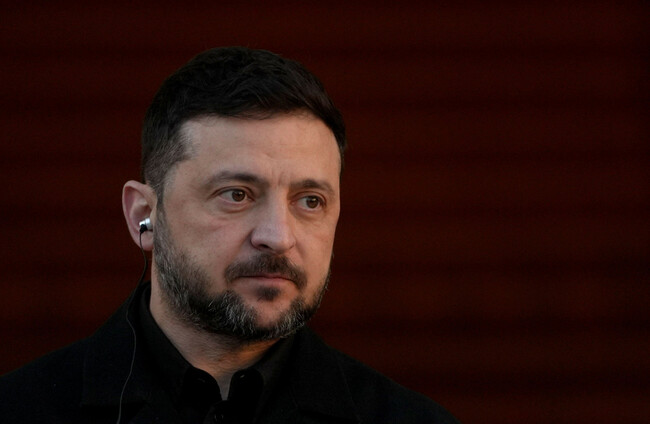
PLANNING IS UNDERWAY for a potential visit by Volodymyr Zelenskyy to Ireland.
The Ukrainian President may participate in the events taking place as part of Ireland’s Presidency of the EU Council during the next few weeks, The Journal has learned.
Ireland will take up the six-month leadership role on 1 July. A series of major events are planned, with the main event in Dublin Castle on that date.
Sources are remaining tight-lipped on exactly when Zelenskyy will arrive and what specific events he is going to, but it is anticipated he will visit Dublin.
Other large-scale events are scheduled for Cork city in the following days.
A number of high profile world leaders are anticipated to be in Ireland also, while Ursula von der Leyen President of the European Commission will attend the Cork events.
The Irish focus for much of the Presidency will be on competitiveness, values and security but Ireland has made no secret of its support for Ukraine to be a full member of the EU.
The Irish government is keen to show its support for the Zelenskyy Government.
The Journal understands that there are high level preparations underway as security will be exceptionally tight for the visit. Sources have said that nothing is certain with a Zelenskyy visit until the last moment.
Zelenskyy last visited the country and addressed the Houses of the Oireachtas in December last year.
His visit was marred by a drone incursion off the Irish coast shortly after he landed in Dublin Airport. The investigation into the incident is continuing, and it has not been made public who or what country is suspected of perpetrating the incident.
He met President Catherine Connolly, had bilateral talks with the government and Taoiseach Micheál Martin in the whistle-stop tour of Dublin.
Earlier this month Marta Kos, the official responsible for overseeing countries seeking to join the European Union, visited Ireland.
Kos, the European Commissioner for Enlargement, met with Foreign Affairs Minister Helen McEntee and Minister of State for European Affairs Thomas Byrne during a series of engagements focused on the future expansion of the bloc.
The visit came just days after Ukraine and Moldova moved significantly closer to EU membership when Hungary dropped its opposition to opening the next phase of accession negotiations.