


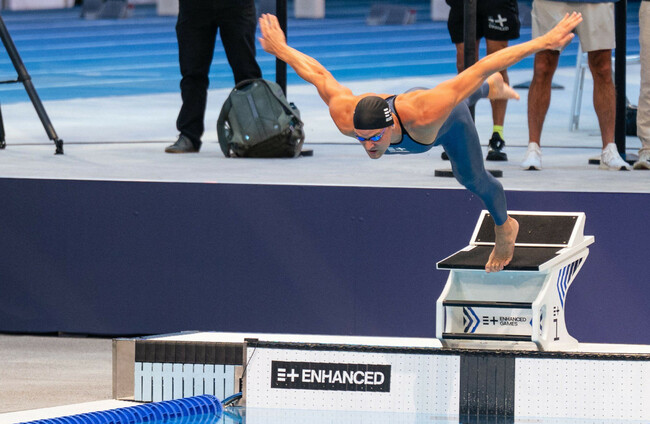
THE CONTROVERSIAL ENHANCED Games have ended in Las Vegas with just one athlete managing to beat a world record time – and that result will not be recognised by official sporting bodies.
Greek swimmer Kristian Gkolomeev clocked 20.81 seconds in the men’s 50m freestyle, narrowly beating the existing mark of 20.88 set by Australia’s Cameron McEvoy in March this year.
But the time will not stand in any official capacity, given the event allows athletes to compete while taking performance-enhancing drugs and using equipment banned from elite sport, including “super suits”(a full-body polyurethane getup that is banned by sporting bodies as it dramatically reduces water resistance and provides unnatural buoyancy).
Organisers had predicted multiple world records would fall across swimming, athletics and weightlifting over the course of the event.
Instead, most competitors fell short of existing marks, despite a series of personal bests and cash incentives of up to $1 million (€862,000) for breaking records.
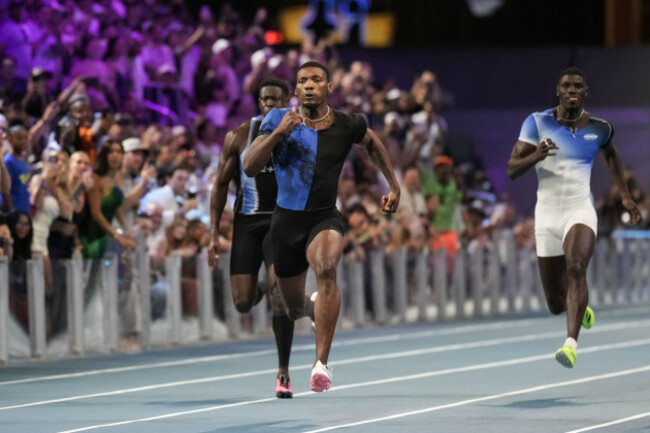
Three athletes competing without performance-enhancing drugs did win events outright, including US sprinter Fred Kerley in the men’s 100m and two swimming events, although winning times remained well outside world record territory.
Kerley, who had predicted Usain Bolt’s world record of 9.58 seconds would get “destroyed”, won the race in 9.97 seconds.
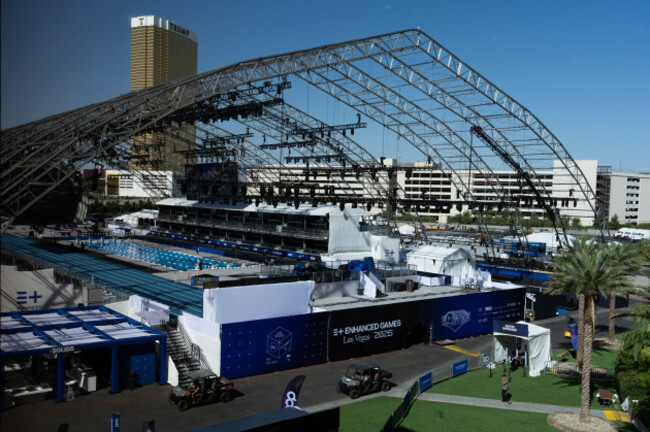
The inaugural Games, held over one day in a purpose-built arena in the car park of a casino in Las Vegas on Sunday, have been heavily criticised by international sporting bodies and anti-doping authorities, who say the format poses serious health risks and undermines clean sport.
Donald Trump Jr and Peter Thiel, the billionaire co-founder of PayPal, were among the investors for the event.
Enhanced Games officials said all medications were approved by the US Food and Drug Administration.
Parent company Enhanced sells many of the substances being taken by its athletes to the public.
The majority of the 42 athletes taking part used performance-enhancing substances and Enhanced Games said “13 athletes set personal bests”.
World Aquatics, the International Olympic Committee and the World Anti Doping Agency all condemned the concept, with critics describing it as a “doping free-for-all” dressed up as innovation.
Among the competitors were several Olympic medallists and elite athletes, including swimmers Ben Proud and James Magnussen, alongside weightlifters and sprinters drawn by large prize money and appearance fees.
Former Irish Olympic swimmers Shane Ryan and Max McCusker were also among those who took part in the event.
Organisers insisted the event demonstrated the “true potential of the human body”, with Enhanced Games CEO Maximilian Martin claiming the project had “changed the world” and entered mainstream culture.
However, reactions from governing bodies and athletes remained overwhelmingly negative, with many warning it could normalise drug use in sport.
In Ireland, sporting authorities had already taken a firm stance against participation in the event last year.
Sport Ireland and Swim Ireland both previously condemned athletes involved in the Enhanced Games, warning of reputational damage and the risks associated with sanctioned doping environments.
Sport Ireland warned the event “sends an insidious message” to young athletes.
Despite the backlash, organisers say they intend to return next year, with plans to expand the programme and attract more elite competitors.