


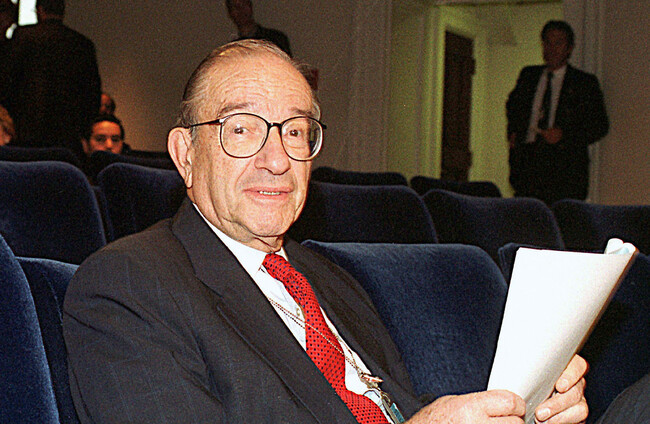
ALAN GREENSPAN, THE longtime US Federal Reserve chief who presided over a period of American economic expansion but was later faulted for failing to rein in markets ahead of the 2008 global financial crisis, has died.
Greenspan – who died Monday at age 100 – guided the world’s biggest economy through a stock market crash in 1987 as he first took up his post, the Mexican and Asian financial crises, the dot-com boom and bust, and the 11 September 2001 attacks.
The US Federal Reserve extended its condolences to Greenspan’s wife Andrew Mitchell and his family. They said Greenspan helped ‘anchor’ public confidence in the institution and expressed “deep sadness” at his passing.
“Under his leadership, the Federal Reserve achieved a sustained era of price stability that supported economic growth and helped anchor the public’s confidence in the institution,” the statement said.
— Federal Reserve (@federalreserve) June 22, 2026
Greenspan spent decades in the inner circles of power in Washington, ultimately leading the Fed for presidents of both political parties.
Greenspan was even hailed as the greatest central banker the world has ever known, winning glowing praise for his steady hand and cool demeanour.
Supporters especially admired his willingness to cut interest rates and keep them low even as unemployment rates fell – which conventional wisdom and his own early beliefs said would cause inflation to spiral out of control.
However, he was criticised for his confidence in unfettered markets and institutions to correct themselves and his decision not to do anything to rein in the mortgage markets.
Greenspan is survived by Mitchell, whom he married in 1997.
In a statement announcing her husband’s death Monday, Mitchell called Greenspan “a giant of a man who helped shape the U.S. economy for decades under presidents of both parties, but was always honest in acknowledging his mistakes.”