



惯性聚合 高效追踪和阅读你感兴趣的博客、新闻、科技资讯
阅读原文 在惯性聚合中打开

推荐订阅源

C
Check Point Blog
IT之家
IT之家
V
Visual Studio Blog
The Cloudflare Blog
博客园 - 司徒正美
Jina AI
Jina AI
博客园_首页
阮一峰的网络日志
阮一峰的网络日志
美团技术团队
S
SegmentFault 最新的问题
博客园 - 聂微东
人人都是产品经理
人人都是产品经理
T
Tailwind CSS Blog
罗磊的独立博客
酷 壳 – CoolShell
酷 壳 – CoolShell
量子位
奇客Solidot–传递最新科技情报
奇客Solidot–传递最新科技情报
Hugging Face - Blog
Hugging Face - Blog
博客园 - 【当耐特】
博客园 - 三生石上(FineUI控件)
爱范儿
爱范儿
博客园 - Franky
Last Week in AI
Last Week in AI
钛媒体:引领未来商业与生活新知
钛媒体:引领未来商业与生活新知

TheJournal.ie

Court told Eleanor Donaldson placed bugging device in her husband’s car over fears of affair TD says she's been left with 20cm scar after skin cancer diagnosis Homelessness: Record number in emergency accommodation, including new high for children Blue Origin rocket explodes during test launch John Gibbons: The planet is burning, but Ireland still isn't taking climate change seriously 'Truly devastating': Tributes paid to Masuma Sohrabi after stabbing in Clifden Mother and carer: You don't appreciate public services until your child needs them to survive Left or right? Sinn Féin's fence-sitting may be about playing the long game Gavan Reilly: Gerry Hutch and his 30% vote in Dublin Central's best-heeled area Gavan Reilly: The Gerry Hutch 37.1% share of the vote in the shadow of the IFSC Ebola on the rise: Why the latest outbreak should concern all of us Ireland's data centre energy drain: How Big Tech added €1.4bn to household electricity bills Living with myeloma: 'I chose not to fight this blood cancer, but to instead live alongside it' Alberta’s separation bid: How Canada’s next political crisis could come from within Kelly Earley: Militarism might be Ireland’s next economic disaster Raising them right: Ireland has a dog poo problem, and we parents are sick of stepping in it Money Diaries: A recently graduated digital journalist on €35K living in Dublin Global tech job losses: Is ‘AI-washing’ the new trend nobody wants to call out? Down on the farm with a difference: This is what happens when animals are allowed to feel safe Surrealing in the Years: Some shameful Irish attitudes take a leaf out of Israel's book Motoring: Should we trust self-driving cars? The physio is in: Ireland is growing older, but are we moving enough to age well? Tech dubbed 'creepy': AI smart glasses are here, but our privacy laws have not caught up Larry Donnelly: The polls point one way for Friday but byelections rarely follow the script The war on human thought: Educational institutions must take back control from AI The Bee Guy: World Bee Day won't save our little bee friends Kelly Earley: Could Mountjoy Square be Dublin’s most important park? Money Diaries: How is your spending and saving going? Would you like to keep a diary for us? Rearing them right: Should modern parents bring back ‘the man’? Ireland's energy future: What if the real failure here is that we stopped thinking bigger?
Ireland
https://www.thejournal.ie/author/andrew-walsh/ · 2026-06-20 · via TheJournal.ie

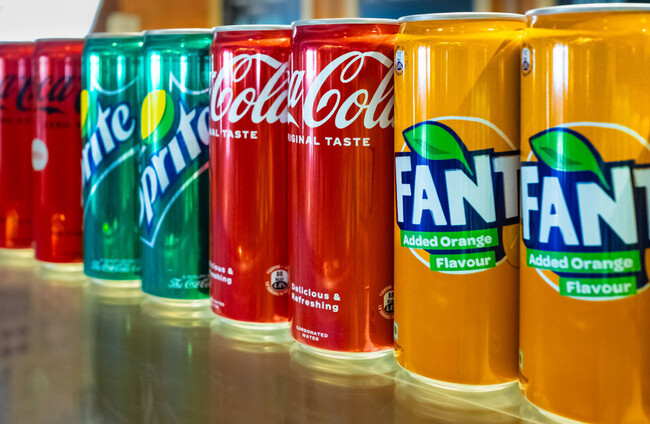
More than 115 countries have introduced some form of sugar tax. Alamy Stock Photo

sweeten the deal

With obesity levels rising, a new study has argued that higher sugar taxes could encourage manufacturers to cut sugar levels further.

RESEARCHERS FROM FOUR Irish universities are calling on the government to increase Ireland’s sugar tax, arguing that stronger measures are needed to tackle rising obesity levels and encourage drinks manufacturers to cut sugar content even further.

The appeal comes as newly published figures show revenue from the Sugar-Sweetened Drinks Tax (SSDT) remained unchanged at €30.5 million in both 2024 and 2025.

The researchers, whose findings were published in the Irish Medical Journal, said the static returns suggest progress has stalled and that Ireland should now adopt a more ambitious approach similar to that being introduced in the UK.

Under the current system, drinks containing between 5g and 7.99g of sugar per 100ml attract a tax equivalent to about five cent on a standard 330ml can, while drinks containing 8g of sugar or more are taxed at around eight cent per can.

Researchers argue those rates were enough to encourage many manufacturers to cut sugar levels when the levy was introduced in 2018, but say the incentive to reformulate products further has now weakened.

They point to the UK, where the threshold for the lower tax band is set to fall gradually over the coming decade, bringing more drinks into scope unless manufacturers reduce sugar content again.

According to the research team, the tax has already delivered significant results, with major brands including Pepsi, 7Up, Fanta, Sprite and Club Orange reformulating products in 2018 to bring sugar levels below the taxable threshold. They added, however, that the incentive to reformulate products further has now weakened.

Dr Frank Houghton of the Technological University of the Shannon (TUS), who led the study, said the levy had proven effective but needed to go further.

“The sugar tax had a real impact. The research clearly demonstrates this,” Houghton said.

“It encouraged manufacturers to reformulate their recipes to avoid the tax. That is a major success. We now need to build on that and encourage further reformulation by industry.”

The researchers want Ireland to follow the UK’s model, which will gradually lower the sugar threshold at which drinks become liable for the tax over the coming decade.

They also called for revenue generated by the levy to be ring-fenced for obesity prevention programmes, treatment services and community food initiatives.

The World Health Organization has previously described sugar taxes as a public health “best buy”, meaning they are considered highly cost-effective interventions.

More than 115 countries have introduced some form of sugar tax, while recent estimates suggest around 60% of adults in Ireland are overweight or obese.

Among children, the figure is estimated to be about 20%.

The researchers said stronger action is needed to address the long-term health consequences of obesity, including diabetes, cardiovascular disease and some cancers.

Readers like you are keeping these stories free for everyone...

A mix of advertising and supporting contributions helps keep paywalls away from valuable information like this article. Over 5,000 readers like you have already stepped up and support us with a monthly payment or a once-off donation.