




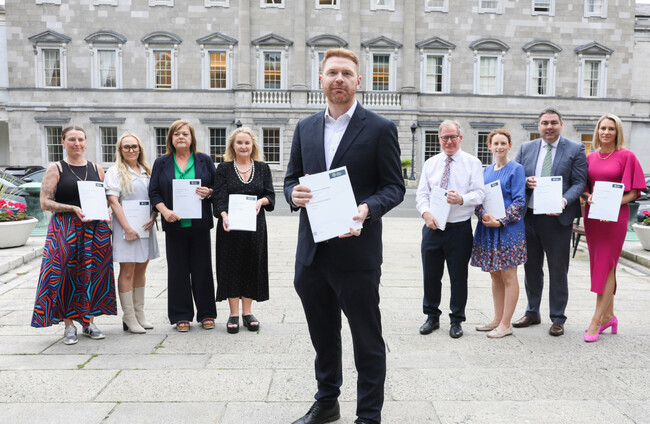
EVERY WEEKEND, OUR political team casts an eye over the events inside and outside Leinster House that have people talking.
This week saw the downfall of a UK prime minister, a rare show of cross-party consensus on drugs policy and moves to make the religious orders pay up.
So, here are our political winners and losers from the week that was:
The three winners of the week are…
1. Ivana Bacik
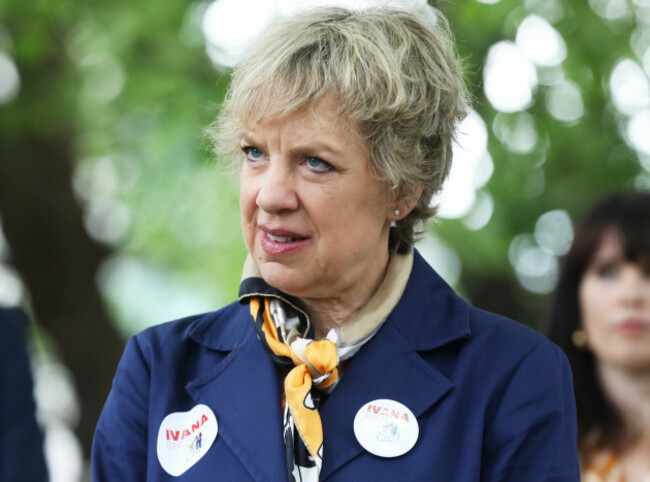
The Labour leader brought forward proposed legislation this week that could finally force the religious orders to pay up for redress.
Writing about it for The Journal, she said religious orders must now be compelled to pay redress for child abuse. She said appealing to Christian morality has not worked, and it is long overdue to that these institutions paid their dues and were held to account.
The government has decided to support the bill, but has put down a timed amendment of six months. This mechanism is often used by the government when it agrees with the spirit of a bill, but needs to look at the legalities of it more closely. It is also used to buy some time as the government often has its own plans to address an issue.
To that measure, The Journal reported in April that the Attorney General is being consulted to see what next steps can be taken to ensure that religious orders that have offered no contributions at all to a redress scheme for survivors of mother and baby homes pay their fair share.
Last year, Tánaiste Simon Harris said the government would pursue legislation to make sure religious orders do not “get off the hook” in terms of redress owed for historical abuse.
“I’ve specifically asked the Attorney General to draft legal advice for Government about what mechanisms we can deploy or indeed legislation to introduce to make sure that those institutions do have to contribute.
“Let me be really clear: My first approach is we should ask people to do the right thing. That’s not to suggest that we’re naive and presume they want to do the right thing. If they don’t do the right thing, we need to legislate to make sure that they do,” he said.
Harris confirmed that had also asked the Attorney General to review legislation put forward by Labour leader Ivana Bacik on the issue.
This is another great example of both opposition and the government parties being on the same page, and making joint efforts to get something done.
2. The Oireachtas Drugs Committee
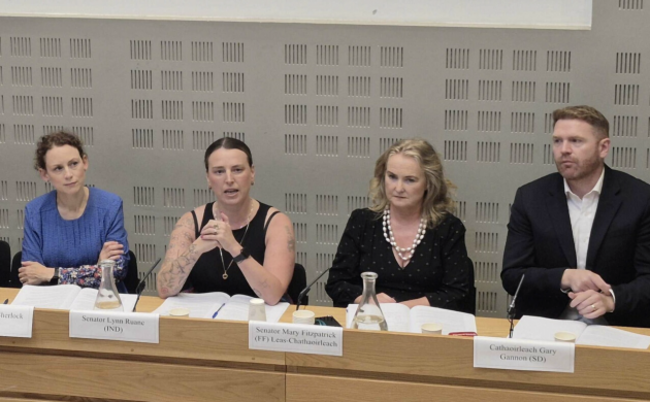
A joint award this week for TDs and senators from across the political spectrum for putting together a comprehensive report that is likely to stir much debate.
It has recommended that the possession of drugs for personal use be fully decriminalised – and that the move should apply to all illicit substances.
The report says “the stigmatisation of drug use and the shaming of drug users” are a source of significant harm in Irish society.
It calls for the “decriminalisation of the person” in relation to the possession of drugs and says the goal of drug policy should be to reduce harm “caused and exacerbated by the criminalisation of people who use drugs”.
The report comes two years after the Citizens’ Assembly on Drug Use, as well as an interim report published by the committee in 2024 – during the last Dáil – had recommended decriminalising possession of any substance for personal use.
The Taoiseach has committed to examining the report. We shall watch this space.
3. Andy Burnham

As they say, a week can be a long time in politics and that is certainly true when it comes to politics across the water.
Andy Burnham, the man tipped to be the next UK prime minister, was only elected in the last week, and now he’s headed to the top office.
In a speech at Downing Street on Monday, Keir Starmer said he will step down as Labour leader and will remain as prime minister until a replacement is selected.
Burnham, who won last week’s byelection in Makerfield, has said Starmer’s resignation “marks the beginning of a transition”.
It just goes to show, dream big.
4. Sinead Gibney
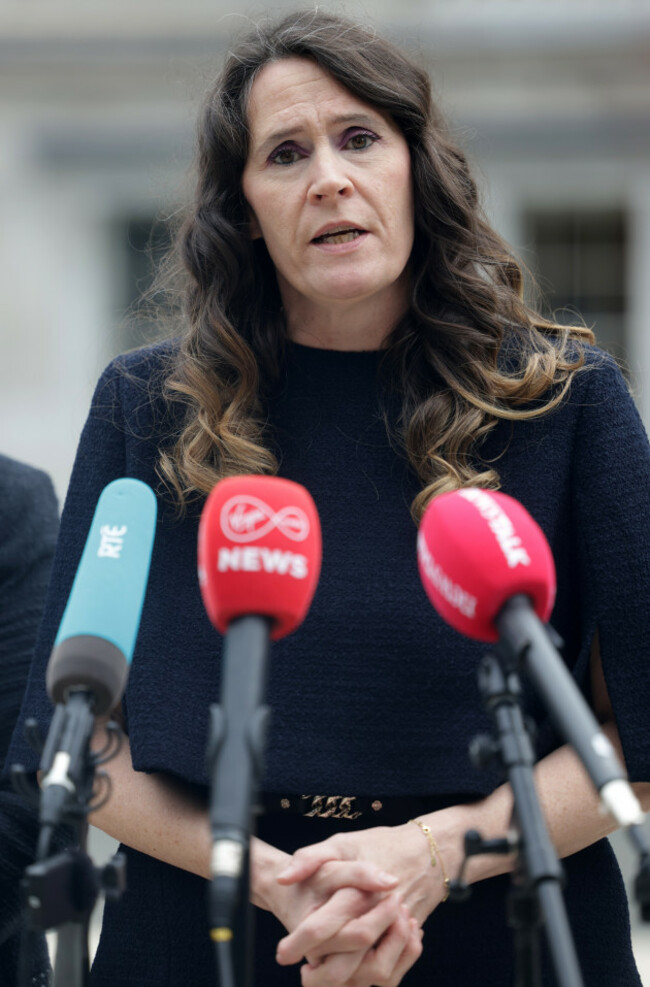
This week, we are giving a nod to Social Democrats TD Sinéad Gibney for the quote of the week when she proclaimed on RTÉ Radio 1′s David McCullough Show that the government’s position on neutrality is “bolloxology”.
Extra points for her delivery, which was heartfelt and full of vigour.
Agree or disagree with her, it’s great to hear politicians speak passionately about their convictions and having a right old debate on the airwaves.
She made the remark during an impassioned debate on the triple lock between herself and Fianna Fáil senator Mary Fitzpatrick.
You can listen back to the interaction here.
The losers of the week are…
1. Keir Starmer
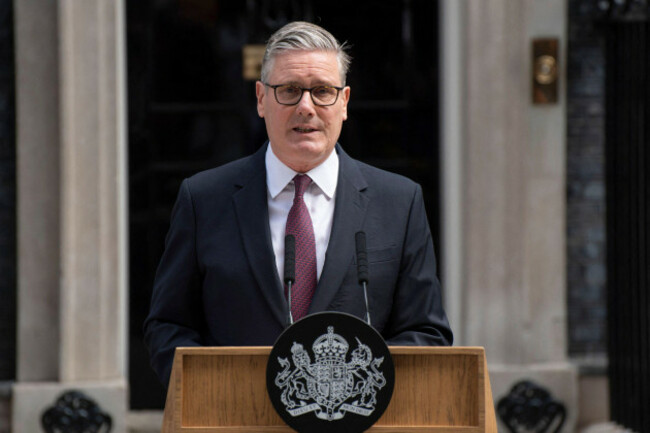
As mentioned above, Burnham is a winner this week, but that means Keir Starmer has to be the loser.
Starmer has become the sixth prime minister to announce his departure from Downing Street in the last decade, a serious turnover.
He may not have sent the UK economy into a death spiral as Liz Truss did, but Starmer’s two-year term has been marked by a further fracturing of UK politics.
He will leave office as one of the country’s most unpopular leaders in decades. A pretty incredible feat.
2. Herman Kelly
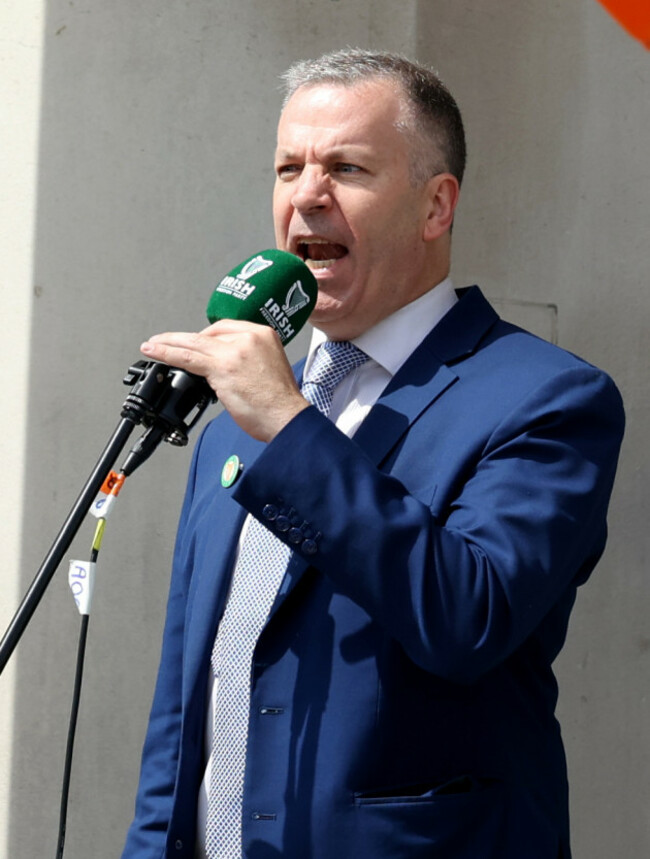
Kelly’s Irish Freedom Party is set to lose its official status as a political party after the Registrar of Political Parties moved to cancel its registration earlier this week.
In practical terms, this means the party will lose the right to have its name appear alongside candidates on ballot papers, and will no longer be treated as a registered party for electoral purposes.
Candidates will still be able to run in elections, but only as independents unless the party is re-registered.
Kelly seems to have taken the decision in his stride, telling The Journal that party members will continue to stand for election, perhaps under a different party name should that be required.
4. James Browne

Housing Minister James Browne admitted this week that the Irish government has no projections or estimates for when homelessness numbers may fall.
Speaking on Monday with Gavan Reilly, the Fianna Fáil minister said that the number of people without a home is “not going to come down immediately, but they might level off”.
“Unfortunately, it’s when the number of homes being delivered exceeds the number of people who need homes in terms of our population increase, and we’ve seen a significant increase in our population,” Browne said.
The week was book ended with bleak housing news.
While Monday saw those depressing comments from the man responsible for housing policy in the country, Friday saw the release of the monthly homeless figures.
There is some solace for the minister in that the people in emergency accommodation decreased by 101 last month, reaching 17,447 people are now homeless in the State, 5,583 of them are children. But the numbers are still huge.
The person responsible for fixing it cannot say when the rising trend of homelessness will be reversed.
What do you make of the chosen winners and losers this week?
Tell us in the comments who your winners and losers are this week.