



Steve Dempsey
IT WAS A tale of two publishers last week. The best of times, the worst of times. An age of closures and an age of acquisitions.
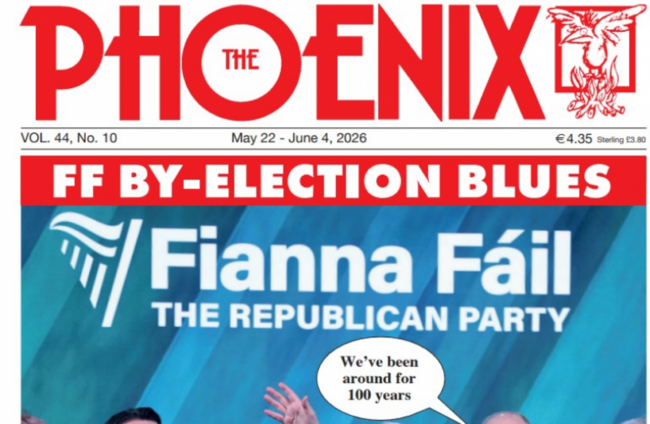
The closure was that of The Phoenix, the satirical mag that folded after more than four decades. And the acquisition was The Business Post which is now majority owned by Swedish media group Bonnier.
Closures, mergers and acquisitions are standard in the media sector these days, especially in small markets like Ireland. These two, and their timing, are particularly noteworthy.
The Phoenix occupied a niche that should, in theory at least, have been sustainable. It was small. It was specialised. It had a loyal audience of political gossip mongers. But now the magazine’s publisher Penfield is entering voluntary liquidation.
It’s easy to see this as another story about old school print media being outflanked by the internet. That’s a neat explanation because it implies a simple solution. Build a better website. Or maybe an app. Launch a podcast. Hire some social media staff. Optimise your subscription funnel. Pivot to video maybe?
But this is all easier said than done. Maybe The Phoenix adapted as well as any publication of its size could have done. The deeper problem is that Ireland has become a difficult place for independent media businesses to exist. Maybe the challenge isn’t journalism. Maybe the issue really is the size of the addressable market for niche media outlets in Ireland.
For most of the twentieth century, media companies controlled three things: content, advertising and distribution. Today they control only one: the content.
Nowadays the advertising (at least at scale) and distribution belongs to global tech giants.
Irish media spends money creating journalism. But Meta, Google, TikTok and YouTube now determine whether anyone sees it. They own the relationship with the audience. They set the tolls.
Sure, media outlets still distribute their content on trucks and over the airwaves. But this analogue moat isn’t all it has cracked up to be. And it too is subject to mergers and acquisitions: Sky, Comcast’s pay TV brand, is apparently buying ITV’s broadcast and streaming capabilities for $2.1bn (€1.84 billion). Content may be king. But distribution is the kingmaker.
Real power
So while newspapers, magazines, radio stations and TV are still seen as dominant media institutions, they ain’t what they used to be. The real power – and the money – increasingly sits with companies whose business model is not journalism, but delivering content to audiences. In this context media consolidation seems inevitable.
So it’s no surprise that Bonnier is increasing its stake in The Business Post. Just as it was no surprise when Belgian-owned Mediahuis entered the Irish market by snapping up what used to be Independent News and Media. And no surprise when Bauer Media acquired what used to be Communicorp.
The question is no longer whether Irish media assets will attract foreign buyers. Rather, could any media outlet afford to say no to these buyers when they come calling?
Ireland is a market of just over four million adults. Investigative journalism, political reporting and business coverage all have fixed costs. Court reporting costs money. Foreign reporting costs money. Editors, and lawyers cost money.
The audience does not become larger simply because the cost base increases. So scale matters.
Big multinational publishers can consolidate back office functions across multiple countries; and retain a core content and advertising team locally. An Irish acquisition is a sweet way for a big publisher from Scandinavia, the Low Countries or anywhere else to dip their toes in an English speaking market.
The old fear was that media ownership would become concentrated in the hands of a small number of Irish businessmen. But this is outdated thinking.
Increasingly, ownership is moving towards large international media groups and this brings different risks. When an overseas organisation controls an organ of democracy, what happens when they squeeze their assets? What happens when the bean counters in Stockholm or Antwerp demand cuts in Dublin? The international group will realise the benefits of rationalisation, but the downsides will be felt in Ireland.
So policymakers need to stop worrying about consolidation of media locally. Today they should worry about who owns the relationship with the audience, the vibrancy of the indigenous news ecosystem and reducing costs for indigenous media.
In this light, the decision by Coimisiún na Meán to increase broadcasting levies on radio operators looks like rent-seeking more than responsible regulation. Independent broadcasters have warned of average levy increases of around 39% this year, following earlier increases in 2025.
They argue – rightly – that radio is being asked to absorb costs at a time when the sector is competing against global platforms that can operate at massive scale. Minister Patrick O’Donovan has expressed concern about the levy, but it seems he has no power to stop it.
All of this makes it seem like policymakers don’t fully appreciate who is coining it in the modern media ecosystem. Irish media outlets are still expected to fund journalism, maintain newsrooms, comply with regulation and serve local communities.
Meanwhile, the advertising revenue they used to enjoy is being hoovered up by digital platforms, and audiences increasingly rely on social media platforms to stay informed.
We need to consider who controls reach as well as who owns titles; what does it mean for multinational companies to control local journalism, and whether the online platforms should bear more responsibility for sustaining news, a critical part of the attention economy, which they monetise so well.
If we don’t, a small market like ours could well become a news desert. And that really would usher in the worst of times.