



Darach Ó Séaghdha Author and linguist
In Calling 353, a brand-new series for The Journal, bestselling Motherfoclóir author and podcaster Darach Ó Séaghdha casts a linguistic eye on how we talk about what it means to be Irish, the signs we post to each other about Irishness – and what really lies beneath it all.
A FEW MONTHS ago, a person might have reasonably concluded that Claire Keegan’s career couldn’t have been going any better – critical and popular acclaim, excellent sales, two film adaptations of her work with another on the way (Walk The Blue Fields is being adapted for screen by Conor McPherson and will star Andrew Scott and Emily Blunt).
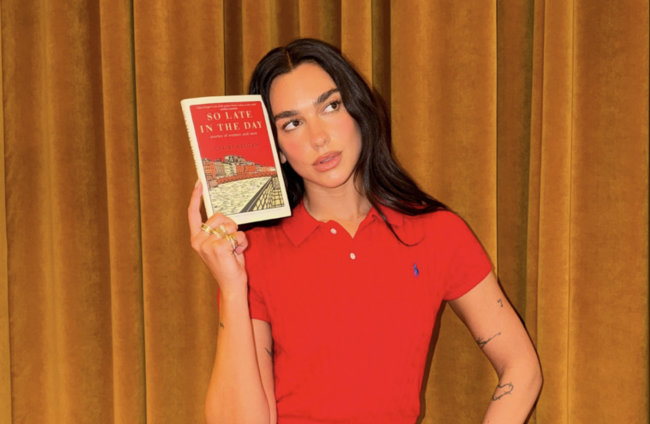
And yet there was even more (fully deserved) good fortune on the way for the Wexford wordsmith as she had two of her books featured in Dua Lipa’s Service95 book club.
Celebrity book clubs are not a new thing – Oprah Winfrey began hers in 1996 when Ms Lipa was but a baby. But Lipa’s project is different, not being focused on the publication cycle as it chooses older books as well as recent ones.
The fact that Lipa’s musical oeuvre is floor-filling bops adds to her book club’s appeal. She’s your fun friend, not the patronising, exhausting flatmate who you can’t take anywhere, so her book recommendations can’t be that off-putting. Bookshops have noticed the impact of Service95 and you may have seen a “Dua Lipa Recommends” stand or sticker about.
Lipa isn’t the only pop singer to use her platform to share her love of reading. Last year, Solange Knowles launched the Saint Heron Library and Digital Archive with the aim of preserving and promoting work by writers of colour, particularly works that are out of print or in danger of being forgotten. Saint Heron existed prior to Solange’s involvement but her participation and association has taken the project to a whole new level. And while Dolly Parton’s book club doesn’t promote particular texts, her work in providing reading material for children who might not otherwise have it has touched thousands of lives.
There’s no doubt about it: the girls are reading and don’t intend to stop. Which begs the question – are there any young fellas in pop culture, and any Irish ones specifically, with books to recommend?
There are some older gentlemen with book clubs, like former US President Barack Obama, but presidential book endorsements have always been a different beast (I wrote about that phenomenon a few years ago).
Over in England, both Stormzy and Marcus Rashford have been involved in book promotion campaigns, although these have been publisher-led rather than an insight into their own reading preferences.
So again, not quite the same as a personal recommendation from someone whose voice can fill a dancefloor in seconds.
The question cuts to the heart of so many problems with boyhood and manhood in the world right now. Straight men don’t recommend stuff to each other the way women do, and this goes way beyond books. For years, the profit margin on Durex condoms was significantly higher than that of other personal hygiene products because men don’t discuss their positive and negative consumer experiences – or ask questions about what’s right for them – the way women do.
If you walk down Grafton Street you probably won’t see two different women wearing the same top but pretty much every teenage boy will be dressed exactly the same, with identical haircuts to boot.
Blogger Aidan Curran, whose history of Irish Number One singles is always worth a look, has reflected at length on the extraordinary popularity of Mr Brightside by the Killers here. Although it has never been in the top 40, it has an unbroken run of 400 weeks in the Irish charts. No other wedding perennial or sport anthem has come close to this.
The reason behind such devotion? Curran’s theory: “Having grown up in small-town Ireland and gone only to all-boys schools, I know that lads prey on sincerity: if you fancy someone, or study diligently, or follow a sub-culture, you’ll either get mocked mercilessly or live in fear of same… If anyone asks, you like what everyone else likes and nothing that stands out as different or weird.”
A natural fit for the creative Irishman
And yet, even though the risk of being cringe and sincere is very great, the celebration of books should be a natural fit for the creative Irishman at large; it’s such a big part of who we are. While a growing gap between the amount of men and women who read has been noted with alarm abroad, Irish men are bucking that trend – in fact a Eurostat survey from this April found that, in the “10 books or more a year category”, Irish men score at twice the EU average.
Irish men, for all their many faults, still have leabhar power.
Hozier and Fontaines DC have literary references in their lyrics, and I’m sure some of their fans have taken the time to look for the works they have alluded to. But an actual bookclub, with regular featured works that will appeal to a person who enjoys the music of that artist…
Almost forty years ago, a ringing endorsement from Elvis Costello brought the self-published debut novel by a teacher in Kilbarrack to wider attention.
Roddy Doyle is now one of our best-loved and most successful novelists, and getting plugged by as literate and witty a songwriter as Costello was most apt. So when it happens, it happens hard.
Perhaps a Mr Brightside bookclub is what’s needed: there are plenty of novels about jealousy, cabs, smokers, destiny, cages and many other themes which are only waiting to be picked up and read.
Reading may be a solitary activity but by building empathy, by helping us articulate things we’ve already thought and felt but didn’t have the words for before, and by giving us the confidence to enjoy our own company so much that we require less external validation, it is a solitary activity that makes us a better friend. And while bookclubs (celebrity-led or not) aren’t compulsory, they do mean the solitary activity doesn’t need to be so solitary all the time.
Darach will be back next Sunday with more thoughts on the words that unite us.