


DJ, writer and broadcaster Kate Butler reflects on the evolution of Ireland’s electronic music scene and the activists who helped make it more inclusive along the way. That experience later inspired her to create Control, a new radio documentary exploring how artists like Mariah Carey, Kate Bush, Enya and Sinéad O’Connor used music technology to shape their sound…
IT’S AN AMAZING feeling, being part of a movement for change. In the late 1990s, I began buying dance music records. I never thought of myself as a proper DJ – I didn’t learn how to beat-match; I didn’t play in clubs; I didn’t even have a DJ name.
I played records in a messy way at parties and gigs. My dream was to play on pirate radio and this came true when my pal, the Golden Maverick, let me play on his show on Power FM. Soon after, I got my own show.
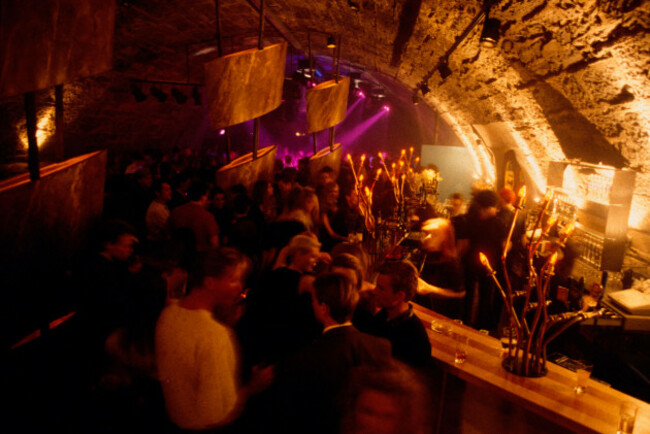
Back then, there were women DJs playing in Dublin clubs – Aoife Nic Canna, DJ Ali, DJ Genie, Dandelion, DJ Karen and DJ Laynee, for example. But nothing like the scale of male DJs. In the 1990s, it felt like every guy you met was carrying a record bag – a square-shaped, cross-strap bag – signalling strong DJ vibes.
Weirdly, it felt normal to be in a minority. Internationally, there was this massive electronic music scene, yet very few women DJs or producers with visibility.
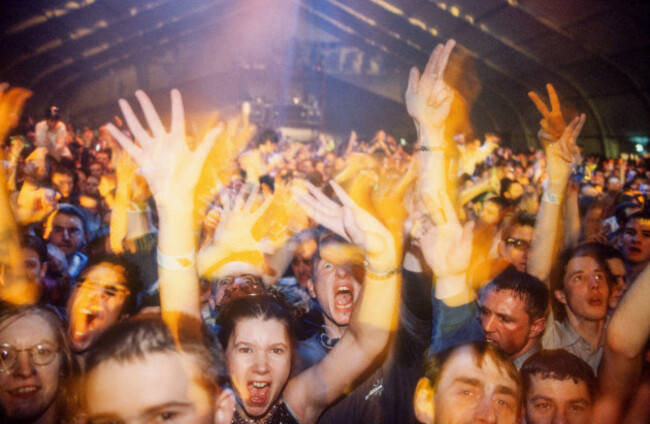
At Homelands Ireland in 1999, the first big dance music festival to reach our shores, I don’t recall a single woman DJ or producer on the line-up. At the time, that wasn’t something to even remark on.
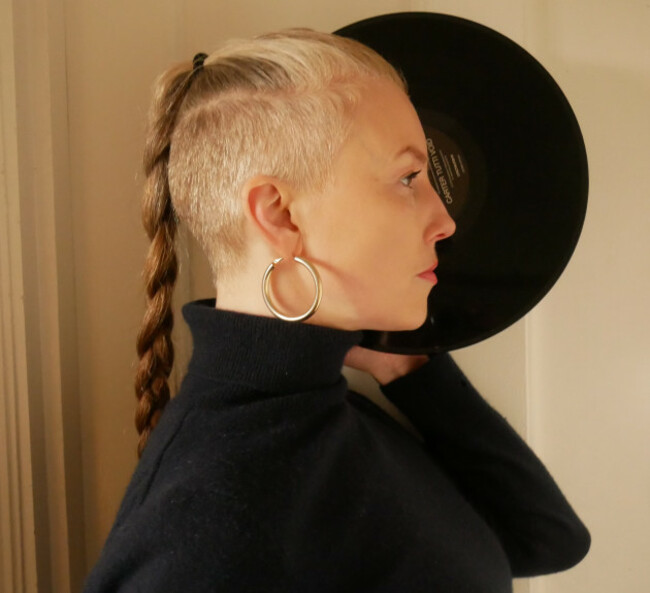
DJing and electronic music production were so technology-focused – I felt as though technology was something that men found easy, and that women had an inherent disadvantage with.
Pop music was partly responsible for this idea. Nearly every pop performance that I watched on TV as a child in the 1980s informed me that women created music with their voices, while men created music with instruments and technology.
It was a message that I can’t recall ever being expressly discussed. Yet it entirely informed how I viewed myself in the world of electronic music.
Something shifts
Indeed, I didn’t really feel like I was part of a movement until much later. After a long hiatus while having children, I met Cathy Flynn in 2017, who was helping to run a new broadcasting project, Dublin Digital Radio (ddr).
On International Women’s Day, Cathy invited me and other women and non-binary folk to broadcast on ddr for 24 hours. Through this, I got to meet a whole new generation of women and non-binary DJs and producers – there were so many of them!
In fact, there were so many that it made me wonder about how accepting I was of there being so few of us back in the day.
The same year, 2017, Ellen King from Cork, a producer known as Ellll, and Laura O’Connell from Galway, aka DJ Lolz, invited women, including trans women, queer and non-binary people, to join the Gash Collective.
Ellll and Lolz made a difference in really meaningful ways: they booked members of the Gash collective to play in venues across the country, including Galway’s Electric City club and the National Concert Hall. They put out two compilations of music produced by artists in the collective.
In her day job, Lolz also worked with a group of DJs with intellectual disabilities. They put on club nights called Bounce. In dance music, more of us were thinking about what we wanted our culture to mean and express, and how to make everyone feel welcome.
Wow, I thought. Even though there was now loads more diversity in electronic music, we still needed activism to progress. All of this hard work by Cathy in ddr, and Ellll and Lolz in Gash, was done voluntarily. From a gender point of view, it was the most consistent and effective activism I had come across in the Irish scene, ever.
Proliferation
In time, other support groups, club nights and labels for underrepresented creatives mushroomed: Club Comfort, WWW, Skin and Blister, Dublin Modular, Foxgluv, DIAXDEM, Galpal Collective, wherethetimegoes, Ethereal Skies, Honeypot, BPM (Bitches Play Music), Whynothereu, MYSFITS, Stretch and more.
Many of these collectives have a connection with ddr. As well as this, a festival called Open Ear, which began on Sherkin Island back in 2016, was switched onto Gash and the other groups: they have booked many of the artists who came through these collectives.
Because of the activism, there was a growing sense of understanding and support from the wider electronic music community.
One of the people I met through ddr was DJ, artist and engineer, Viva Dean. Over Covid, myself and Viva went for walks and talked a lot about gender, STEM and dance music culture. In 2022, Viva came to me with an idea for a feminist sound-technology project – they wanted to use their engineering skills to facilitate a workshop.
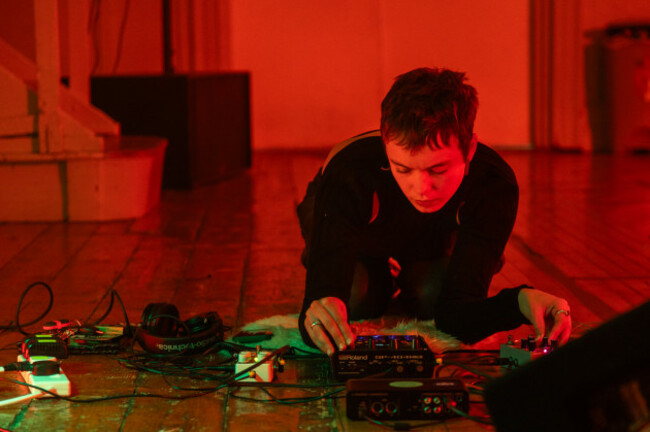
Viva asked me to give a talk at the workshop about the historical context of women and music technology. One day I was talking about the project with Sunil Sharpe, legendary techno DJ and Give Us the Night campaigner. He suggested the name Synthesize_Her.
That same year, I met Renn Miano, one of the founders of DIAXDEM. We collaborated on an event for IMMA about Black women in dance music – For What You Dream Of, co-programmed with Ashley Chadamoyo Makombe of Galpal Collective.
Radio dreams
One of the people who came to that event in IMMA was Adam Fogarty, head of music at 2FM. A few days later, he called me and asked if I’d like to make a radio documentary about women and music technology.
This was an amazing opportunity: the nation’s number one pop station would be the perfect place to talk about women’s roles in pop production and to challenge the idea in the industry that women were singers only.
Straight away, I knew who I wanted on the team – I needed folk who were already active, who understood at a grassroots level what the challenges were, but also the possibilities for women and gender minorities in music production.
Renn Miano became the co-writer and narrator of Control. Viva Dean became the sound designer. Control simply wouldn’t be what it is without the work they put in. We had an amazing team, including Molly Mansukhani, who mastered the series, and Sal Stapleton, who did the engineering and, as Goldmoth Media, created the visual identity.
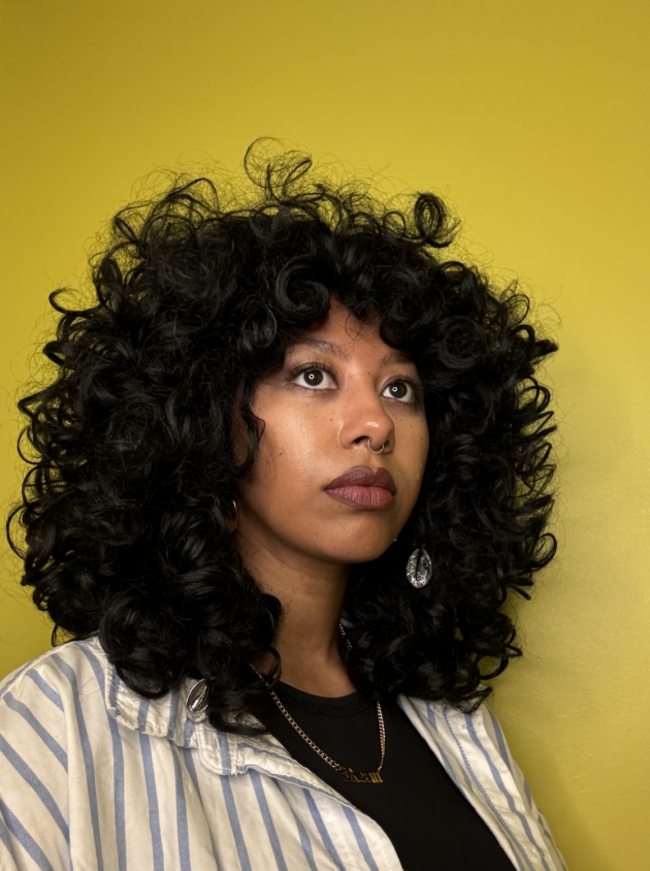
We had 23 contributors, Irish and international, whose research and expertise made it possible to describe the complexity and scale of issues facing women producers in the pop industry, but also, most importantly, to speak about the depth and range of contributions by women to pop production, despite these challenges.
Our supportive and knowledgeable executive producer was Cathal Funge, a documentary maker who has uncovered really important stories about women in Irish music, including Ellen O’Bryne Dewitt (Label of Love) and Mellow Candle (Swaddling Songs at Fifty).
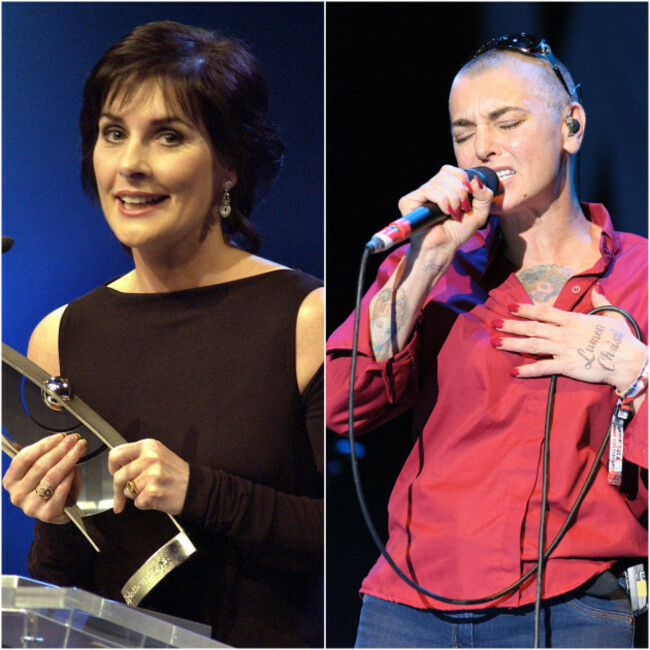
Broadcast live this week on 2FM, Control is a four-part series. We tell the studio stories of Mariah Carey, Kate Bush, Enya and Sinéad O’Connor – all women with Irish connections – who all took leadership roles in crafting their sound. In the fourth episode, we pay tribute to our hero activists.
In recent years, I’ve been learning how to beat-match. I’ve played in clubs and at festivals. I even gave myself a DJ name – dj softskills. Mostly, though, I’m happier dancing to records produced by and DJed by all sorts of folk, from all sorts of backgrounds and life experiences. Like I said, it feels great to be part of a movement.
Kate is a Dublin-based DJ, writer and broadcaster. She runs Atomic, a programme that teaches DJing and broadcasting skills to girls and marginalised young people. Control is broadcast live on 2FM, Monday to Thursday, on 2FM New Music Show with Beta Da Silva – RTÉ 2FM.